
Abdul El-Sayed pitches public health fixes after Michigan’s wildfire smoke and diarrhea crises
The epidemiologist running for Senate says Michigan needs policy pressure on the real drivers behind disasters.
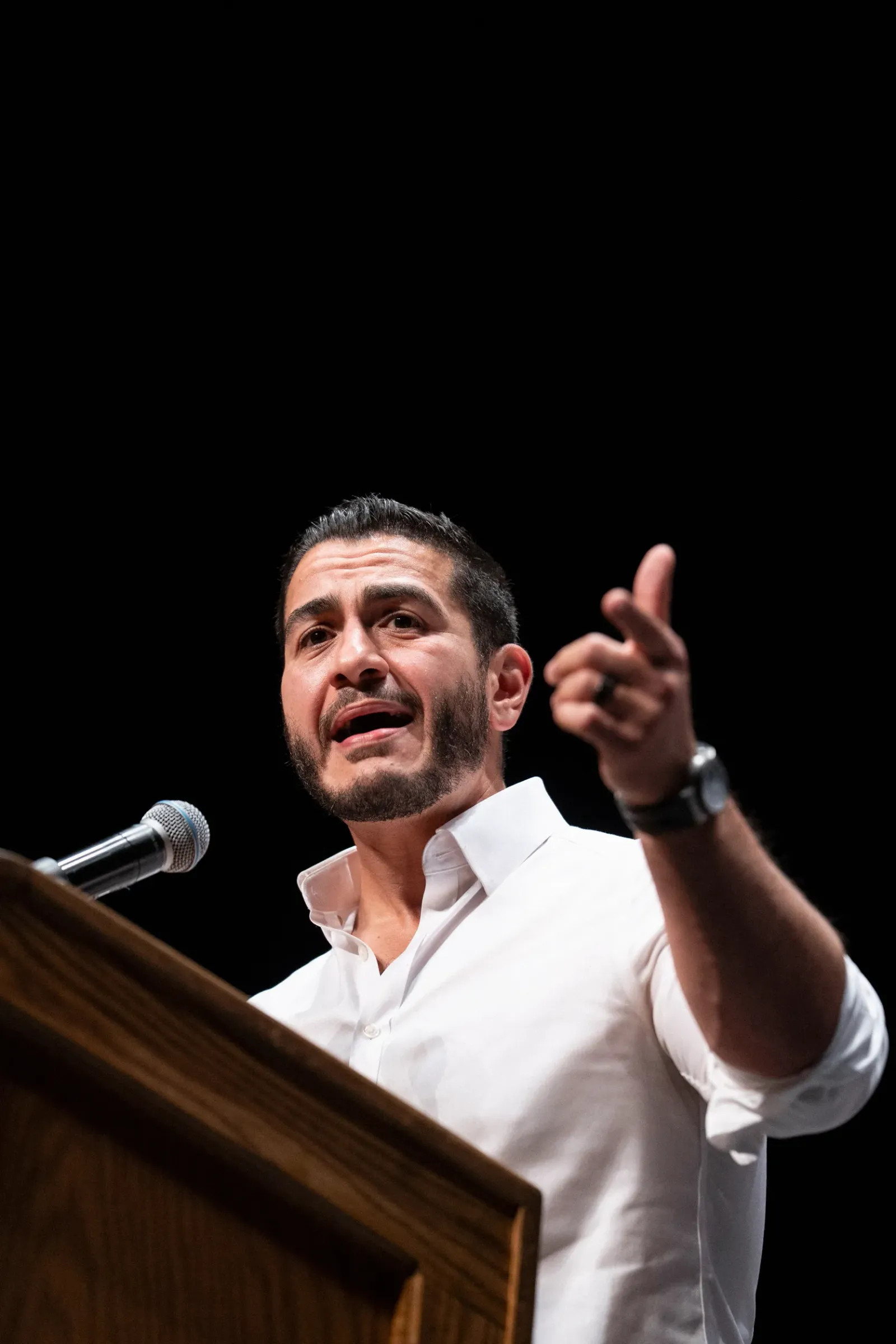
Abdul El-Sayed, a progressive Democrat and epidemiologist running for Senate, talks to WIRED about how he would tackle Michigan’s wildfire smoke and explosive diarrhea outbreaks. For decision-makers, his framing highlights how public health failures become operational, legal, and economic risk.
Michigan has been at the center of two headline-grabbing outbreaks: wildfire smoke and explosive diarrhea. And now the person trying to translate that lived reality into national policy is Abdul El-Sayed, a progressive Democrat and epidemiologist running for Senate. In WIRED’s account, he discusses how he would tackle the forces behind these public health disasters if elected. The core point is simple but uncomfortable: these events are not just “bad luck.” They are signals that the systems responsible for prevention, response, and accountability are being outpaced.
Start with the wildfire smoke angle, because it’s already become a recurring threat rather than a once-a-year oddity. When smoke floods an area, it affects everyone, but it tends to hit certain groups harder, including people with pre-existing respiratory conditions and communities with fewer resources. For executives who manage facilities, workforces, and local operations, smoke is not only a health issue. It can trigger absenteeism, disrupt school and work schedules, stress healthcare capacity, and push costs into the weeks and months that follow. El-Sayed’s pitch, as framed by WIRED, is about pulling on the policy levers that shape those conditions, instead of treating smoke as an inevitable background hazard.
Then there’s the other outbreak: explosive diarrhea. That one matters because it points to something different than climate-driven smoke. Diarrhea outbreaks often reflect breakdowns across sanitation, water quality, food safety, and rapid response. They can also be amplified when public health surveillance is weak, when communication is slow, or when resources are mismatched to what’s happening on the ground. The “explosive” part is the warning light. Outbreaks like this tend to spread quickly once they take hold, and they force urgent decisions across clinics, hospitals, schools, and local agencies.
El-Sayed’s role as both an epidemiologist and a political candidate is the connective tissue between these two crises. Epidemiology is about patterns, causes, and how to intervene before the situation spirals. In a state like Michigan, where WIRED reports it has been at the epicenter of both wildfire smoke and diarrhea outbreaks, the stakes are bigger than any single week of bad news. When multiple public health pressures hit at once, systems can get saturated. That affects staffing, lab turnaround times, outbreak investigation capacity, and the ability to communicate effectively with the public. It can also put pressure on budgets, because emergency response spending can collide with long-term public health funding.
This is where the policy incentives get real. Public health work is often underfunded until a crisis makes it impossible to ignore. Regulators and state agencies usually operate within statutory authority, budget cycles, and reporting requirements that can lag behind fast-moving events. That means elections are not just about ideological swings. They can determine whether states prioritize earlier prevention, faster detection, and clearer accountability structures. And because infectious outbreaks and air quality threats both have cross-sector spillovers, the policy choices can land on business operations too.
For executives, there are second-order effects to take seriously. One is that public health failures can become compliance events, not just human ones. Poor outbreak control can increase liability exposure for organizations that touch food, water, healthcare, or community services. Another is that health emergencies can stress vendor ecosystems, including transportation, medical supply chains, and staffing pipelines. A third is reputational risk. When communities are repeatedly hit, trust in institutions takes a hit, and that distrust can spread across employers, schools, and local government.
WIRED’s framing matters for peers in similar roles because it positions El-Sayed’s Senate run as an attempt to connect science to the policy levers that can reduce both smoke harm and infectious spread. If he’s elected, his approach is presented as a way to tackle the forces behind the crises, not just manage the outcomes after the fact. In practical terms, that’s a reminder that public health is infrastructure. And if the infrastructure repeatedly fails, the economic and operational costs show up whether or not leadership planned for them.
This story's Key Insights and Take-aways are locked.
Create a free account to unlock Executive Actions for one credit.
Register to UnlockAlways free for Executives Club members. Join the Club
More in Politics

LA County: DOJ's 20,000 'noncitizen' voter list is 'unreliable,' includes U.S.-born
Preliminary review by Los Angeles County election officials finds errors in the federal list, raising the stakes for voter roll integrity ahead of November.

Trump's $1.5B Pentagon chip investment lands in North Carolina
A $1.5 billion defense infusion for North Carolina chipmaking signals a new era of Pentagon-backed reshoring - here's what it means for the industry.

Nigeria confirms first Ebola case in Abuja, a woman just off a Uganda flight
Health Minister Muhammad Ali Pate says the patient flew in from Uganda, putting Africa's latest outbreak on Nigeria's doorstep.