
Adam Smith says Trump withheld Iran war casualty stats from Congress
The House Armed Services ranking member flags a transparency gap as U.S. service members die and lawmakers demand numbers.
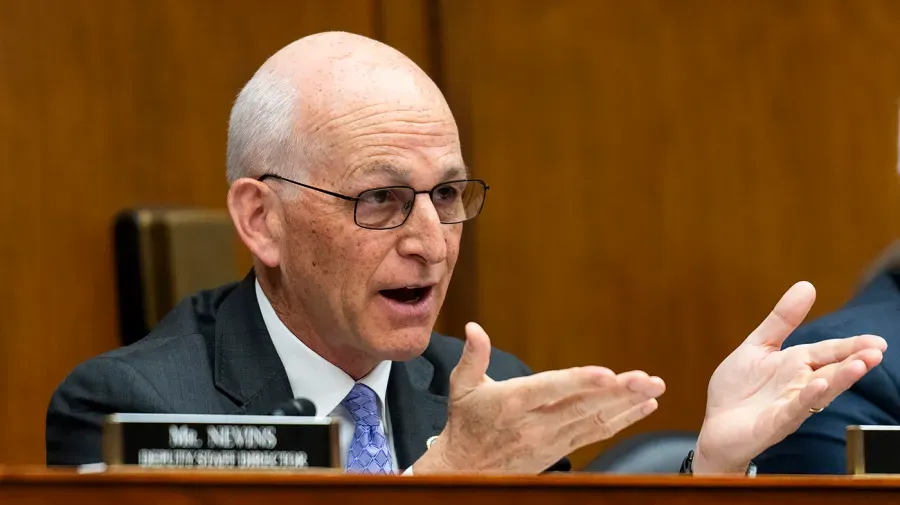
Rep. Adam Smith (D-Wash.), ranking member of the House Armed Services Committee, said President Trump has not shared Iran war casualty statistics with Congress. The dispute matters because it shapes congressional oversight, readiness decisions, and the political and operational risk calculus around the conflict.
Rep. Adam Smith (D-Wash.), the ranking member of the House Armed Services Committee, said Monday that President Trump has not shared Iran war casualty statistics with Congress. Smith raised the issue on CNN's “OutFront,” telling host Erin Burnett that the lack of shared casualty information is becoming a major point of contention even as hostilities with Iran have resumed.
This is not an abstract governance debate. Smith’s complaint comes after three U.S. service members were killed over the last week, underscoring why casualty statistics are not just paperwork. For members of Congress, the numbers are the input for oversight. For the Pentagon and commanders, they influence how quickly decisions get made and how leadership is questioned. In other words, when casualty data does not flow cleanly to the oversight bodies that are supposed to receive it, the entire accountability loop gets noisier, slower, and more politicized.
Smith’s role amplifies the stakes. As ranking member, he is not the marginal voice in the room. He is one of the key congressional figures responsible for pushing for scrutiny of defense policy and military operations. When he publicly argues that the White House has not provided casualty statistics, it signals that oversight is not just ongoing in committee hearing rooms, it is actively colliding with the executive branch’s information control.
For decision-makers watching from outside politics, this is where the second-order effect hits. Military conflicts, especially those involving resumed hostilities, tend to trigger rapid shifts in posture: readiness levels, deployment tempo, sustainment decisions, and risk management. Those decisions often require timely, accurate situation awareness. If lawmakers do not have the casualty data they believe they are owed, they may respond with hearings, demands for briefings, and process pressure. That can create operational friction, even if the people closest to execution are focused on mission outcomes rather than messaging.
There is also a regulatory and institutional angle, even though this dispute is not about a traditional industry regulator. In the U.S. system, Congress exercises oversight partly through information rights. Those rights are a governance mechanism designed to prevent blind spots, ensure budgets and authorities match reality, and limit escalation risk. When information sharing becomes contested, it can change the incentives of everyone involved. The executive branch has incentives to control narrative and limit what can be disclosed. Congress has incentives to press for more transparency, especially after high-cost events like reported deaths of three service members over the last week.
The timing matters, too. Smith’s comments come as hostilities with Iran have resumed and the question of casualty reporting is already a live wire in the public sphere. In politically charged contexts, once a transparency issue becomes the headline, it can crowd out other, harder-to-explain military and strategic details. That can force leaders to spend political capital on defending process rather than explaining policy. It can also shape how future reporting is handled, potentially leading to more cautious disclosures, more redactions, or delayed sharing until data can be verified.
Executives and board-level leaders in defense-adjacent industries should also take note, because congressional attention often tracks directly to procurement and spending. When oversight ramps up, budgets and contracts can come under greater scrutiny. Companies that depend on defense spending do not need to be concerned about the ethics of casualty reporting, but they do need to understand how oversight dynamics can affect timelines. Even when contracting decisions remain separate from casualty statistics, the environment around them changes when lawmakers intensify their demands for accountability.
For peers in similar roles, the strategic stake is straightforward: if you cannot rely on a clean flow of verified information, every decision becomes harder. Oversight loses confidence, the executive branch faces political costs, and the public debate becomes more about process than facts. Smith’s claim that Trump has not shared Iran war casualty statistics with Congress turns a quiet administrative responsibility into a loud governance test. In a conflict where the costs are measured in lives, how quickly and transparently casualty information is shared is not a secondary detail. It is part of the system that ensures the country can respond, debate, and authorize with clarity.
This story's Key Insights and Take-aways are locked.
Create a free account to unlock Executive Actions for one credit.
Register to UnlockAlways free for Executives Club members. Join the Club
More in Politics

LA County: DOJ's 20,000 'noncitizen' voter list is 'unreliable,' includes U.S.-born
Preliminary review by Los Angeles County election officials finds errors in the federal list, raising the stakes for voter roll integrity ahead of November.

Trump's $1.5B Pentagon chip investment lands in North Carolina
A $1.5 billion defense infusion for North Carolina chipmaking signals a new era of Pentagon-backed reshoring - here's what it means for the industry.

Nigeria confirms first Ebola case in Abuja, a woman just off a Uganda flight
Health Minister Muhammad Ali Pate says the patient flew in from Uganda, putting Africa's latest outbreak on Nigeria's doorstep.