

AI Power Demand Transformed Caterpillar Into a High-Multiple Tech Play
Caterpillar's stock is no longer just a cyclical bet - it's riding the AI infrastructure boom, and investors are paying a premium for it.

Caterpillar (CAT) has seen its valuation multiple expand as AI data center power demand drives sales of its backup generators and equipment. The shift positions the industrial giant as a tech-adjacent growth play, but it also raises questions about sustainability and cyclicality.
The bulldozer maker that built America's highways is now powering the AI revolution. Caterpillar (CAT) has quietly transformed from a plain-vanilla cyclical industrial into a high-multiple tech play, and the market is paying up for it. The catalyst? An unprecedented surge in electricity demand from data centers that train and run large language models - and Caterpillar's diesel and gas generators are the go-to backup power source when the grid can't keep up.
Investors have taken notice. Over the past year, CAT's stock has outpaced the broader market, and its forward price-to-earnings ratio has expanded well beyond its historical average. That multiple expansion is the clearest sign that the market is no longer valuing Caterpillar as a mere construction-equipment maker, but as a growth company tied to the buildout of AI infrastructure. The narrative shift is stark: instead of being hostage to global GDP and commodity cycles, Caterpillar is now a direct beneficiary of hyperscaler capex - the billions that Microsoft, Amazon, Google, and Meta are pouring into data centers.
The mechanics are straightforward. Data centers need reliable, always-on power. Grid connections often take years, and even when they arrive, they're not always stable. That's where Caterpillar's power generation business steps in. Its industrial generators, often running on natural gas or diesel, provide backup and prime power for facilities that cannot afford a single second of downtime. The company's electric power division has become a key growth engine, with orders for data center projects stacking up. In recent earnings calls, management has explicitly cited AI-related demand as a driver, a phrase that would have been unthinkable just a few years ago.
But this transformation is not without its ironies. Caterpillar's core construction business still depends on housing starts, mining activity, and infrastructure spending - all deeply cyclical. The AI power boom is a new, potentially more stable revenue stream, but it also introduces a new set of risks. If the AI bubble deflates or hyperscalers pull back on capex, the same orders that are boosting CAT's multiple today could evaporate tomorrow. The company is essentially trading one cycle for another, albeit one with a faster growth trajectory and a more exciting narrative.
The market's willingness to slap a tech-like multiple on Caterpillar also reflects a broader shift in how investors classify industrial companies. As the energy transition and digitalization blur the lines between sectors, traditional manufacturers that can attach themselves to high-growth themes - AI, electrification, grid modernization - are being rewarded with re-ratings. Caterpillar is not alone; peers like Cummins and Generac are also jockeying for position in the data center power market. But CAT's scale, global service network, and brand trust give it a competitive moat that smaller rivals struggle to match.
For executives and boards, the lesson is clear: the market is willing to pay a premium for companies that can demonstrate durable growth, even if their legacy businesses remain cyclical. Caterpillar's management has been careful not to overpromise, but the stock's multiple suggests investors are betting on a structural shift, not a temporary blip. The company's ability to execute on its power generation backlog, manage supply chain constraints, and fend off competition will determine whether this re-rating sticks.
The strategic implications extend beyond Caterpillar. If an industrial stalwart can morph into a tech play, other companies with exposure to AI infrastructure - from electrical equipment makers to cooling system providers - could see similar re-ratings. Conversely, the risk of overvaluation looms. A single missed earnings report or a high-profile data center delay could trigger a sharp correction, punishing investors who bought the narrative without scrutinizing the fundamentals.
For now, Caterpillar sits at the intersection of two powerful forces: the physical world of heavy machinery and the digital world of artificial intelligence. That intersection is exactly where the market's attention - and capital - is flowing. The question is not whether Caterpillar has become a tech play, but whether it can sustain that status as the AI power demand story evolves. The answer will determine whether today's high multiple is a permanent re-rating or just another cyclical peak.
This story's Key Insights and Take-aways are locked.
Create a free account to unlock Executive Actions for one credit.
Register to UnlockAlways free for Executives Club members. Join the Club
More in Business

Tim Cook steps down as Apple CEO, stays on as chair with $45M equity
The 'Trump whisperer' keeps his White House and Beijing access as Apple navigates tariffs and a $4.6 trillion market cap.
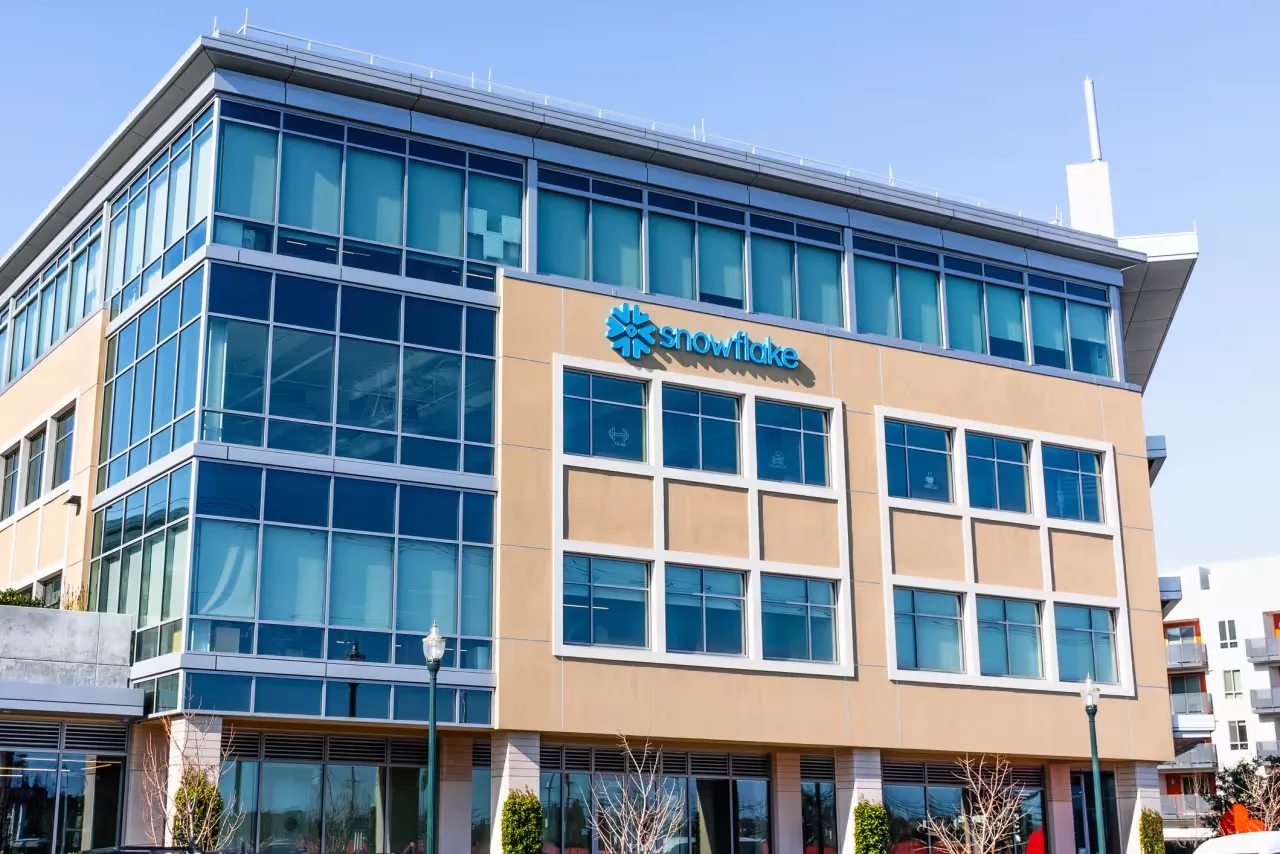
Snowflake shares surge as AI data demand crushes estimates, lifting full-year forecast
Stocks jumped on stronger-than-expected guidance, signaling enterprise AI workloads are accelerating faster than Wall Street priced in.

Tim Cook's 15-year Apple CEO run ends: 3 lessons for any successor
After 15 years, Tim Cook hands Apple to John Ternus - here's how he turned a $350B company into a $4.6T juggernaut.