
Air Force One goes offline for safety upgrades after a Turkey trip raised questions
The new Air Force One will be grounded for upgrades. The briefing answers what’s being fixed and whether the earlier flight was safe.

The new Air Force One will be taken out of service to receive safety upgrades, following a trip President Trump took with the plane earlier this month to Turkey. For decision-makers, the issue is operational safety, not optics: when aircraft get upgraded, how quickly, and what it signals about risk management.
The new Air Force One is going out of commission to receive safety upgrades. NPR reports the key question is what needs to be done, and whether it was safe for President Trump to fly the plane to Turkey earlier this month.
That sequence matters. Grounding a flagship aircraft immediately triggers a natural instinct to ask: was the plane unsafe before it left the hangar? The NPR framing does not suggest a dramatic failure on the Turkey trip in the way a headline would, but it does point to a core point of aircraft operations and safety culture: even when an aircraft is cleared to fly, teams may still identify upgrade work that should be completed on a defined schedule, and the safest path can still be to take it offline.
To understand why that can both be true and still sound confusing, it helps to know how aviation safety upgrades are handled in practice. Aircraft are built and certified against specific safety requirements, and they can be cleared for service under those rules. But aircraft also live in the real world, where operators gather data, engineers review system performance, and regulators and manufacturers incorporate improvements. “Cleared to fly” is not the same thing as “no further work is possible or recommended.” Safety upgrades often reflect incremental improvements: changes to parts, software, procedures, inspection intervals, or system behaviors that may not be triggered during a specific flight but become important enough to schedule.
When a high-profile aircraft like Air Force One is involved, the stakes expand beyond the technical. The U.S. military aviation program has to balance mission readiness with risk reduction, and it does so under scrutiny that commercial airlines never face. A grounded plane affects schedules, planning, and contingency options. That creates pressure to avoid unnecessary downtime. But it also means the threshold for leaving safety improvements incomplete can feel higher to operators and oversight stakeholders, because the downside is not just delay, it is public trust and, in the worst case, real-world risk.
The NPR question about “was it safe” for the Turkey flight also highlights how safety assessments work after the fact, and why updates can be communicated in stages. Safety determinations usually involve a combination of regulatory compliance, aircraft maintenance history, inspection records, and engineering assessment of identified issues. Even if an aircraft is flying safely today, the team can still decide that an upgrade should be executed on a timetable that keeps the aircraft ahead of emerging requirements or best practices. In aviation, the safest operators aim to reduce uncertainty, not simply wait until a problem appears.
There is also a governance angle. For any operator, whether it is a defense aviation program or a commercial fleet, decisions about upgrades involve multiple parties: engineering, maintenance leadership, command structures, and regulatory oversight, plus the original equipment manufacturer that understands the design. Those groups can disagree on timelines and scope. Yet once a safety upgrade is selected, it tends to become a coordination problem more than a debate, because every stakeholder has a stake in preventing the next audit finding or the next incident.
The “out of commission” phrasing, reported by NPR, is a reminder that the public-facing aircraft is not just a symbol. It is a complex, tightly managed system that still requires regular work. When upgraded safety systems or procedures are installed, engineers can validate performance and maintenance teams can implement updated workflows. That is how aircraft programs stay safe over long lifecycles: not by assuming everything is perfect, but by continuously tightening the system.
For executives and board members in adjacent industries, the second-order lesson is about how to manage the gap between “safe enough to operate” and “best to upgrade now.” Grounding a centerpiece aircraft for safety upgrades shows that leadership is willing to accept short-term disruption to reduce long-term uncertainty. It also shows how communication can become its own operational risk. If a premium system goes offline, stakeholders will immediately parse it as either a confession of danger or a proactive safety management step. The difference is the underlying technical answer to what exactly needs to be done and how the assessment for the earlier flight was reached.
In this case, NPR’s focus on the Turkey trip alongside the planned grounding puts the spotlight on that exact distinction. The new Air Force One is being taken out of commission for safety upgrades, and the real issue for anyone watching is not only whether the plane left the airport safely, but whether the program is maintaining the discipline to address future risk before it becomes present risk.
This story's Key Insights and Take-aways are locked.
Create a free account to unlock Executive Actions for one credit.
Register to UnlockAlways free for Executives Club members. Join the Club
More in Politics

LA County: DOJ's 20,000 'noncitizen' voter list is 'unreliable,' includes U.S.-born
Preliminary review by Los Angeles County election officials finds errors in the federal list, raising the stakes for voter roll integrity ahead of November.

Trump's $1.5B Pentagon chip investment lands in North Carolina
A $1.5 billion defense infusion for North Carolina chipmaking signals a new era of Pentagon-backed reshoring - here's what it means for the industry.
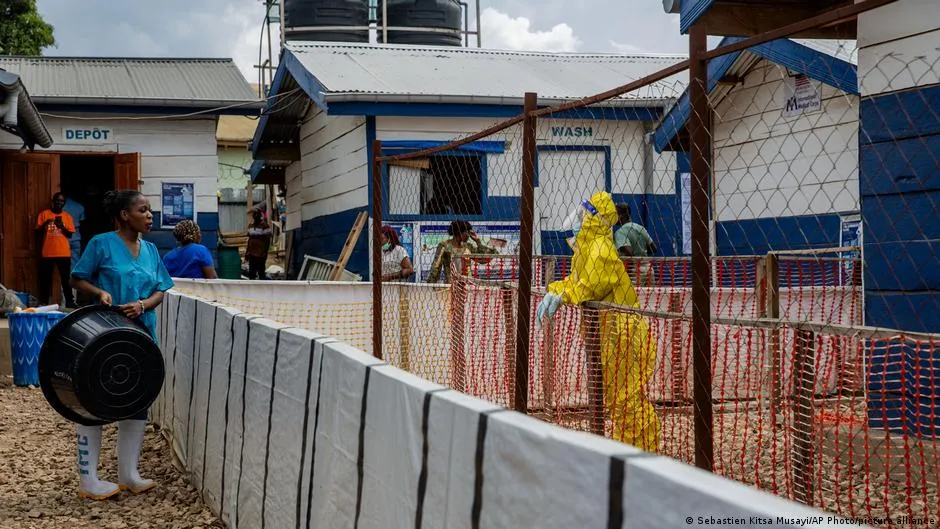
Nigeria confirms first Ebola case in Abuja, a woman just off a Uganda flight
Health Minister Muhammad Ali Pate says the patient flew in from Uganda, putting Africa's latest outbreak on Nigeria's doorstep.