
Alinma Bank buys back 5 million shares for ESIP after April 21 AGM nod
The bank spent SAR 122.55 million at SAR 24.51 per share to secure treasury stock for employee incentives.

Alinma Bank says it completed its share buyback, acquiring 5 million ordinary shares to fund its Employee Stock Incentive Program (ESIP). The repurchase required a SAR 122.55 million capital outlay after shareholders authorized it in an Extraordinary General Assembly held on 21 April 2026.
Riyadh - Alinma Bank has finished the buyback it announced for internal compensation, acquiring exactly 5 million of its own ordinary shares for its Employee Stock Incentive Program (ESIP). The move came with a total capital outlay of approximately SAR 122.55 million, executed at an average price of SAR 24.51 per share, according to a bourse filing.
The timeline matters because this was not an open-ended decision. The share purchase followed authorization from Alinma Bank’s shareholders during an Extraordinary General Assembly held on 21 April 2026, with the assembly results published on the Saudi Exchange website on 22 April 2026. Under the resolution’s terms, Alinma Bank had a maximum period of twelve months from the date of the decision to complete the acquisition process, and it has now done so within the permitted window.
So what does a “treasury stock” buyback actually do here? In this case, the shares will be held as treasury shares until they are officially vested and transferred to eligible employees under the ESIP’s specific terms and conditions. That structure is key: it lets the bank use market transactions to build the share pool for a long-term compensation and retention strategy, rather than creating incentives that are disconnected from shareholder value.
In practical board terms, this is a classic alignment mechanism. Employee share incentive programs are designed to tie part of compensation outcomes to the same underlying interests as shareholders, with the stated intent of encouraging a performance-driven culture and longer-term institutional stability. For banks, where talent retention is often as strategic as capital management, ESIP-linked programs are a way to keep high-caliber professionals inside the organization across market cycles. Alinma Bank’s filing frames this as part of its strategic human resources initiatives, and the mechanics are straightforward: acquire shares first, then administer incentive vesting later.
Regulatory framing is part of the story too, even if it is not always headline material. The buyback was conducted within the authorization mandate approved by the Extraordinary General Assembly, and the bank states that the completion demonstrates adherence to the regulatory framework set by the Capital Market Authority (CMA) and the Saudi Exchange (Tadawul) regarding the acquisition of treasury shares. In other words, the bank is signaling that this was not just a private HR decision. It was a capital markets action with formal governance, timetable constraints, and exchange visibility.
There is also a governance beat hiding under the numbers. The completion of the purchase is only step one. Alinma Bank notes that the focus will shift to administration of the incentive scheme. The board of directors and relevant committees will oversee the allocation of the five million shares, with distribution tied to pre-defined performance benchmarks and vesting periods. That means executives and boards are not done once the shares are bought. They move from transaction execution to program design enforcement, ensuring eligible participants, eligibility criteria, and performance conditions are applied according to the approved rules.
Second-order, this matters for how other banking boards may think about employee incentives versus capital allocation optics. A repurchase is often watched as a signal of confidence and capital discipline, but when the stated destination is ESIP, the narrative shifts toward internal talent and retention. Even with that distinction, the market still sees the same surface outcome: shares were bought at SAR 24.51 on average, funded by approximately SAR 122.55 million, and completed on the allowed schedule. For decision-makers, it becomes a balancing act between shareholder expectations for capital actions and internal needs for incentive funding, all within the CMA and Tadawul rules.
Finally, the transaction closes a procedural loop that started with the Extraordinary General Assembly and runs through treasury holding, vesting, and eventual transfer to participants. In the filing’s framing, the strategic initiative is expected to enhance Alinma Bank’s ability to attract and retain high-caliber professionals, supporting long-term growth objectives in the Saudi financial sector. For executives and directors at any institution running similar programs, the headline takeaway is simple: the buyback is the easy part. The real work begins when the board turns those treasury shares into outcomes tied to performance and time.
This story's Key Insights and Take-aways are locked.
Create a free account to unlock Executive Actions for one credit.
Register to UnlockAlways free for Executives Club members. Join the Club
More in Business

SpaceX Nasdaq debut makes it the 6th most-valuable U.S. company at record scale
The IPO flips the usual tech script, putting a revenue-light rocket maker among megacap peers on day one.

Mena construction CPMI slips 12% in April 2026, but execution momentum rebounds to 1.01
GlobalData’s April CPMI shows resilience masking pre-execution caution, with conflict risk surfacing unevenly by country and sector.
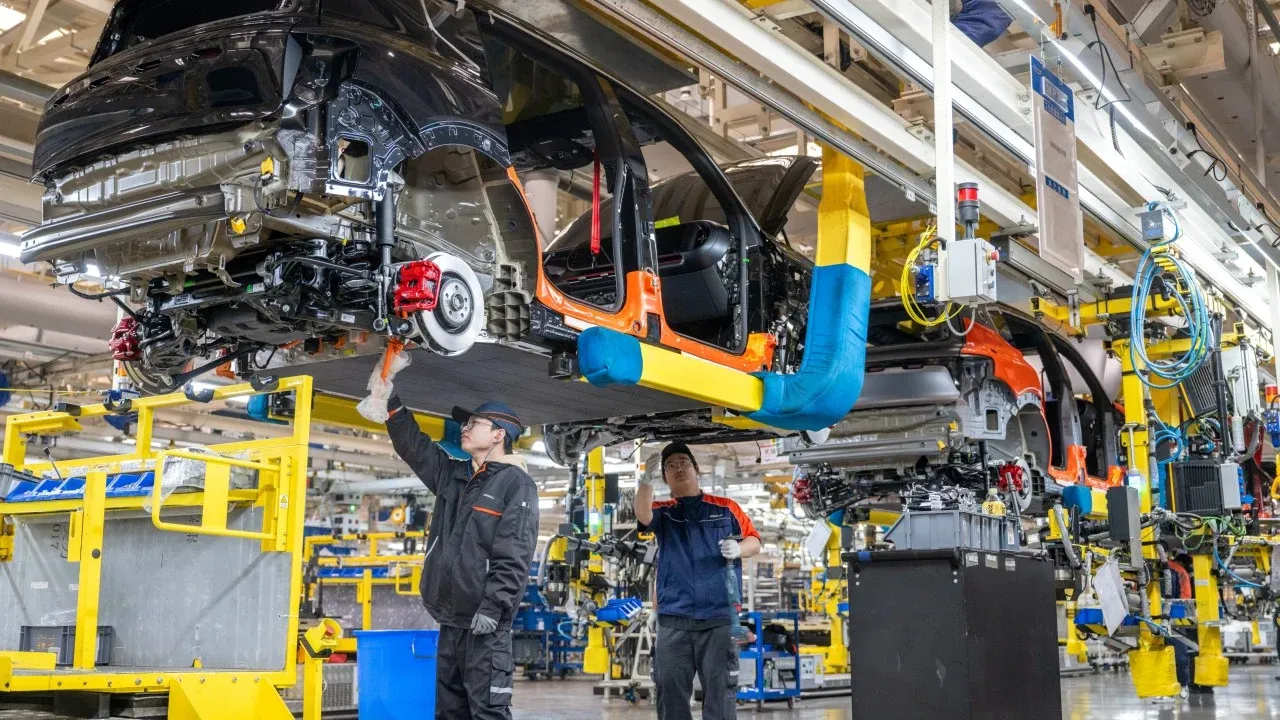
Li Shufu orders Geely to purge excess capacity after BYD battle at Chongqing Auto Show
Geely’s chairman says the company will assess oversupply and decide which capacity to close, suspend, merge, or sell.