
Anthropic will “abruptly disable” Fable 5 and Mythos 5 for foreign access
US export control order forces Anthropic to suspend model access abroad, and then disable the models for everyone.

Anthropic says the US government ordered it to suspend access to its advanced AI models for foreign nationals, including Fable 5 and Mythos 5. Anthropic says it will “abruptly disable” those most advanced models for all users as a result.
Anthropic says it will “abruptly disable” its most advanced AI models, including Fable 5 and Mythos 5, after a US export control directive ordered the company to suspend access to foreign nationals. The company adds that the US government believes its safeguards can be bypassed and that the product could be used to identify software vulnerabilities. Anthropic also says it did not receive specific details about the national security concern, which is where the real friction begins: the company has to act decisively on limited information.
In practical terms, this is not a slow-taper change for select customers. Anthropic frames it as an abrupt disablement for all users, following the directive to suspend access only for foreign nationals. That mismatch matters. It signals that the compliance boundary is hard, not theoretical, and that the safest operational path the company sees is turning off the capability rather than trying to keep it live while carving the world into approved versus restricted use.
The background here sits at the intersection of US export controls and a newer reality for frontier AI. Regulators are increasingly treating advanced model access as something closer to controlled technology than a normal software download. When the concern is national security, the typical “we have safeguards” argument often turns into a regulatory gamble. Anthropic’s statement reflects that dynamic, saying the US government believes safeguards can be bypassed and that the product could be used to identify software vulnerabilities. If the government believes bypass is realistic, then letting the models run with a partial restriction can look like leaving the door ajar.
Export control directives like this also reshape how companies build and ship. At a product level, “disablement” is a deployment decision, not just a policy decision. It requires systems that can switch capabilities off quickly, and it forces teams to think about model gating, monitoring, and the operational risk of resuming access later. At a governance level, it pressures boards and executives to weigh reputational costs and customer impact against compliance risk and the possibility of escalating enforcement. In fast-moving AI markets, those tradeoffs are brutal because customer expectations and developer dependencies do not wait for procurement cycles.
There is also an adoption and competition angle, even if the source does not name competitors. When one leading developer of frontier models takes a capability offline abruptly, enterprise and developer users feel it immediately. Those users may look for alternatives, and alternative vendors with different compliance postures can pick up momentum. More subtly, disablement can change internal roadmaps at companies using AI tools for security research, code analysis, or vulnerability discovery workflows, since the availability of the most capable models is suddenly a regulatory variable.
For decision-makers inside the broader AI sector, this is a warning label disguised as an update. The directive Anthropic received to suspend access to Fable 5 and Mythos 5 for all foreign nationals is framed as national security driven, but Anthropic says it was not given specific details. That “no further details” piece is important: it means other organizations face a similar environment where the compliance demand may come without a technical audit trail they can directly debug. The second-order effect is that boards may push for more conservative release strategies, more redundancy in model access, and tighter scenario planning for government-directed shutdowns.
Strategically, the move also pressures executives to think about what “safeguards” means operationally. Anthropic is effectively acknowledging that the government sees a credible path to bypass and misuse. When the consequence is an abrupt disablement, the incentive shifts from building guardrails you can describe to building architectures you can enforce. And in frontier AI, enforceability is hard because the most capable systems tend to be the ones that solve difficult tasks, including those adjacent to vulnerability research.
The stakes are bigger than one company’s product choice. Anthropic’s situation shows how quickly national security framing can reach into model availability worldwide, even when the initial order targets foreign nationals specifically. Executives and boards across the sector should treat this as a signal that regulatory enforcement can be swift, that details may be withheld, and that “partial access controls” may not be the end of the story. If your strategy depends on keeping the top models online globally, this is the kind of disruption your risk committee has to rehearse before it happens.
This story's Key Insights and Take-aways are locked.
Create a free account to unlock Executive Actions for one credit.
Register to UnlockAlways free for Executives Club members. Join the Club
More in Technology

April marked Earth’s first autonomous “found it” moment for an observation satellite
An Earth observation satellite located its target on its own in April, signaling a step change in space sensing workflows.
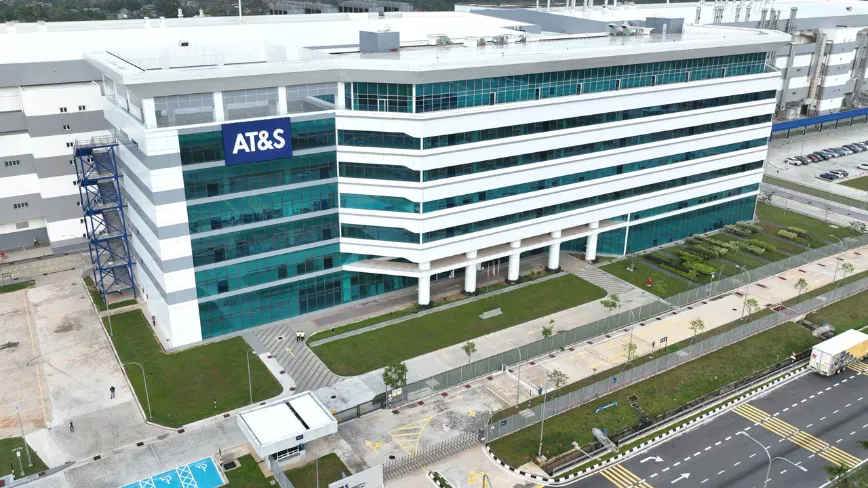
AT&S commits up to €2bn to expand AI high-end IC substrate capacity
The Austrian chip-materials supplier is scaling output in Malaysia and China, betting its next growth cycle rides AI demand.

Tesla allegedly misled European regulators with self-driving safety data in Sweden and Netherlands
A Reuters review says Tesla’s self-published statistics could be viewed as misleading marketing while it pushes Full Self-Driving approval.