
AT&S commits up to €2bn to expand AI high-end IC substrate capacity
The Austrian chip-materials supplier is scaling output in Malaysia and China, betting its next growth cycle rides AI demand.
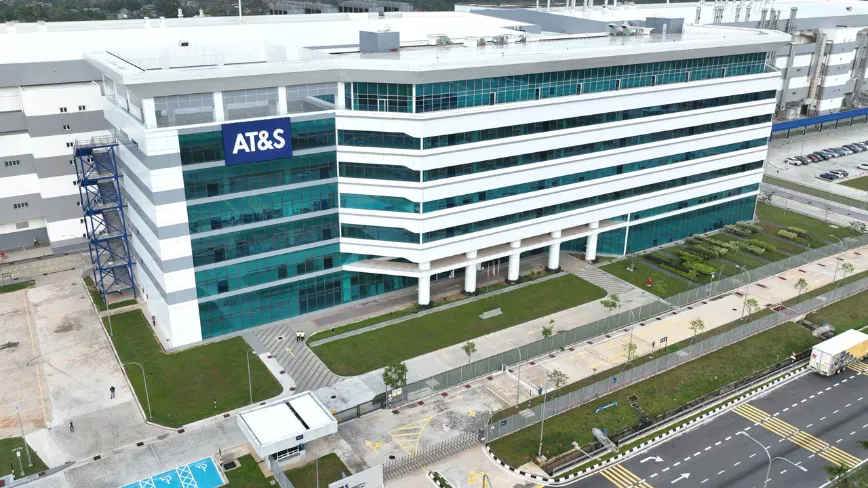
AT&S, the Austrian maker of printed circuit boards and chip substrates, says it will spend between €1.5bn and €2bn to expand capacity for high-end IC substrates. For decision-makers, that is a capacity-and-supply-chain signal tied to where AI and high-performance computing chips are built.
AT&S is committing serious capital to an unglamorous but critical part of the AI boom. The Austrian printed circuit board and chip substrate maker says it will spend between €1.5bn and €2bn expanding capacity for the high-end IC substrates that AI and high-performance computing chips are built on.
And AT&S is not keeping this expansion abstract. The plan spans specific production sites: its plant at Kulim in Malaysia and its facility at Chongqing in China. In other words, the company is pairing “AI demand” with “where the manufacturing happens,” which matters when supply chains get tight and timelines start slipping.
If you have followed AI’s supply chain story, you know the pattern: headlines focus on chips, but value often gets locked earlier in the chain, in the materials and substrate platforms that connect silicon to the real world. High-end IC substrates are the physical foundation that helps enable high-performance chip packaging and the electrical performance those systems need. When the demand cycle turns toward AI accelerators and high-performance computing chips, those substrate requirements tend to rise as well, and companies that can add capacity in the right places can capture that incremental demand.
AT&S is essentially betting that the “AI chip boom” is not just a semiconductors story. It is also a manufacturing infrastructure story, and it is about execution speed. Scaling capacity is never instant. A €1.5bn to €2bn expansion is large enough to reshape output over multiple years, which is exactly what boards and investors want from a supplier they believe will ride through demand peaks rather than scramble to catch up.
There is also a geopolitical and operational layer to this decision. By expanding in Malaysia and China, AT&S is tying its growth plan to two of the world’s most important manufacturing ecosystems. That can help when customers want more reliable delivery timelines, but it also exposes the company to local risks that come with operating and scaling plants in different jurisdictions. For executives, the key is not whether risk exists, it is whether the company has structured the expansion so demand pull outweighs execution uncertainty.
Regulatory framing can be part of that story, even when the announcement itself is focused on capacity. Cross-border manufacturing and technology supply chains often run into evolving compliance expectations, including trade and export-control considerations that can affect where certain components can be shipped and how products are categorized. While the source does not detail compliance mechanics, the basic board-level reality remains: expansions into China and Malaysia typically require operational readiness for local requirements, plus the ability to meet customer documentation needs for products flowing into global systems.
From a market dynamics standpoint, this move also suggests how AT&S sees the competitive landscape. If high-end IC substrates are the bottleneck, then capacity additions are a way to avoid losing share during periods when buyers are allocating across suppliers. In a boom cycle, customers may not just buy what is available today, they may plan procurement months ahead. A supplier that signals credible capacity expansion can become part of long-term sourcing discussions, while suppliers that look capacity-constrained can get deprioritized or forced into less attractive terms.
There is a second-order implication here for anyone running adjacent businesses, from PCB manufacturers to packaging ecosystems. When a company invests at the high-end substrate layer, it often increases the throughput of upstream and downstream steps, because those substrates must be integrated into larger chip system builds. Even if the rest of the chain is not perfectly synchronized, adding substrate capacity can tighten the link between chip demand and finished product output.
For decision-makers at other companies in the semiconductor and electronics value chain, AT&S’s expansion is a reminder to look past the “AI narrative” and into the “where and when.” The headline number is the spend range, €1.5bn to €2bn. The operational anchors are Kulim in Malaysia and Chongqing in China. Put together, that is a concrete capacity signal: AT&S expects AI and high-performance computing demand for high-end IC substrates to persist enough to justify large-scale scaling now, not later. If that bet is right, customers get more supply during the most expensive part of the cycle. If it is wrong, those plants become costly assets during a slowdown. Either way, the move sets the tempo for substrate capacity planning across the market.
This story's Key Insights and Take-aways are locked.
Create a free account to unlock Executive Actions for one credit.
Register to UnlockAlways free for Executives Club members. Join the Club
More in Technology

Nvidia's $89B data center quarter: the 9 companies cashing in
The AI buildout is minting fortunes beyond GPUs, and memory, cloud, and cooling suppliers are riding the same wave.

A YouTuber dissected the iPhone Duo and thinks he found crackgate's cause
CuriousHagi's teardown of Apple's foldable reveals a gear-like hinge that may explain why screens crack in the same spot within hours.

Google quietly links your phone number to every Android account on your SIM
Adding a SIM now ties your phone number to all Google accounts - and future accounts inherit it. Here's the security and privacy stakes.