
Apple's new CEO calls memory shortage a crisis, won't rule out Chinese chips
John Ternus, who took over as CEO on September 1, tells TIME that 'all options should be on the table' after reports Apple tested Chinese-made memory, a signal for supply chain leaders.
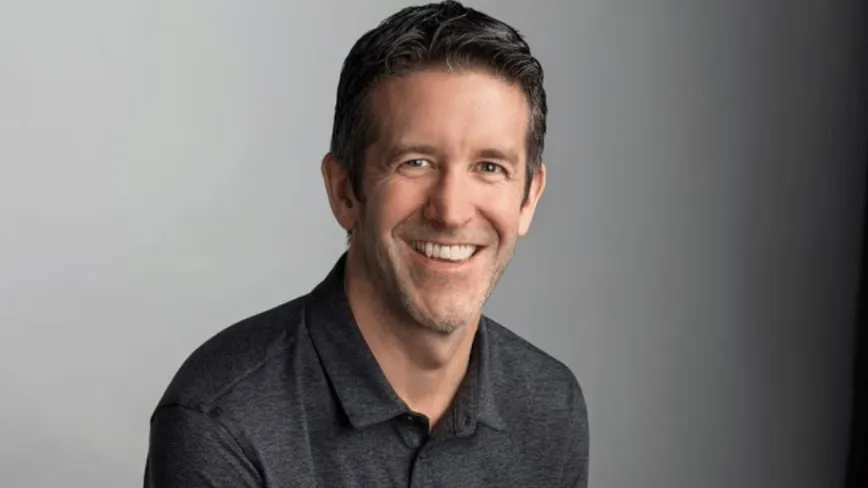
Apple CEO John Ternus told TIME that 'all options should be on the table' on memory chips, calling the shortage a crisis, after reports Apple tested Chinese-made memory. The comment signals a potential shift in Apple's supply chain strategy with major implications for chip vendors and geopolitical tensions.
Apple's new chief executive, John Ternus, is not mincing words about the memory chip shortage. In an interview with TIME, Ternus called the shortage a crisis and said "all options should be on the table" when it comes to sourcing memory chips. The comment lands just weeks after Ternus took over as CEO on September 1, and it comes amid reports that Apple has tested Chinese-made memory chips for the first time. Ternus is also on the cover of TIME's 2026 Best Inventions issue, which features the iPhone Duo.
The "all options" line is the one that matters. For years, Apple has relied on a tight circle of memory suppliers, mostly South Korean and American firms like SK Hynix, Samsung, and Micron. The idea that Apple would even test chips from Chinese manufacturers would have been unthinkable a few years ago, given Washington's export controls and the broader tech cold war. But the memory shortage has become so severe that Apple's new CEO is publicly leaving the door open to suppliers that were once off the table.
The shortage itself is not new. Memory chips, particularly DRAM and NAND, have been in short supply since the AI boom began soaking up fab capacity and driving up prices. But the crisis has deepened in recent months, with prices for some memory components rising by double digits quarter over quarter. For Apple, which ships hundreds of millions of devices a year, memory is a critical input, and the cost pressure is hitting margins across the industry. The company's willingness to consider Chinese suppliers suggests that the usual levers, like long-term contracts and inventory hoarding, are no longer enough.
The geopolitical stakes are enormous. Chinese memory makers like ChangXin Memory Technologies (CXMT) have been improving their technology, but they remain subject to US export controls that restrict the sale of advanced chipmaking equipment. If Apple were to source memory from China, it would not only be a commercial decision, it would be a political one. Washington has been pressuring allies to limit China's access to advanced semiconductors, and Apple, as America's most valuable company, would be under intense scrutiny. Ternus's comment may be a negotiating tactic, a way to signal to existing suppliers that they need to step up, or it may be a genuine exploration of alternatives.
For executives watching from the sidelines, the takeaway is that even the most entrenched supply chains are being forced to rethink their assumptions. The memory shortage has exposed the fragility of a market dominated by a handful of players, and the AI boom has made that fragility worse. Companies that once had the luxury of choosing suppliers based on price and quality now have to factor in geopolitical risk, export controls, and the possibility of supply disruptions. Ternus's public statement is a reminder that no company, not even Apple, is immune to the forces reshaping the global chip industry.
The timing is also notable. Ternus took over as CEO on September 1, and he is already making headlines with a stance that would have been politically radioactive for his predecessor, Tim Cook. Cook was known for his careful, diplomatic approach to China, but he also faced criticism for being too reliant on Chinese manufacturing. Ternus's willingness to say "all options should be on the table" suggests a more pragmatic, perhaps more aggressive approach to supply chain management. It also signals to investors that Apple is aware of the problem and is willing to consider unconventional solutions.
For peers in similar roles, the lesson is clear: the memory crisis is not going away, and the playbook is changing. CFOs and supply chain chiefs should be asking themselves whether their own sourcing strategies are flexible enough to handle a world where the cheapest or most reliable supplier may not be the most politically acceptable one. Ternus's comment is not just about memory chips, it is about the broader need for resilience in a world where technology and geopolitics are increasingly intertwined.
The next few months will show whether Apple actually follows through on testing Chinese memory, or whether this is just a signal to its traditional suppliers. Either way, Ternus has put the industry on notice: the memory shortage is a crisis, and all options are on the table. For anyone who depends on chips, that is a warning worth heeding.
This story's Key Insights and Take-aways are locked.
Create a free account to unlock Executive Actions for one credit.
Register to UnlockAlways free for Executives Club members. Join the Club
More in Technology

AI researcher's 26,000-word claim: Neural nets aren't tangled after all
Nick Cammarata's Goodfire post has the AI world split - if he's right, monitoring frontier models just got a lot easier.

A Chinese rocket deorbited over Minnesota and landed in a farmer's cornfield
Experts tied the fragment to LandSpace's Zhuque-2E, which launched on September 15 and shed debris over the American Midwest after deploying 10 satellites.

JPMorgan Chase deploys first $5B into defense tech and hypersonic missiles
The bank is moving off its balance sheet to back robot factories, hypersonic missiles, and supply chains, signaling a new era of bank-backed military innovation.