

Aug. 1, 1968: NASA ends Saturn V production, killing Apollo's moonshot one year early
Budget pressure from Johnson and Congress ends Saturn V output, forcing NASA to stretch a shrinking heavy-lift supply.
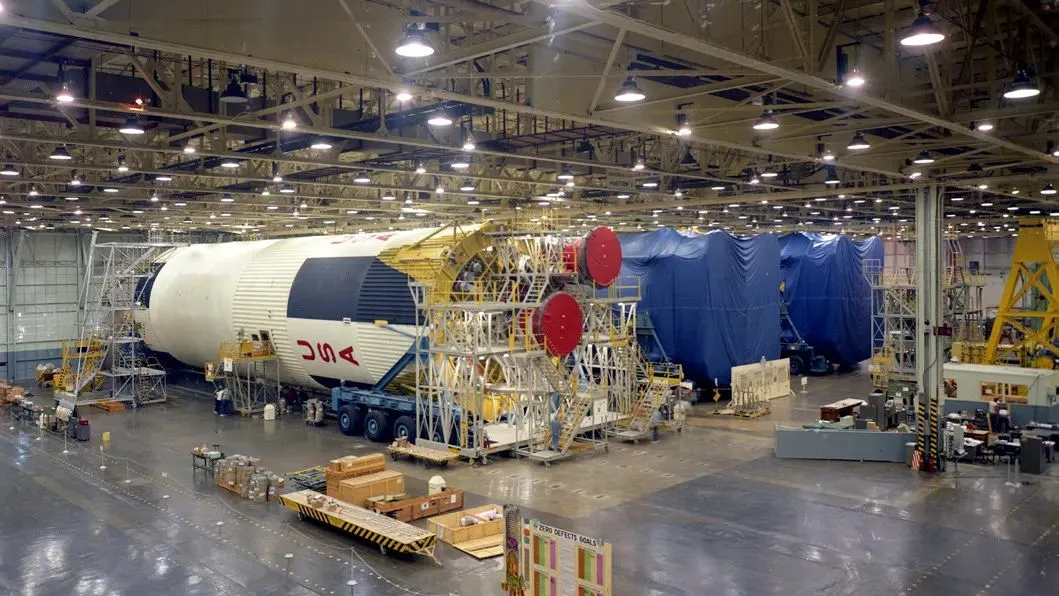
On Aug. 1, 1968, NASA canceled the production of its Saturn V moon rocket. The decision, driven by budget cuts and escalating program costs, ends the Apollo program's timeline early and shapes the agency's next three major missions.
On Aug. 1, 1968, NASA ended production of the Saturn V moon rocket. This was not a minor procurement tweak. Saturn V was the only launch vehicle, at the time, that could carry astronauts beyond low-Earth orbit, and it became the biggest and most powerful rocket of its era.
Here is the kicker that explains why the date matters: NASA built 15 Saturn V rockets but only flew 13. When NASA shut down construction in 1968, Apollo 11 was still almost a year away from landing humans on the moon in 1969. In other words, NASA chose to stop making the rocket that would make further heavy-lift moon missions possible, before the most famous mission had even happened.
So what forced the hand? The source points to a federal budget deficit and the rising costs of the Vietnam War, which led Congress to slash nearly three-quarters of the funding that President Lyndon Johnson had allotted for the Apollo program. That is the budget story behind the space story: mega-projects do not just compete with physics. They compete with national priorities, and those priorities can change fast.
The knock-on effect is also straightforward. From start to finish, NASA spent a reported $9.4 billion on the Saturn family of rockets, which the source estimates as $118 billion in today's dollars, including Saturn I and Saturn IB blocks. But the decision to shut production down in 1968 over those costs did something more than reduce a line item. It spelled the end of NASA's Apollo program to send astronauts to the moon a year before Apollo 11 astronauts even walked on the lunar surface. If you do not have a steady supply of heavy-lift rockets, your list of moonshots runs out, even if you still have astronauts and ambition.
The remaining rockets and missions make the logic visible. The last Saturn V launch to carry astronauts sent Apollo 17 astronauts to the moon in 1972. After that, the agency did not simply keep sending Saturn Vs because it had stopped building them. Instead, the source notes that the last Saturn V launched in 1973, and it was originally supposed to send Apollo 18 to the moon. Apollo 18 got canceled, and that Saturn V launched the Skylab space station instead. That is an operational pivot, not a theoretical one: a rocket planned for one mission gets reassigned to another because the broader program direction changed.
Then comes the tail end of Saturn production. Skylab flew a year later, and the final Saturn IB rocket launched an Apollo command module on the Apollo-Soyuz flight in 1975. The pattern is consistent across the timeline: when heavy-lift availability shrinks, mission planning bends. NASA had to reallocate what it could launch and what it could afford, trading deep space exploration for what could still be supported.
Fast forward to why today’s executives still care. The source says it would not be until 2022 that NASA had another megarocket to rival the Saturn V, when it launched the first Space Launch System on the Artemis I mission. In April 2026, that new rocket launched NASA's Artemis II astronauts around the moon. The implication for decision-makers is not that budgets will always dictate everything, but that the timing of funding and production decisions can permanently reshape the mission ladder you get to climb.
Finally, the source adds a modern competitive angle: SpaceX has developed a new megarocket that is even more powerful than the Saturn V, with its Starship and Super Heavy booster. When a sector gains a new class of capability, it changes what future programs think is possible. But the 1968 Saturn V decision is a reminder that capability alone is not a guarantee. Production schedules, funding realities, and long-term procurement choices still determine what gets built, what gets canceled, and what gets delayed.
In exec terms, Aug. 1, 1968 is a case study in how cost pressure can end an entire strategic pathway before its crowning moment. NASA had the dream of lunar landing, but stopping Saturn V production turned that dream into a shorter runway, with consequences that echoed through Apollo 17, Apollo 18's cancellation, Skylab, and Apollo-Soyuz.
This story's Key Insights and Take-aways are locked.
Create a free account to unlock Executive Actions for one credit.
Register to UnlockAlways free for Executives Club members. Join the Club
More in Politics

LA County: DOJ's 20,000 'noncitizen' voter list is 'unreliable,' includes U.S.-born
Preliminary review by Los Angeles County election officials finds errors in the federal list, raising the stakes for voter roll integrity ahead of November.

Trump's $1.5B Pentagon chip investment lands in North Carolina
A $1.5 billion defense infusion for North Carolina chipmaking signals a new era of Pentagon-backed reshoring - here's what it means for the industry.

Nigeria confirms first Ebola case in Abuja, a woman just off a Uganda flight
Health Minister Muhammad Ali Pate says the patient flew in from Uganda, putting Africa's latest outbreak on Nigeria's doorstep.