

Beijing courts Mazu to sell Taiwan unification narratives as political tool
China is trying to weaponize Taiwan’s sea goddess, using culture as messaging. Here’s what that means for leaders watching risk.

Foreign Policy reports that Beijing is trying to turn Taiwan’s ancient deity Mazu into a Chinese agent to advance unification narratives. For decision-makers, the move signals a cultural and information strategy that can reshape how political influence is deployed around Taiwan.
Beijing is trying to turn Taiwan’s sea goddess, Mazu, into a Chinese agent to push unification narratives, according to Foreign Policy. The core idea is simple, and strategically loaded: use a shared cultural figure to make a political storyline feel familiar, legitimate, and inevitable.
Mazu is not a random prop. She is an ancient deity tied to maritime life and coastal worship in the Chinese cultural sphere, including Taiwan. By leaning on that resonance, China can wrap contemporary politics in older symbolism. In other words, the messaging is not just “about” unification, it is “through” culture. If your goal is influence, culture is a powerful delivery mechanism because it moves at the speed of belief, not bureaucracy.
For executives and boards, this matters because political narratives increasingly operate like infrastructure. Once a story is embedded in the public mindset, it can change what people expect, what institutions tolerate, and what policies become easier to justify. Messaging campaigns are often dismissed as soft power, until they start to affect hard outcomes like cross-strait relations, regulatory posture, tourism flows, shipping sentiment, and the risk calculus of companies with operational exposure to Taiwan and China.
Foreign Policy’s framing highlights the instrumental nature of the effort. Beijing wants to use Mazu to sell unification narratives, and the phrase “turn... into a Chinese agent” is doing real work. It implies deliberate repurposing, not organic cultural exchange. That distinction is important for leaders who need to assess whether a development is a harmless cultural tie-in or a signal of deeper intent.
In business terms, this is the difference between marketing that respects identity and messaging that tries to re-label identity. When governments treat cultural heritage as political machinery, the second-order effects can show up in places companies do not usually monitor closely: the tone of public campaigns, the alignment of local institutions, the boundaries of permissible discourse, and the degree to which civic symbolism becomes a lever for compliance.
This also fits a broader incentive pattern that decision-makers recognize even if they are not political scientists. Governments typically prefer tools that are scalable and hard to counter. Culture fits that bill. It can be communicated broadly, repeated consistently, and adapted to local contexts without needing every message to be framed as state power. The result is that audiences may process the narrative as tradition rather than instruction.
The stakes extend to regulatory and governance environments. When narratives shift, regulators and state-adjacent bodies can interpret “neutral” actions through a political lens. For example, organizations that promote cultural activities, manage community relationships, or rely on maritime and regional networks may find that symbolic alignment becomes part of operational risk. Leaders planning partnerships, sponsorships, or distribution in the region should think about how cultural messaging can influence counterpart behavior, stakeholder expectations, and the likelihood of sudden friction.
There is also a reputational dimension. In disputes over Taiwan, narratives do not stay confined to politics; they spill into global perceptions of legitimacy and alignment. That can influence what partners, investors, and customers choose to support. Even when a company is not directly involved in cultural programming, association by proximity can become a factor. Boards that treat geopolitics as a distant macro variable sometimes get surprised when symbolism and messaging shape real-world constraints.
The strategic takeaway for peers is that Beijing’s attempt to use Mazu for unification narratives is not merely a cultural story. It is a signal about how influence may be built: by embedding political messages into familiar symbols, lowering resistance among target audiences, and strengthening the plausibility of a desired political end-state. For executives with exposure to Taiwan and the China region, the question to ask is not only what policy changes, but what narratives are being engineered. Because once engineered narratives start to drive behavior, they can alter the operating environment faster than formal regulation can.
This story's Key Insights and Take-aways are locked.
Create a free account to unlock Executive Actions for one credit.
Register to UnlockAlways free for Executives Club members. Join the Club
More in Politics
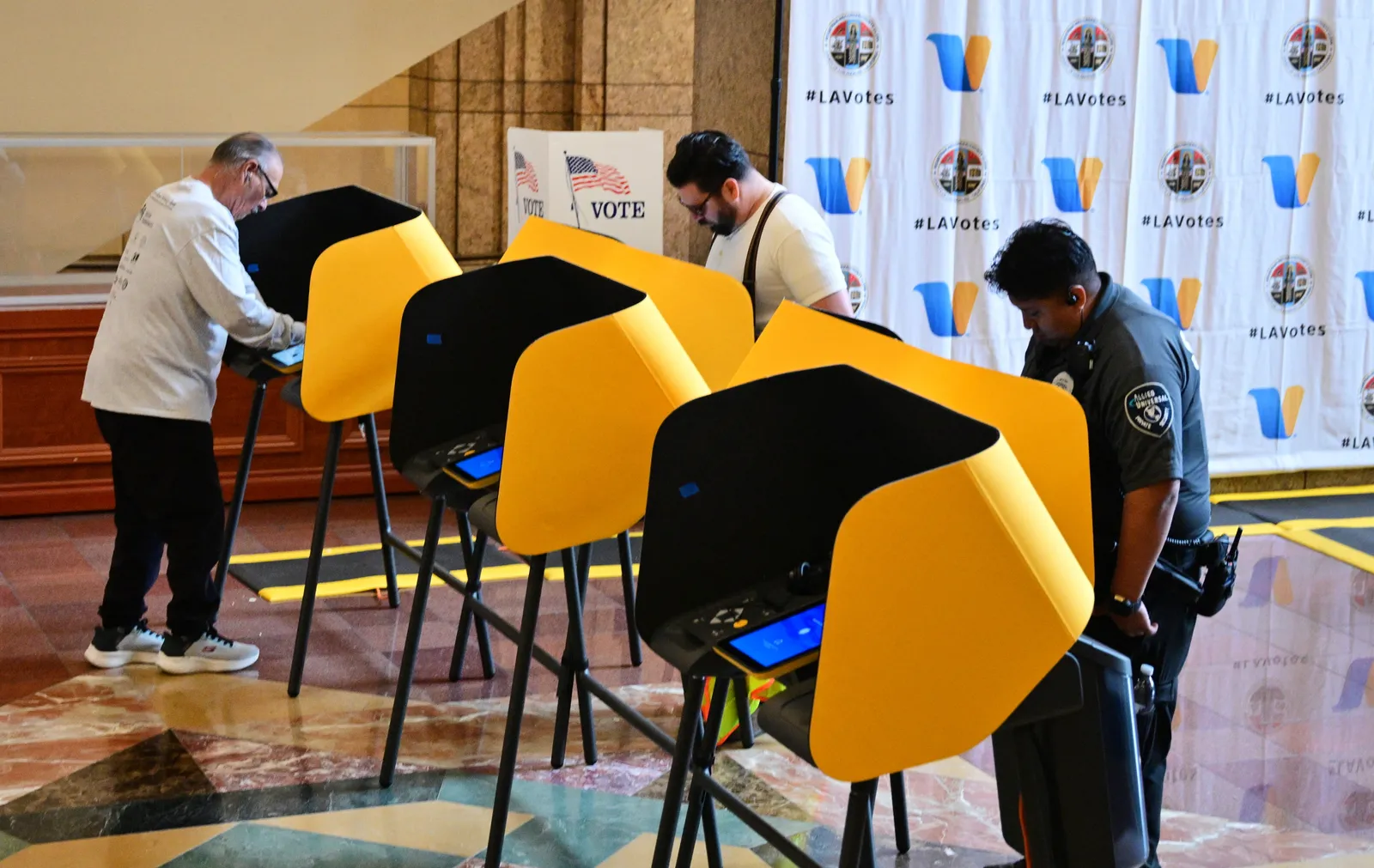
LA County: DOJ's 20,000 'noncitizen' voter list is 'unreliable,' includes U.S.-born
Preliminary review by Los Angeles County election officials finds errors in the federal list, raising the stakes for voter roll integrity ahead of November.
Trump's $1.5B Pentagon chip investment lands in North Carolina
A $1.5 billion defense infusion for North Carolina chipmaking signals a new era of Pentagon-backed reshoring - here's what it means for the industry.

Nigeria confirms first Ebola case in Abuja, a woman just off a Uganda flight
Health Minister Muhammad Ali Pate says the patient flew in from Uganda, putting Africa's latest outbreak on Nigeria's doorstep.