
Ben Folds tells Congress Trump politicized the Kennedy Center, making it “propaganda”
The former artistic advisor says the federal arts institution was turned into a “hyper-politicized environment.” Here’s what that changes.
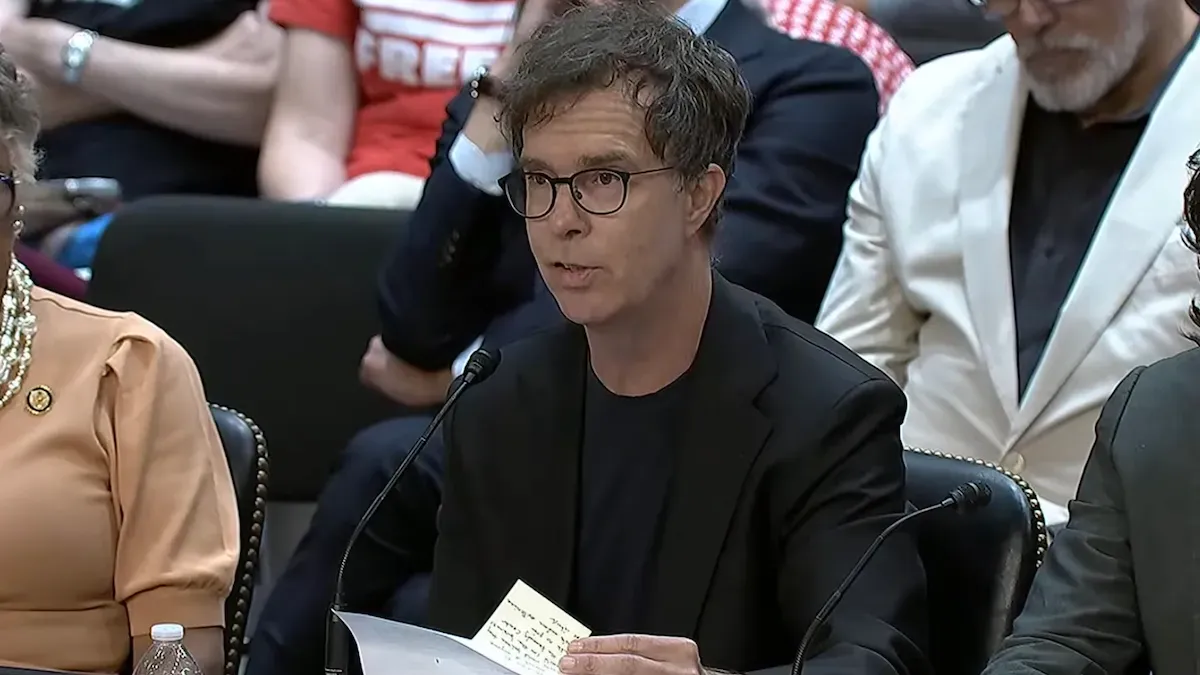
Ben Folds testified before a bicameral congressional forum on July 21 about President Donald Trump’s takeover of the Kennedy Center. He argued the move undermined the federal arts institution and transformed it into a “hyper-politicized environment,” creating a propaganda risk.
Ben Folds took his concerns about the Kennedy Center to Capitol Hill on Tuesday, July 21, testifying before a bicameral congressional forum that President Donald Trump’s takeover of the Kennedy Center in Washington, D.C. undermined the federal arts institution. In his testimony, Folds described the result as a “hyper-politicized environment.”
The key line, the one that landed because it is blunt, came with his warning about what happens when politics absorbs culture: “When You Politicize Art, You’ve Got Propaganda.” That is the central claim of the hearing. And it matters for decision-makers because it is not just about vibes. It is about how a federally connected cultural institution signals independence, governs programming priorities, and manages reputational risk when political actors gain control.
To understand the stakes, zoom out to what the Kennedy Center is supposed to be. It is a federal arts institution in Washington, D.C., and it sits at the crossroads of public accountability and cultural authority. Folds, who was appointed in 2017 as the first artistic advisor to the National Symphony Orchestra, is speaking from inside that ecosystem, where artistic boards, institutional leadership, and government-adjacent oversight all have to coexist. When an administration “takes over” an institution like this, it typically triggers a new set of incentives for staffing, program selection, and messaging discipline. Even if the institution keeps producing performances, the governance posture can shift.
Folds’ specific framing was that Trump’s actions turned the Kennedy Center into an environment where politics is not merely present, it is dominant. Calling something “hyper-politicized” suggests more than disagreement. It implies that the institution’s operating center of gravity changes. For leaders and boards, that is a problem because it can convert cultural strategy into political strategy, even unintentionally. The question stops being “what does the audience need” and becomes “what will play well in the current political moment.”
This is also why the congressional setting is consequential. A bicameral forum signals that lawmakers are taking the issue seriously enough to put it on the record across chambers, not just as a press-cycle grievance. Hearings are where narratives get pressure-tested through testimony, and where institutional legitimacy is argued in formal language. That means the Kennedy Center’s leadership and oversight teams, as well as stakeholders tied to federal arts programs, face reputational scrutiny that can ripple beyond the walls of Washington. In a world where donors, artists, and audiences increasingly care about autonomy and mission integrity, politics can become a measurable risk factor.
There is another second-order implication here, one that boards and executives in adjacent sectors will recognize immediately: once you politicize an institution, you often change how other institutions behave. Artists and cultural organizations watch what happens to peers, and employees watch what leadership rewards. If programming decisions are perceived as aligned to political preferences rather than artistic merit, it can alter participation incentives for talent. It can also affect how external partners assess reputational exposure when they collaborate.
For executives who sit on boards, the lesson is not “politics is bad” in the abstract. The lesson is operational. When your institution is publicly visible and federally connected, governance language matters. It shapes how stakeholders interpret control, independence, and mission drift. Folds’ testimony argues that the Kennedy Center’s mission was undermined through a transformation into a “hyper-politicized environment,” and he ties that directly to propaganda risk through his quote about politicized art.
So the strategic stakes are straightforward: if lawmakers and the public accept that a federal cultural institution is being driven by political ends, then the institution’s long-term credibility takes a hit. That credibility is the currency that helps attract talent, sustain public trust, and justify the institutional role in the national cultural ecosystem. And for anyone leading organizations with public mandates, this hearing is a warning shot: governance decisions that change cultural autonomy can turn an institution into a battleground, and once that happens, it is hard to rebuild legitimacy without a clear return to mission-first decision-making.
This story's Key Insights and Take-aways are locked.
Create a free account to unlock Executive Actions for one credit.
Register to UnlockAlways free for Executives Club members. Join the Club
More in Politics

LA County: DOJ's 20,000 'noncitizen' voter list is 'unreliable,' includes U.S.-born
Preliminary review by Los Angeles County election officials finds errors in the federal list, raising the stakes for voter roll integrity ahead of November.

Trump's $1.5B Pentagon chip investment lands in North Carolina
A $1.5 billion defense infusion for North Carolina chipmaking signals a new era of Pentagon-backed reshoring - here's what it means for the industry.

Nigeria confirms first Ebola case in Abuja, a woman just off a Uganda flight
Health Minister Muhammad Ali Pate says the patient flew in from Uganda, putting Africa's latest outbreak on Nigeria's doorstep.