
Bev Craig elected mayor of Greater Manchester, beating Reform’s Sian Astley by nearly 2x
Labour’s Bev Craig replaces Andy Burnham, winning close to double the votes Reform’s Sian Astley received.
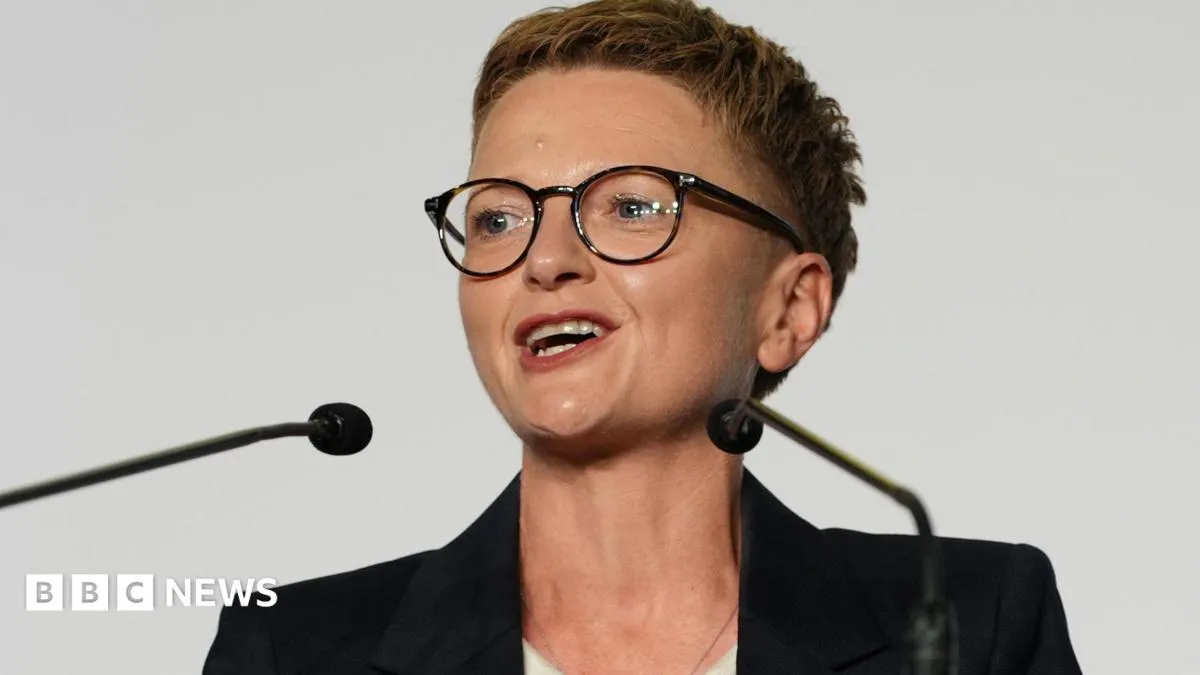
Labour’s Bev Craig has been elected mayor of Greater Manchester, replacing Andy Burnham. She secured nearly double the number of votes won by Reform UK candidate Sian Astley.
Bev Craig is now the mayor of Greater Manchester, elected for the role that Andy Burnham previously held. The BBC reports that Craig secured nearly double the number of votes won by Reform UK’s Sian Astley. In an election where turnout and margins often get treated like trivia, that “nearly double” figure matters because it signals not just who won, but how voters clustered around Labour versus a smaller, emerging party trying to break through.
For decision-makers tracking the political weather around UK cities, this is a clean read: Labour’s candidate, Bev Craig, doesn’t just edge past a rival. She outpaces Reform UK’s Sian Astley by close to two times the vote share the BBC highlights. That gap can translate into practical momentum, because mayors control budgets and shape priorities for transport, housing, skills, and other local levers that businesses watch closely.
To understand why executives should care, start with how UK metro-mayoral systems work in general terms. A mayor is not a symbolic office. The role is designed to concentrate authority at the local level, so the person in charge becomes the coordinating point for funding bids, policy delivery, and the long-run planning that affects everything from commuting patterns to procurement and local economic development. When the mayor changes, strategy can shift, timelines can be reprioritized, and negotiations with councils, transport bodies, and national departments can reset.
This transition also carries an “administration effect.” Andy Burnham’s tenure is being replaced, which usually means incoming leadership will revisit what it inherits, even when it keeps major initiatives. The BBC’s framing is straightforward on the result, but the second-order implication for leaders in the region is that the relationship web around the mayor will refresh. That can include how quickly decisions move, which partners get more access, and which programs get protected when budgets get squeezed. Even if the policy themes remain broadly similar, the day-to-day cadence changes when a new mayor comes in.
The vote comparison to Reform UK’s Sian Astley adds another layer. Reform is competing for attention and votes by challenging how mainstream parties run things. If one major party candidate captures nearly double the votes of a rising challenger, it can indicate that reform-minded voters are still partly consolidating around a protest-to-alternative pathway rather than fully displacing the incumbent coalition at this moment. For boards, investors, and operators with regional footprints, the practical question becomes: does the incoming leadership need to move quickly to address voter dissatisfaction, or can it focus on execution because the winning coalition holds?
There is also a risk-management angle. Political transitions can briefly increase uncertainty, especially for contracts tied to local authority priorities. Companies that depend on public sector procurement, infrastructure delivery, or regulatory coordination often have to think in horizons: what changes in the first 100 days, what stays stable, and what gets renegotiated when staffing and committee structures settle. With Craig’s win, the most likely baseline is continuity through a Labour governing framework, but the margin highlighted by the BBC suggests the new mayor also has a mandate to accelerate whatever her team believes will deliver results.
Finally, zoom out to why this story lands on an executive briefing page. Greater Manchester is a high-importance region for policy implementation and economic activity. A mayoral election there is not a side quest. It sets the priorities that shape where money goes and which projects move from planning to delivery. Bev Craig’s election, replacing Andy Burnham, and her nearly two-to-one vote advantage over Reform UK’s Sian Astley, is the kind of outcome that can influence confidence across stakeholders who need predictable government direction. Executives should treat the winner’s first months as a strategy checkpoint: align on procurement calendars, refresh government relationships, and stress test how local priorities will flow through to operations.
This story's Key Insights and Take-aways are locked.
Create a free account to unlock Executive Actions for one credit.
Register to UnlockAlways free for Executives Club members. Join the Club
More in Politics

Cyberattacks on U.S. water widen: Michigan and Minnesota now part of at least 7-state Iran-linked scope
Water systems across multiple states are being targeted, and evidence points to Iran. Here is what leaders should do with that reality.

Justice Dept. subpoenas Times freelancer to trace leaks tied to failed SEAL Team 6 mission
A newly disclosed subpoena shows the government is widening leak investigations. Editors and executives should treat source-protection as risk management.

Trump threatens to extend Todd Blanche and reanimate the $1.776B anti-weaponization fund
The fight over Blanche's full-time confirmation is now tied directly to a controversial $1.776 billion Justice Department fund.