

Trump threatens to extend Todd Blanche and reanimate the $1.776B anti-weaponization fund
The fight over Blanche's full-time confirmation is now tied directly to a controversial $1.776 billion Justice Department fund.
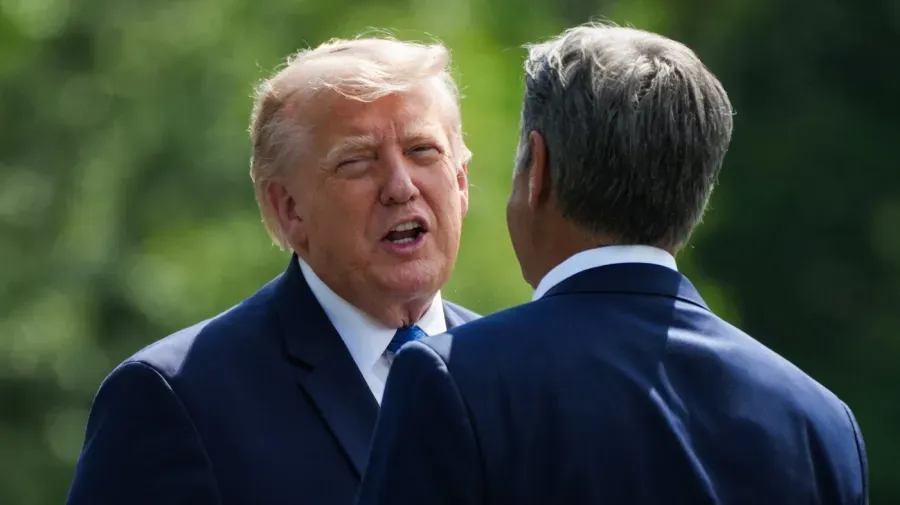
President Trump renewed pressure on Senate Republicans over the delayed confirmation of Acting Attorney General Todd Blanche to become Attorney General full-time. He warned he could keep Blanche in the interim and revive the $1.776 billion 'anti-weaponization' fund, targeting Sen. John Cornyn and Sen. Thom Tillis in the process.
President Trump renewed his criticism on Saturday of the delayed confirmation for Acting Attorney General Todd Blanche to serve in the role full-time. In the same move, Trump also warned he could keep Blanche in the interim spot and revive a controversial $1.776 billion “anti-weaponization” fund. And he did not keep the pressure anonymous, calling out Senate Republicans John Cornyn and Thom Tillis as part of the bottleneck.
For decision-makers tracking the Justice Department confirmation pipeline, this is not just a political temperature check. When Trump ties an internal staffing choice, Blanche’s status, to a specific funding mechanism worth $1.776 billion, it signals the administration is willing to use institutional leverage and budgetary messaging as both persuasion and fallback. The question for anyone watching DOJ oversight, Senate processes, or executive branch execution is straightforward: if the Senate continues to delay, will the administration revert to interim management while simultaneously reactivating an initiative that has already become a flashpoint.
To understand why this matters beyond Washington noise, it helps to know what “confirmation delay” usually does in federal governance. Acting roles can function, but interim status changes how investors, litigants, and regulated entities read the Department’s posture. It can also tighten timelines for policy implementation. When a high-stakes leadership slot remains in limbo, other internal decisions often become more cautious, because long-term directives might be questioned later, or reversed after a permanent nominee is confirmed.
Then there is the money. Trump’s threat to revive the $1.776 billion “anti-weaponization” fund elevates this from a nomination dispute to a resource dispute. Funds are not abstract. They shape enforcement capacity, staffing priorities, and the structure of internal programs. In the Justice Department context, money and policy design can influence how cases are selected, how investigations are supported, and how guidance is issued across components. Even without the technical details in this excerpt, the core point stands: reviving a fund of that scale implies a deliberate choice to formalize an enforcement and messaging strategy.
Trump’s critique also lands on particular Senate GOP lawmakers, Cornyn of Texas and Tillis of North Carolina. That naming matters because it turns a broad Senate delay into a targeted accountability story. For Republicans in leadership roles, the dynamic is tricky. Delay can be a tool to negotiate, limit risks, or extract concessions. But public pressure from the president can create reputational costs, especially if the administration frames the delay as obstruction or as a failure to advance a selected candidate.
So what is the second-order effect for boards, executives, and compliance leaders? Start with the regulatory horizon. DOJ posture influences the environment in which companies manage risk, respond to inquiries, and plan for potential enforcement. If resources and priorities shift through a revived fund, that can alter how businesses expect scrutiny to land. That does not automatically mean enforcement ramps up, but it does mean the signaling channel gets louder. In parallel, if Blanche remains in the interim role rather than becoming full-time, the market may treat DOJ actions as more contingent on political timelines, and that can affect how quickly companies decide to move on legal strategy.
For other offices and regulated actors, the “anti-weaponization” framing is also an important variable. The phrase itself is designed to suggest that certain forms of politicization are to be resisted. Whether stakeholders agree with that framing is separate from a key practical point: the label can influence how DOJ justifies its actions internally and how it communicates with the outside world. When presidential pressure and a dedicated funding mechanism reinforce the narrative, it can change how both supporters and opponents interpret DOJ moves.
Finally, there is the procedural leverage question. Trump’s vow to revive the fund if confirmation remains delayed is a lever aimed at the Senate GOP, but it also creates a clock for the administration’s opponents and allies. If Cornyn and Tillis decide not to accelerate the confirmation path, the administration gains a fallback that keeps momentum and resources active through an interim structure. That is why this story is worth more than a day of headlines. It is a preview of how future confirmation fights could be paired with budgetary and operational consequences, and how quickly political disputes can turn into governance choices with real-world ripple effects.
In the end, the stake is simple: Blanche’s status, Senate credibility, and DOJ resource priorities are now entangled in public. For anyone whose business depends on predictable regulatory enforcement or whose organization operates at the intersection of federal law and executive branch action, that entanglement is a risk and a forecasting challenge. Watch the confirmation timeline, but also watch the funding signal, because Trump has made it clear he sees both as part of the same fight.
This story's Key Insights and Take-aways are locked.
Create a free account to unlock Executive Actions for one credit.
Register to UnlockAlways free for Executives Club members. Join the Club
More in Politics

LA County: DOJ's 20,000 'noncitizen' voter list is 'unreliable,' includes U.S.-born
Preliminary review by Los Angeles County election officials finds errors in the federal list, raising the stakes for voter roll integrity ahead of November.

Trump's $1.5B Pentagon chip investment lands in North Carolina
A $1.5 billion defense infusion for North Carolina chipmaking signals a new era of Pentagon-backed reshoring - here's what it means for the industry.

Nigeria confirms first Ebola case in Abuja, a woman just off a Uganda flight
Health Minister Muhammad Ali Pate says the patient flew in from Uganda, putting Africa's latest outbreak on Nigeria's doorstep.