
British soldiers reveal why ground drones fail in combat
At a Mojave Desert exercise, troops tested air and ground drones, finding cost and power limits that shape future military tech.
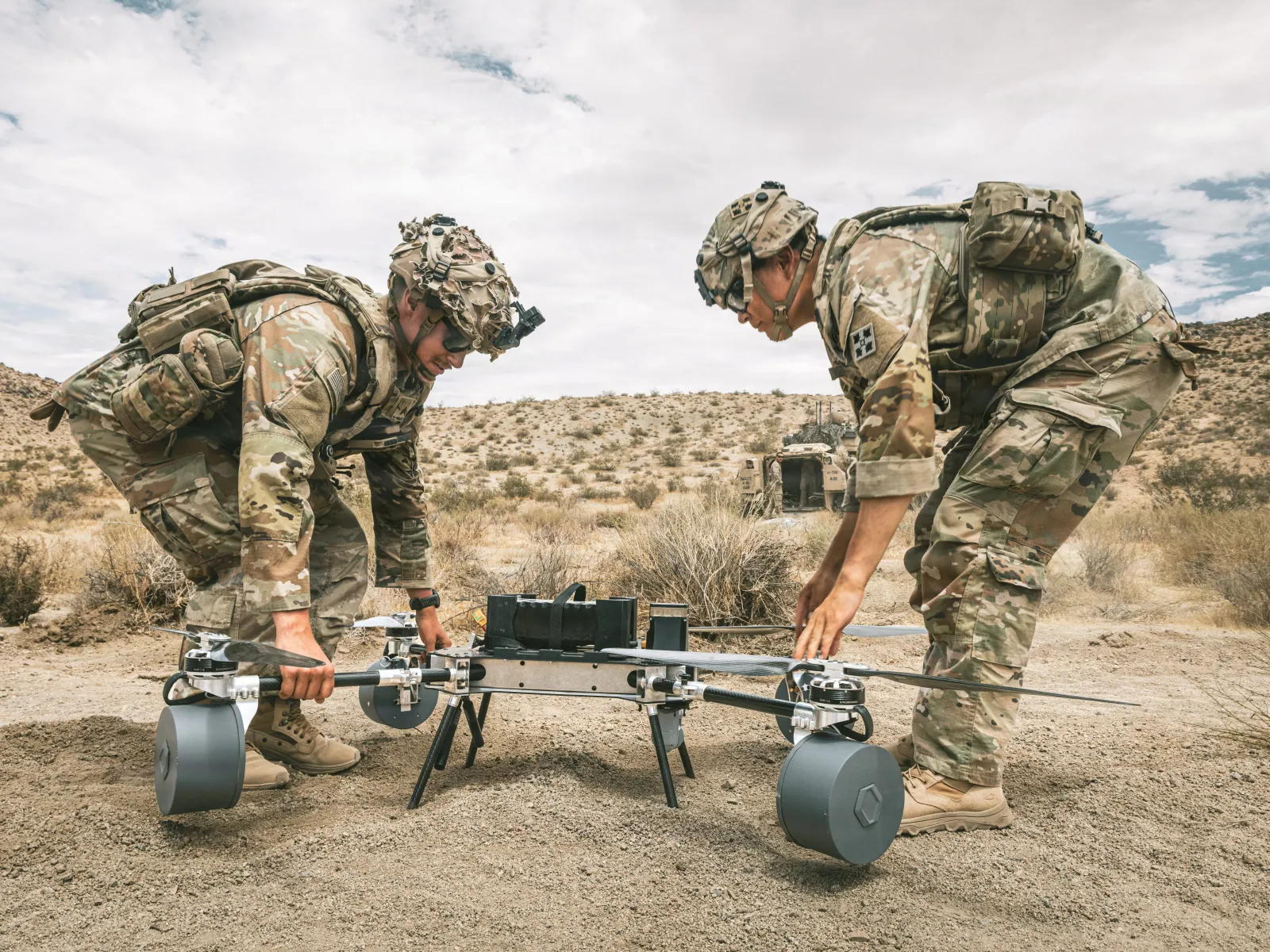
British soldiers at a US-led exercise in Fort Irwin, California, tested drones and found ground robots too costly and aerial drones limited by power and range. These trade-offs will influence how Western militaries deploy uncrewed systems in future conflicts.
British soldiers are on the front lines of a drone revolution, but their latest field tests reveal a sobering truth: the machines that dominate modern battlefields still have critical weaknesses. At a recent US-led exercise in the Mojave Desert, thousands of troops gathered at Fort Irwin, California, to put uncrewed systems through their paces. The British Army's experimentation unit, the 2nd Battalion, The Yorkshire Regiment, and its successor, the 1st Battalion Irish Guards, were on hand to test which drones work best for specific missions. What they found is a tale of trade-offs: ground drones are often too expensive to lose, while aerial drones struggle with power, loitering time, and range. Capt. Wick Willett, a mortar platoon commander with the 1st Battalion Irish Guards, told Business Insider that "there are challenges with both air and ground vehicles," but the trials are helping troops figure out how to work through them. "These robust trials that we're going through now" are key, he said, to understanding what works and what doesn't in real-world conditions, from extreme heat to rugged terrain and electronic warfare interference. The stakes are high: with Ukraine and Russia burning through thousands of drones monthly, Western militaries are racing to field systems that are both effective and expendable. But the British soldiers' feedback suggests that the current generation of drones may not be ready for the scale of conflict that modern warfare demands. The core problem, as Willett and others see it, is cost. Uncrewed ground vehicles (UGVs) are often too high-end to be used tactically, where they might be lost or destroyed. "In order to be consumable, they need to be at a certain price point per unit," Willett said, meaning troops need to be able to use, lose, or break them without worrying about the financial hit. Lt. Col. John Black, commander of the 2nd Battalion of the Yorkshire Regiment, echoed this after testing dozens of UGVs: the systems are frequently too expensive to be used in large volumes and be expended. This is a fundamental shift from how militaries traditionally think about equipment. In the past, a tank or a howitzer was a precious asset to be preserved. But drones, especially in the Ukraine conflict, have become more like ammunition - something to be fired and replaced. One US Army commander said earlier this year that a brigade needs between 1,000 and 1,500 drones a week in sustained combat. "We need drones at scale. We need to treat them like ammunition," he said. That mindset clashes with the current cost structure of many ground robots, which are built to survive, not to be sacrificed. Aerial drones, on the other hand, face a different set of challenges. Willett noted that range, battery power, and loitering time are all limiting factors. "You need to have enough systems that you could, for example, if you want to observe a particular area, you need to have enough systems in your magazine to be able to put one up and then, before that one runs out of charge, there's another one up to take over the role," he explained. This is a logistical nightmare: maintaining a constant aerial watch requires a steady supply of drones, each with limited flight time. In the heat of the Mojave, batteries drain faster, and electronic warfare can disrupt connectivity, making it even harder to keep eyes in the sky. The British Army's approach to testing is methodical. Trials are designed to take a drone, "put it through its paces, and test it to see if it does what the Army wants it to do" before it's acquired, Black said. This includes safety and integration tests. Experiments, by contrast, focus on applying a system to specific use cases, such as using ground robots to make front-line logistics easier or safer, or aerial drones for reconnaissance. The soldiers at Fort Irwin were doing both, learning not just whether a drone works, but how it fits into the broader mission. The lessons from this exercise have implications far beyond the British Army. Western militaries are watching the drone war in Ukraine closely, where both sides have used thousands of uncrewed systems for reconnaissance, artillery spotting, and strikes. The need for expendable, mass-produced drones is clear, but the technology is still catching up. Ground robots that can navigate rough terrain and carry supplies are valuable, but only if they are cheap enough to lose. Aerial drones that can loiter for hours are useful, but only if they have the power and range to do so. The British soldiers' feedback is a reminder that the drone revolution is not just about new technology - it's about rethinking how militaries buy, deploy, and expend equipment. For defense contractors, this is a signal: the winners in the drone market will be those who can deliver systems that are both capable and cheap enough to be treated as disposable. For military leaders, it's a call to invest in logistics and training that can support drone swarms, not just individual platforms. As Willett put it, the trials are helping troops understand the strengths and weaknesses of each system, so they can make informed decisions on the battlefield. The next generation of drones will need to be more rugged, more efficient, and, above all, more expendable. The soldiers at Fort Irwin are showing the way.
This story's Key Insights and Take-aways are locked.
Create a free account to unlock Executive Actions for one credit.
Register to UnlockAlways free for Executives Club members. Join the Club
More in Business

Tim Cook steps down as Apple CEO, stays on as chair with $45M equity
The 'Trump whisperer' keeps his White House and Beijing access as Apple navigates tariffs and a $4.6 trillion market cap.

Snowflake shares surge as AI data demand crushes estimates, lifting full-year forecast
Stocks jumped on stronger-than-expected guidance, signaling enterprise AI workloads are accelerating faster than Wall Street priced in.

Tim Cook's 15-year Apple CEO run ends: 3 lessons for any successor
After 15 years, Tim Cook hands Apple to John Ternus - here's how he turned a $350B company into a $4.6T juggernaut.