

China’s economic decay meets America’s strategic opening
What looks like downturn at home becomes leverage abroad, reshaping how decision-makers plan for China risk and opportunity.
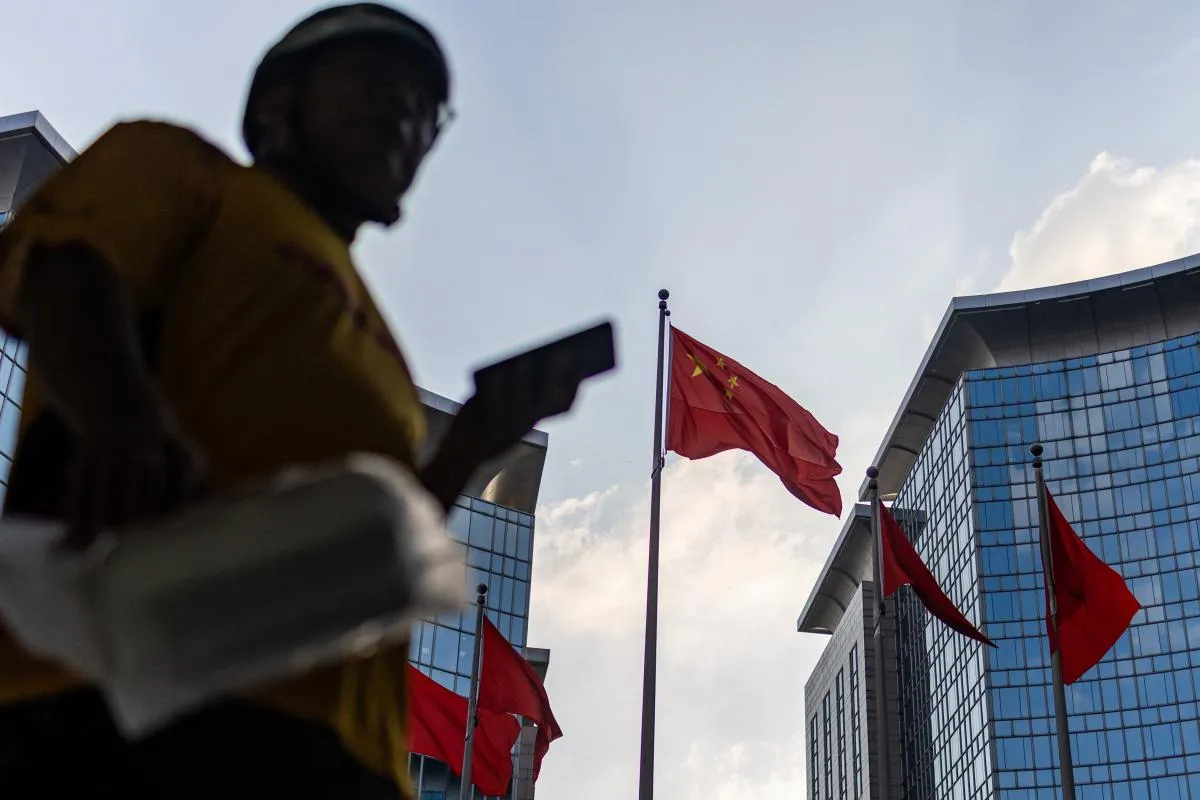
Foreign Affairs frames a two-part shift: China’s economic decay and America’s strategic opening. For decision-makers, the consequence is a sharper menu of leverage, constraints, and timing as both sides realign their economic and security priorities.
Foreign Affairs’ “China’s Moment of Weakness” is built on a simple, high-stakes thesis: China’s economy is weakening, and the United States is using that moment as a strategic opening. Put together, the result is not just “things are bad.” It is “things are weakening in a way that changes bargaining power.”
In other words, the story’s core juxtaposition is the headline. Economic decay is happening inside China, and America is simultaneously positioning itself to take advantage. That combination matters to decision-makers because it changes how incentives work. When growth slows and internal strain rises, governments and companies usually protect stability first. That tends to tighten policy, shift resources, and make cross-border moves more conditional. At the same time, when the other side sees a window, it can push harder on trade-offs, enforcement, and alignment.
To understand why this moment feels consequential, zoom out to how economic decay typically plays out in global markets. Slower growth can reduce the appetite for risk, cap expansion plans, and raise the cost of capital. Even when leaders want to “do more,” the financing reality can become a constraint. For global executives watching China exposure, this matters because your counterparties are not making decisions in a vacuum. They are managing domestic stability pressures that can spill outward into procurement decisions, regulatory posture, and timelines for investment.
The other half of the equation in the Foreign Affairs framing is America’s strategic opening. Strategic opening is a phrase that basically means: timing plus leverage. It is not only about policy being tougher or softer in the abstract. It is about whether the United States can align partners, tighten certain channels, and create a more durable architecture for security and economic coordination while China is distracted or constrained by internal weakness.
That is where regulatory background becomes part of the story, even if this specific source excerpt is brief. In recent years, regulators in the US and elsewhere have treated supply chains and critical technologies as instruments of national power, not merely commercial policy. When a country’s economy is under pressure, regulators tend to gain more attention and more political cover for measures that were previously harder to justify. For boards and investors, the second-order impact is straightforward: compliance and risk planning become board-level issues, not just legal department checkboxes.
Capital position and market expectations also tend to react differently during downturns. Investors price not just current cash flows, but the probability of policy shifts and external constraints. If China’s economic decay is the underlying condition, then America’s strategic opening is the external variable that can amplify or redirect outcomes. That can show up as higher volatility in sectors tied to industrial output, trade volumes, and technology supply chains. It can also show up in how multinational companies structure contracts, diversify manufacturing, and rethink longer-term R and D commitments.
There is also a governance dimension. Economic weakness often raises the stakes inside state-linked decision-making. When stability is the priority, policy can become more direct, and the trade-offs become sharper. That can affect everything from industrial targeting to how quickly regulators grant approvals or how consistently rules are interpreted. From an executive standpoint, that uncertainty is its own risk. Even if a company is profitable today, the board has to worry about the next policy cycle, the next enforcement wave, and how those changes might affect existing supply commitments and customer relationships.
Finally, what makes “China’s Moment of Weakness” more than a macroeconomic observation is the implication for strategic competition. If the US has an opening, it can try to lock in advantages while China’s capacity to respond is constrained. For peers in similar roles, the takeaway is not panic. It is timing. Boards and CFOs need to map where weakness could translate into policy behavior, and where a strategic opening could translate into tougher cross-border rules. The moment can shift quickly, and decisions made during the window tend to have long tails. The real risk for executives is reacting too slowly to the interaction between domestic decay and external leverage, and the real opportunity is preparing early enough to be agile when the bargaining environment changes.
This story's Key Insights and Take-aways are locked.
Create a free account to unlock Executive Actions for one credit.
Register to UnlockAlways free for Executives Club members. Join the Club
More in Politics

LA County: DOJ's 20,000 'noncitizen' voter list is 'unreliable,' includes U.S.-born
Preliminary review by Los Angeles County election officials finds errors in the federal list, raising the stakes for voter roll integrity ahead of November.

Trump's $1.5B Pentagon chip investment lands in North Carolina
A $1.5 billion defense infusion for North Carolina chipmaking signals a new era of Pentagon-backed reshoring - here's what it means for the industry.

Nigeria confirms first Ebola case in Abuja, a woman just off a Uganda flight
Health Minister Muhammad Ali Pate says the patient flew in from Uganda, putting Africa's latest outbreak on Nigeria's doorstep.