
Cristiano Amon bets smart glasses can rival smartphones, backing AI agents and new devices
Qualcomm’s CEO lays out why smart glasses matter, and how AI-powered hardware could rewrite the app model over time.

Qualcomm CEO Cristiano Amon says he is bullish on smart glasses and believes they could eventually become as big as smartphones. His stance reflects Qualcomm’s broader push to build AI-powered devices, with AI agents positioned as the next interface layer.
Qualcomm CEO Cristiano Amon is publicly leaning into a future where smart glasses are not a novelty category but a mainstream device, potentially as big as smartphones. In the CNBC report, Amon ties that conviction directly to the direction of AI-enabled computing and the way people may interact with technology going forward. The headline claim sounds bold because it is. Smart glasses are still, for most people, a “maybe someday” purchase. Amon is essentially arguing they should be treated like a platform shift, not a gadget.
Amon’s argument matters because Qualcomm is not a consumer brand. It is the chip company whose business model depends on what device makers decide to build, how fast they adopt new capabilities, and which compute stack gets standardized. If smart glasses truly scale, it changes the spending priorities across the mobile supply chain. It also changes the kind of AI workload device makers will want to run, because glasses are a different form factor than phones. They create a new set of constraints and opportunities for on-device AI, sensors, power consumption, and always-on experiences.
So what does this have to do with “AI agents replacing apps”? The core idea is that the user interface may shift away from opening and navigating apps, toward delegating tasks to AI systems that can act. Even if you do not take the “apps get replaced” line literally in the short term, the logic is clear: AI agents need a computing environment that can perceive context, understand intent, and then execute actions. Devices like glasses are naturally positioned as an always-present interface, which could make them a compelling target for AI agent experiences. The CNBC piece frames Amon’s smart-glasses optimism as part of that broader direction, where AI is not just something you chat with, but something that helps you operate your day.
This is where market structure kicks in. Smartphones have been the dominant consumer interface for more than a decade, and the entire software ecosystem, advertising model, and developer economy has been built around app discovery and app sessions. A shift toward AI agents does not only affect software. It affects hardware roadmaps, silicon requirements, and the integration work device manufacturers need. Qualcomm sits right in the middle of those tradeoffs. Its chips power a lot of the mobile world, and its partners depend on Qualcomm to deliver the performance and efficiency needed for AI features that users actually notice.
There is also a strategic timeline problem hidden inside Amon’s optimism. Smart glasses have lived through multiple cycles of hype, then plateaued because of user adoption, comfort, content ecosystems, and unclear “killer use cases.” For smart glasses to reach smartphone-scale, several things typically have to align: a reliable hardware experience, a meaningful set of everyday scenarios, and a software or AI layer that makes the device feel smarter over time. AI agents can serve as that glue, because they can personalize the experience without requiring every use case to be a standalone app. In other words, the software layer could become less dependent on a dense app catalog, and more dependent on agent capabilities and device-level integration.
Regulatory and privacy questions will also matter, especially for a device that sits close to your field of view and potentially captures data in real time. Even without new rules being announced in this specific CNBC segment, the general regulatory backdrop for consumer tech has been tightening around data handling, transparency, and consent. For executives and boards, that means the “AI agents on glasses” bet is not only a technology story, it is a risk management story. How companies design on-device processing, data retention, and user controls can determine whether the category earns trust early or spends years fighting backlash.
The second-order implication is that platforms could re-balance. If AI agents become the primary way users get things done, then the “app ecosystem” dynamic starts looking less like a walled garden and more like an orchestration layer. That could elevate new winners: model providers, agent tooling, and device ecosystems that make agents feel responsive and accurate. Qualcomm’s role, given the CNBC report, is to be the enabling layer for those devices, including smart glasses, that can carry the compute burden where it needs to happen and where it is efficient.
For decision-makers watching this, the strategic stake is simple: if smart glasses scale, the mobile interface category is not going away, but it could be diluted. Boards and executives should treat Amon’s bullishness as a signal about where Qualcomm sees growth and platform leverage. Whether AI agents replace apps immediately or gradually, the direction of travel is the same. The next computing interface is likely to be more agent-driven, more context-aware, and more hardware-dependent. The companies that prepare for that shift, and prepare early, will be the ones that define the standards partners build on, not the ones that scramble to catch up.
This story's Key Insights and Take-aways are locked.
Create a free account to unlock Executive Actions for one credit.
Register to UnlockAlways free for Executives Club members. Join the Club
More in Technology

Nvidia's $89B data center quarter: the 9 companies cashing in
The AI buildout is minting fortunes beyond GPUs, and memory, cloud, and cooling suppliers are riding the same wave.
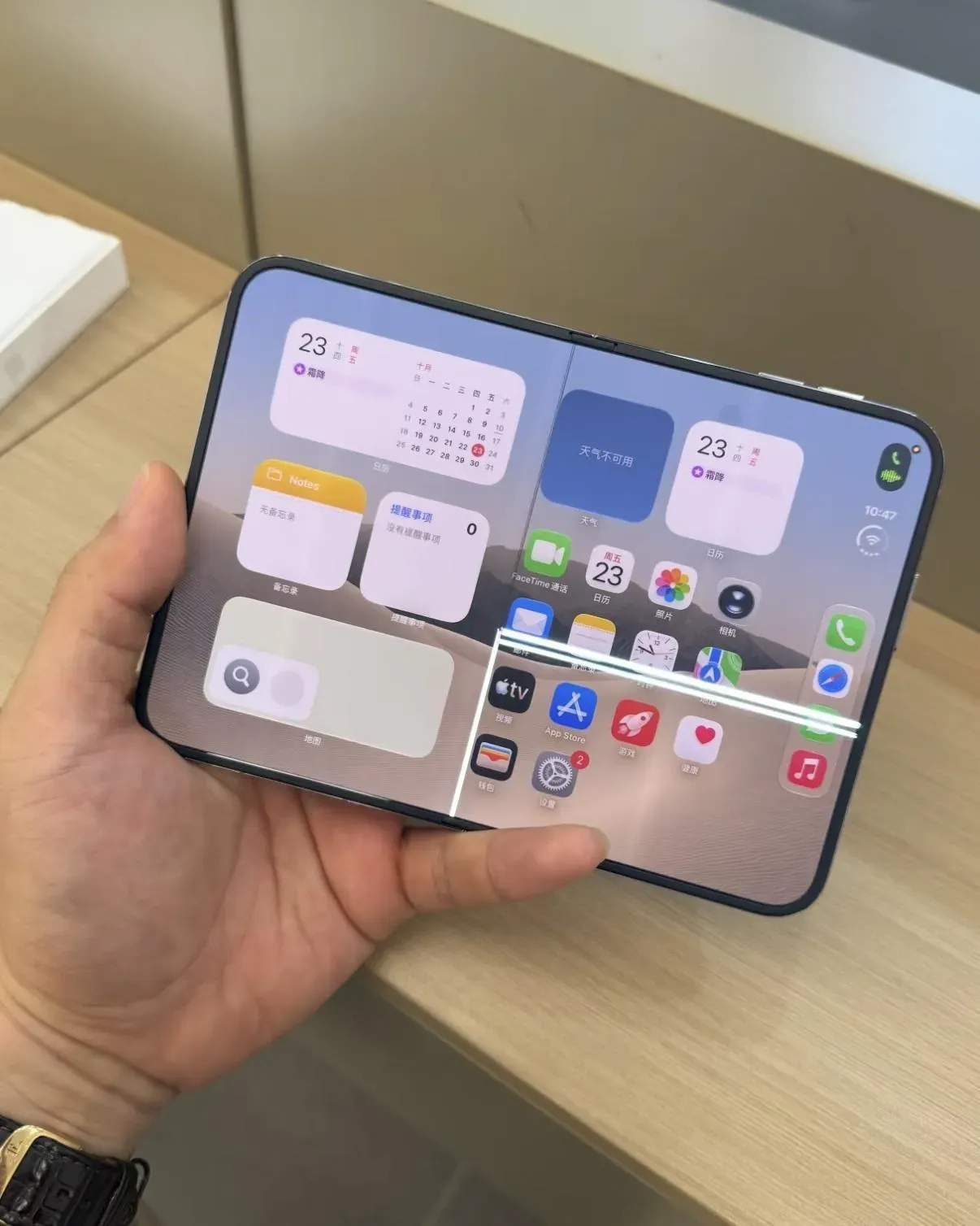
A YouTuber dissected the iPhone Duo and thinks he found crackgate's cause
CuriousHagi's teardown of Apple's foldable reveals a gear-like hinge that may explain why screens crack in the same spot within hours.

Google quietly links your phone number to every Android account on your SIM
Adding a SIM now ties your phone number to all Google accounts - and future accounts inherit it. Here's the security and privacy stakes.