
Diesel hits record $5.85 as Ukraine's drone war cripples Russian refineries
Ukraine's strikes have knocked out 40% of Russia's refining capacity, sending diesel prices to all-time highs and threatening global supply chains.
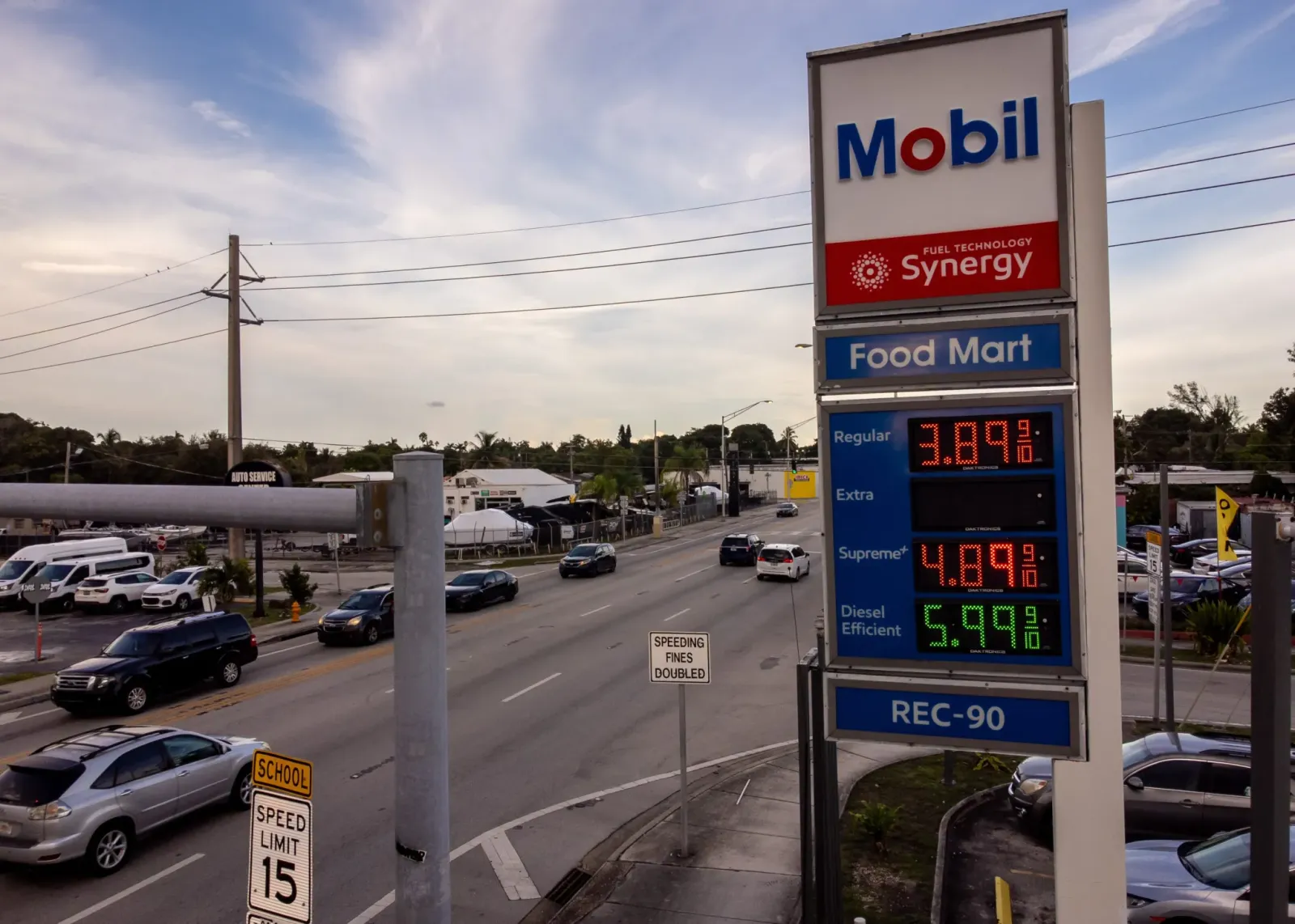
Ukraine's drone campaign has taken 40% of Russia's refining capacity offline, driving U.S. diesel prices to a record $5.85 per gallon. The resulting global diesel shortage is raising costs for trucking, farming, and every consumer good that depends on freight.
The average U.S. diesel price hit an all-time high of $5.85 per gallon on Friday, according to GasBuddy, and gasoline reached $4.14-the highest ever entering Labor Day weekend. The trigger: Ukraine's increasingly successful drone strikes have taken an estimated 40% of Russia's oil-refining infrastructure offline, a disruption that is now rippling through global fuel markets. As Gregory Brew, senior energy analyst at Eurasia Group, told Fortune, "We're seeing increasing tightness for refined products. Diesel in particular is going up across the board in lots of different markets and that is, to a great extent, downstream of what Ukraine has been doing against Russia."
The record diesel price is not a temporary blip. Russia stopped exporting diesel in July and has extended that ban through September and potentially longer, while China has voluntarily mothballed some refineries due to reduced oil imports. Combined with Russia's offline capacity, more than 10% of the world's global refining capacity is now out of action. Brew notes that Ukraine's attacks have become more effective: "What's changed is how much success they've had at hitting their targets. That suggests that Russian air defenses have been slowly whittled down. The Russians can't shoot down Ukrainian drones and missiles with the same kind of effectiveness of a year ago. The Ukrainians are having more success hitting refineries, including around Moscow."
This marks a sharp reversal from the early years of the war. When Russia invaded Ukraine in 2022, oil and fuel costs spiked on fears of a wider conflict, but prices settled as the war remained contained and the Biden administration deterred Ukraine from striking Russian energy assets. That calculus changed under President Trump, who has allowed Ukraine to dramatically increase the range and accuracy of its drone attacks. The result is a strategic shift: Ukraine may not be winning the war on the ground, but its energy war is inflicting real economic pain on Russia and creating global ripple effects.
Beyond refineries, Ukraine has targeted the Druzhba oil pipeline system that runs through Russia into Europe, fired on Russian oil platforms, tankers, and terminals in the Black Sea, and periodically disrupted Kazakhstan's oil production because it depends on the Caspian Pipeline Consortium that transits Russia. Even NATO has been drawn in-last week, alliance fighter jets destroyed a drone near Romania's natural gas projects in the Black Sea. Yet global crude oil and natural gas markets have largely adapted to these sporadic disruptions, either because they don't happen simultaneously or by leaning on strategic reserves. Refineries are different: they are large, immovable, and not easily repaired.
The diesel crunch matters far beyond the pump. Diesel is the fuel that moves the global economy-powering trucks, farm equipment, and freight ships. When diesel prices rise, the cost of food, household goods, and deliveries all climb. "Diesel is the fuel that moves the economy and, when diesel prices reach record levels, the impact extends far beyond the transportation sector," said Patrick De Haan, head of petroleum analysis at GasBuddy. "Higher diesel prices impact consumers as rising supply chain costs increase the price of groceries, household goods, deliveries, and countless other products Americans rely on every day." Unlike crude oil, there is no strategic reserve for diesel or gasoline-the U.S. has drained its Strategic Petroleum Reserve to 44-year lows, but that only holds crude, not refined fuels.
Looking ahead, the situation is likely to worsen before it improves. As summer driving season ends, many refineries enter September and October for planned maintenance, reducing output further. Some U.S. and Canadian refineries, including Canada's largest near Maine, may delay maintenance to capitalize on high prices, but others will go offline. Brew warns that Russia's response is the wildcard: "How does Russia respond? If they're seeing their domestic energy infrastructure slowly disintegrate, will that compel Putin to escalate the war to shift the balance more in his favor? I think that's a real risk." The combination of Russian export bans, Ukrainian drone success, and seasonal maintenance points to sustained diesel price pressure through the fall-and a direct hit to inflation and corporate margins across every sector that relies on freight.
This story's Key Insights and Take-aways are locked.
Create a free account to unlock Executive Actions for one credit.
Register to UnlockAlways free for Executives Club members. Join the Club
More in Business

Tim Cook steps down as Apple CEO, stays on as chair with $45M equity
The 'Trump whisperer' keeps his White House and Beijing access as Apple navigates tariffs and a $4.6 trillion market cap.

Snowflake shares surge as AI data demand crushes estimates, lifting full-year forecast
Stocks jumped on stronger-than-expected guidance, signaling enterprise AI workloads are accelerating faster than Wall Street priced in.

Tim Cook's 15-year Apple CEO run ends: 3 lessons for any successor
After 15 years, Tim Cook hands Apple to John Ternus - here's how he turned a $350B company into a $4.6T juggernaut.