
Evotrex raises $30M to build an RV hybrid power system that cuts charging dependence
The $30M round backs a hybrid power approach aimed at getting RVs beyond campsite-only charging infrastructure.
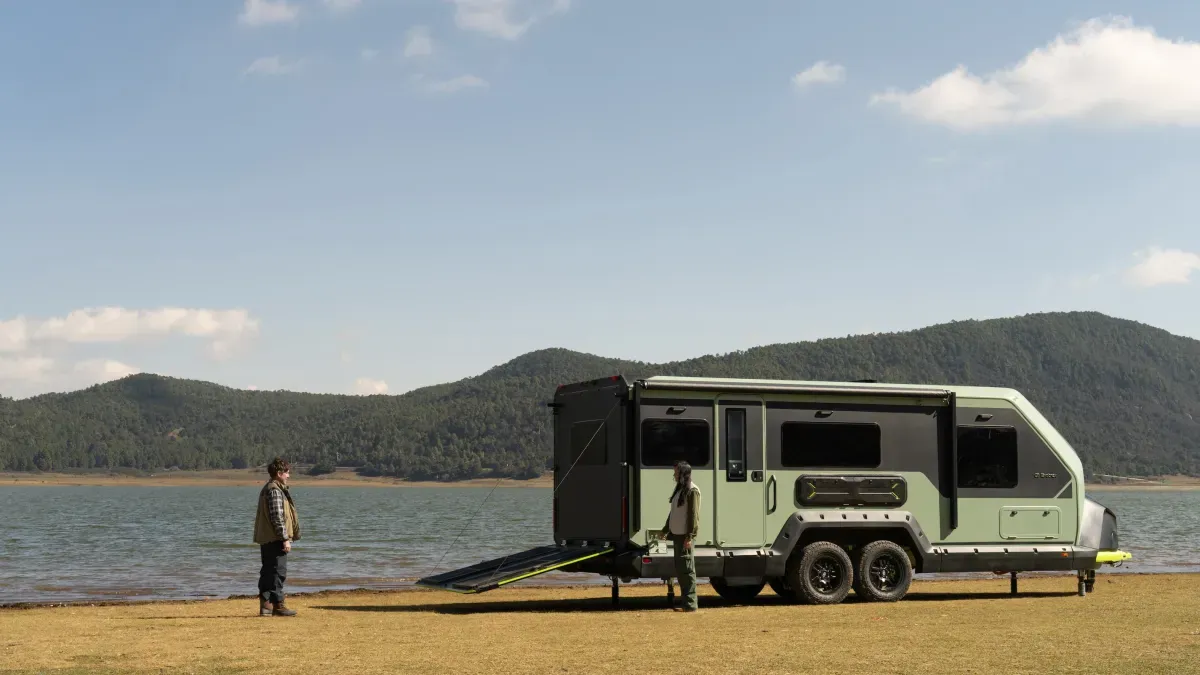
Evotrex, an RV startup, raised $30M to build an RV designed around a hybrid power system. For decision-makers, the bet signals where RV power infrastructure and capital allocation may be headed next.
Evotrex just raised $30M to build the RV “that doesn’t need a charging station.” The headline takeaway is straightforward: this startup is not trying to win by adding another campground amenity. It is betting that a hybrid power system can let RVs go farther, operate longer, and reduce reliance on fixed charging setups.
If you operate in RVs, fleets, outdoor hospitality, or the hardware stack feeding those markets, that distinction matters. Most people treat RV power as an infrastructure problem first and a product problem second. When charging or hookups become the bottleneck, your route planning, operating costs, and even your customer experience get constrained. Evotrex’s framing is that the power system can change the equation, allowing RV usage to extend beyond the places where the infrastructure already exists.
Zoom out and you get why this pitch is timely. The RV space attracts constant new entrants, but the bar for differentiation has shifted. It is not enough to claim range or convenience because competitors can also market “off-grid” capability. What tends to move the needle is whether the solution can be used in the real world without the user constantly thinking about where power is coming from. That is the core of the hybrid bet: combine power sources so the vehicle does not live and die by one narrow constraint.
Hybrid power, in plain English, means the RV can draw from more than one type of energy rather than relying on a single method. The practical implication is flexibility. In an environment where access to power varies by location, season, and even time of day, flexibility is what reduces friction. It also changes how you think about infrastructure partners. If an RV needs fewer charging stations, then charging networks, campground electrical upgrades, and installers might become less central to adoption for certain customer segments. That could shift demand from “build out the power points” toward “make the vehicle power itself better.”
There is also a regulatory and compliance angle, even if this story does not list specific filings. When hardware companies raise serious money to reimagine power systems, they are implicitly planning for a world where safety and standards matter. Vehicles that handle energy generation and storage typically must comply with transportation, electrical safety, and battery-related rules that vary by jurisdiction and use case. The hybrid approach can introduce more complexity than a single power path, but it can also align better with existing safety frameworks because it can be engineered to distribute load and manage energy more intelligently. For boards and investors, the question becomes whether that complexity is manageable within timeline and budget.
Capital allocation is another second-order issue executives should notice. A $30M raise is not the kind of funding number you pursue for a small accessory. It suggests Evotrex is building enough of a platform to compete on core vehicle capability. That means spending priorities likely include prototype development, systems integration, testing, and bringing a repeatable design to market. For peer companies, it raises the competitive temperature. If one startup can credibly sell an RV that reduces charging dependence, it pressures incumbents and adjacent entrants to either match the performance or sharpen their own differentiation around convenience, cost, or destination-based perks.
Meanwhile, the market timing is not just about consumer desire for freedom. It is also about the infrastructure reality. RV travel patterns often run ahead of charging buildout, especially in more remote or less developed areas. When consumers plan trips, they effectively ask a hidden question: “Will I find enough power where I want to go?” If the answer improves because an RV can rely less on external charging, then route confidence rises. That can translate into more spontaneous travel, longer stays, and potentially different demographics choosing RVs for more than the “known” corridors.
For decision-makers reviewing strategy, partnerships, or board-level risk, Evotrex’s $30M round is a signal to take the hybrid power narrative seriously. The RV category is crowded, but infrastructure constraints are a real forcing function. The winners in this space will likely be those that either reduce dependency on charging points or make that dependency feel effortless to the customer. Evotrex is explicitly chasing the first outcome, and the investment suggests it believes it can move the RV conversation from “where can you plug in” to “where can you go.”
This story's Key Insights and Take-aways are locked.
Create a free account to unlock Executive Actions for one credit.
Register to UnlockAlways free for Executives Club members. Join the Club
More in Technology

OpenAI says 10,000 agents cracked a 90-year math problem in 88 hours
The company's claim is audacious, but one mathematician is pushing back. Here's what it means for AI-driven discovery.

Meta still serves child sexual abuse ads on Instagram in India - BBC report
A new report following the BBC Eye investigation says the ads are still there - what it signals for every platform with a self-serve ad engine.

White House yanks 'Build the Wall' game after Tetris Company copyright warning
The administration's arcade game vanished in hours - and the takedown playbook every brand can learn from.