
Flock Safety's $8.3B empire is under siege over who owns its data
As cities drop Flock and renegotiate contracts, the surveillance unicorn's data-ownership model faces its biggest test yet.

Flock Safety CEO Garrett Langley's company, valued at $8.3 billion, faces intensifying privacy controversies over data ownership and usage. Cities are dropping or renegotiating contracts, threatening its growth trajectory and setting a precedent for the surveillance industry.
Flock Safety, the $8.3 billion surveillance startup, is facing a reckoning over who truly owns the data its cameras collect. The company, which operates in more than 5,000 communities across 49 states, has become a venture darling, but privacy experts and civil liberties groups are alleging misuse, and cities are pushing back. The core dispute: Flock says its customers - police departments, HOAs, private customers - own the data, but contracts reportedly allow Flock to retain data for its own use, including training AI models. This has led to vandalism, contract renegotiations, and even cities dropping the service.
CEO Garrett Langley, a Georgia Tech electrical engineer, founded Flock in Atlanta in 2017 after a string of break-ins in his neighborhood convinced him local police lacked the right tools. He built a network of license-plate cameras that expanded to video, gunshot detection, drones, and AI-powered search software. Homeowners associations were the earliest customers, but law enforcement contracts now dominate. The company has raised $500 million at an $8.3 billion valuation and crossed $500 million in annual recurring revenue in the first half of this year. Andreessen Horowitz led the Series D in 2021, with Tiger Global leading the Series E in February 2022 at a $3.5 billion valuation. By March 2025, a16z led a $275 million round at a $7.5 billion valuation, with participation from Greenoaks, Sands Capital, Founders Fund, Kleiner Perkins, Tiger Global, and Y Combinator.
The controversy has escalated in recent months. Privacy experts and civil liberties groups allege officers used cameras to stalk people, including exes, or that departments shared data across jurisdictions, including with ICE, potentially violating state law. Vandalism has increased: people are dousing cameras in paint, ramming them with cars, smearing substances, or chopping them down with chainsaws, documented in at least 36 states. The biggest sticking point is data ownership. Flock says its customers hold the data for a certain time, up to customer discretion. But privacy experts point to Flock's contracts, which reportedly allow the company to retain data for its own purposes. An LAPD inspector general audit quoted one agreement letting Flock "retain the right to use the foregoing for any purpose in Flock's sole discretion," and another granting rights to use anonymized footage for "training of machine learning algorithms." Two privacy attorneys interviewed by Fortune independently described the same pattern in other contracts.
The stakes extend beyond one company's contract. Privacy experts warn that once a department's data can be pooled with other agencies' data, cross-jurisdictional collaboration becomes a nationwide network that agencies like ICE could search, even beyond the initial contract's parameters. This has prompted cities to act. In March, Boston, Flagstaff, and Santa Clara dropped Flock following a viral Super Bowl ad from Amazon's Ring, which subsequently pulled its Flock integration. In July, the LAPD said it was renegotiating its agreement over data-ownership concerns. Flock last week set out new guardrails, including advocating for a seven-day data retention policy for customers, down from the default 30 days. The company maintains this will still cover "over 90% of searches," but it's a recommendation, not a rule. LAPD's contract, for example, guarantees five years.
Langley told Fortune the company is "growing our customer base at ten times the rate of customer churn" and stands by its record solving crimes and finding missing people. But the question its contracts now raise is: safer for whom? For executives in the surveillance and data-driven industries, this is a cautionary tale about the gap between stated customer ownership and contractual fine print. The backlash shows that trust is a fragile asset, and once eroded, it can trigger regulatory scrutiny, customer churn, and reputational damage that no valuation can shield. As cities renegotiate and competitors emerge, some of which are even less transparent, the industry's future may hinge on who can prove they truly put customer control first.
This story's Key Insights and Take-aways are locked.
Create a free account to unlock Executive Actions for one credit.
Register to UnlockAlways free for Executives Club members. Join the Club
More in Business

Tim Cook steps down as Apple CEO, stays on as chair with $45M equity
The 'Trump whisperer' keeps his White House and Beijing access as Apple navigates tariffs and a $4.6 trillion market cap.

Snowflake shares surge as AI data demand crushes estimates, lifting full-year forecast
Stocks jumped on stronger-than-expected guidance, signaling enterprise AI workloads are accelerating faster than Wall Street priced in.
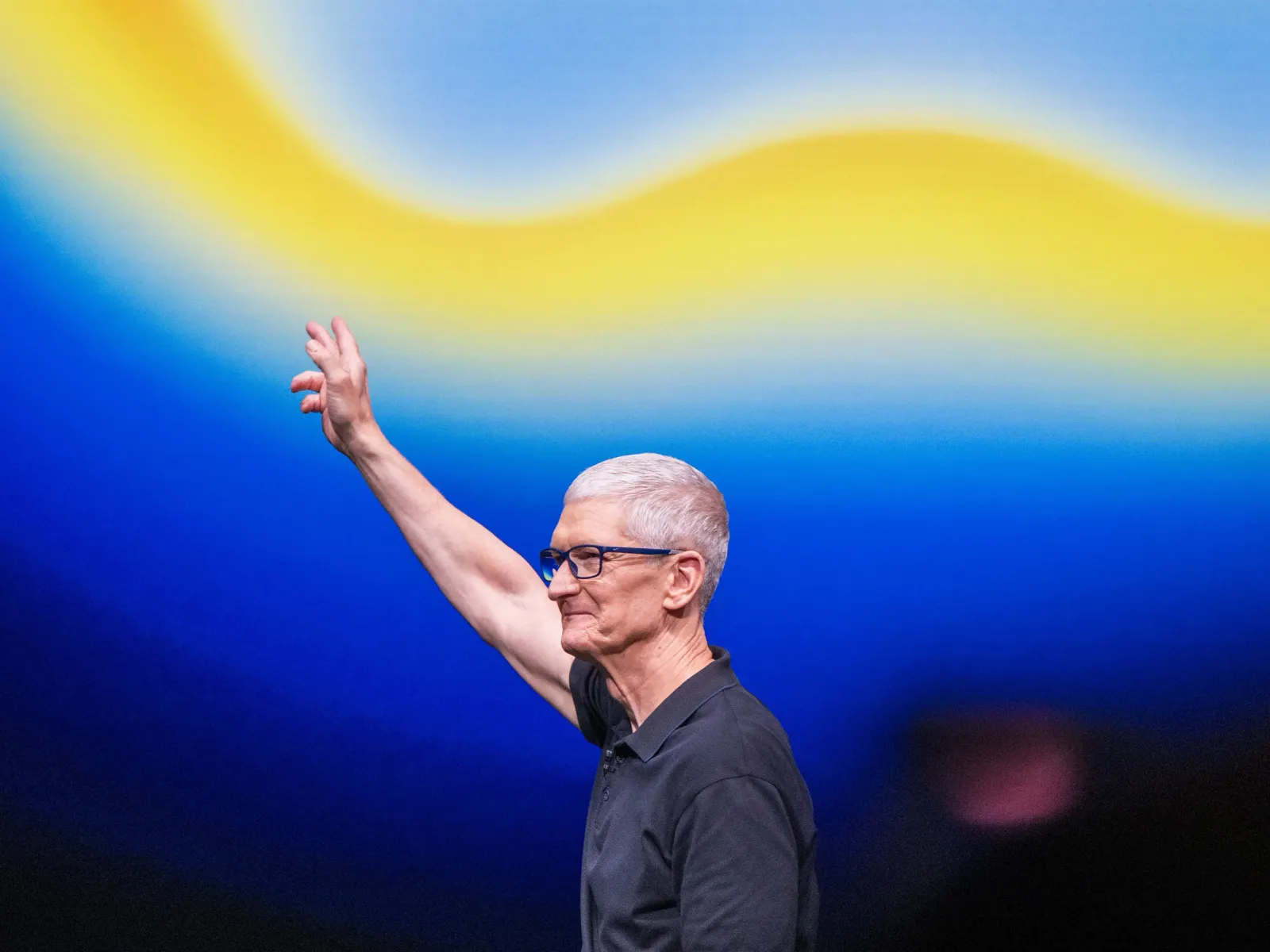
Tim Cook's 15-year Apple CEO run ends: 3 lessons for any successor
After 15 years, Tim Cook hands Apple to John Ternus - here's how he turned a $350B company into a $4.6T juggernaut.