
GM spent $10B on Cruise, then built eyes-off highways anyway, via Sterling Anderson
Even after shutting down Cruise in 2024, GM says autonomy in personal cars will converge on robotaxis.
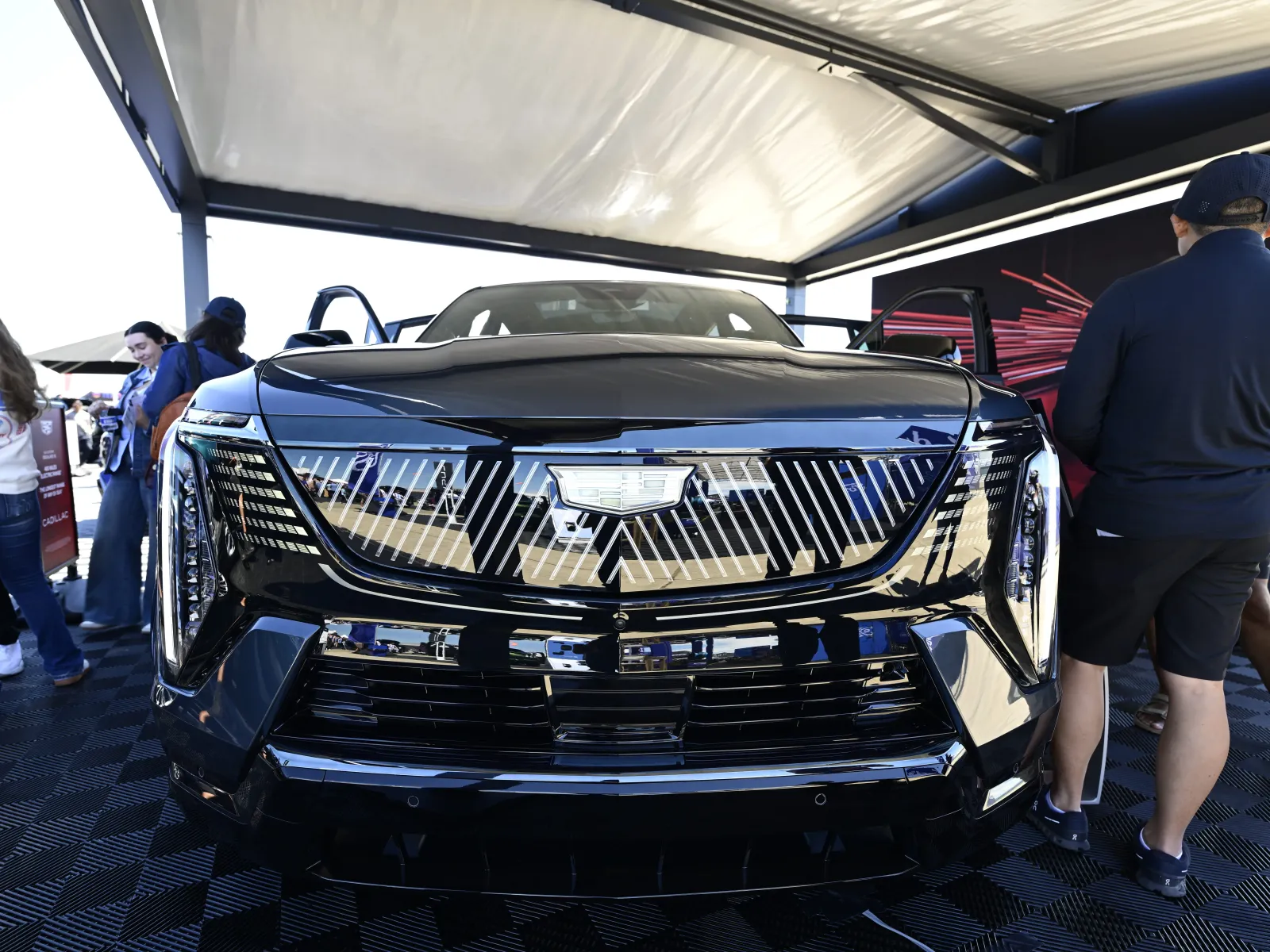
Sterling Anderson, GM's chief product officer and former head of Tesla's Autopilot program, says GM’s approach will ultimately converge toward robotaxis. GM spent more than $10B on Cruise before shutting it down in 2024, and now plans eyes-off highway driving starting in 2028 with the Cadillac Escalade IQ.
General Motors spent more than $10B on Cruise, shut the robotaxi business down in 2024, and still plans to roll out eyes-off driving on highways in 2028, starting with the Cadillac Escalade IQ. The headline fact here is not the turnaround. It is the insistence that the “autonomy in personal cars” route can eventually produce something functionally similar to a robotaxi operation.
That is the core message from Sterling Anderson, GM’s chief product officer and former head of Tesla’s Autopilot program, in an interview with Business Insider. Anderson argues that GM is not treating autonomy as a single monolithic goal. Instead, it is building self-driving capability by breaking the driving experience into pieces, starting with long highway stretches before moving toward more complex arterial roads and urban centers. He then ties that phased approach directly to the robotaxi question: “Ultimately, the two converge,” Anderson said. GM’s operating region, he argues, would look like a robotaxi company’s operating region, which raises the practical question of why GM could not also run a robotaxi-type service.
If you are a decision-maker, the tension worth watching is obvious: GM already “paid tuition” for robotaxis, and it did not come cheaply. The source notes GM acquired Cruise in 2016 and poured more than $10B into the business. Then, after regulatory hurdles and a safety incident that forced Cruise to pause testing in California, GM shut down the dedicated robotaxi division in 2024. In other words, the company did not just take longer. It stopped.
So why does GM still think the endgame is real? Anderson’s framing matters because it maps onto how autonomy programs are typically built. The hardest parts of driving usually come from dense, unpredictable environments: intersections, pedestrians, cyclists, construction zones, and messy human driving behavior. Highways are more structured. You can improve long stretches of driving first, then layer in more decision-making complexity as systems prove themselves. GM’s eyes-off highway timeline starts with the Escalade IQ and targets 2028. The point, as Anderson presents it, is to steadily widen the geographic and situational “operating region” until the same footprint that supports personal autonomy could also support rider service.
There is also a product reality check baked into this shift. GM has leaned on hands-off, eyes-on driver assistance technology called Super Cruise. Business Insider reports that GM customers have driven one billion hands-free miles with the feature, and that GM plans to introduce eyes-off highway driving in 2028. That incremental approach is not just technical. It is operational and regulatory. In many jurisdictions, regulators and public-safety stakeholders tend to be more comfortable when autonomy is limited to specific road types and conditions, and when drivers retain some level of oversight, at least initially.
But the road from hands-free to eyes-off is still a rebuilding story inside GM. The source says GM has shifted resources toward personal autonomy and has rebuilt its autonomous-driving ranks. Business Insider reported in December that GM hired Ronalee Mann, a former Cruise and Tesla executive, for its renewed self-driving focus. And according to The Information, GM has rehired about 100 former Cruise employees to develop eyes-off driving capabilities. Second-order implication: this is GM trying to preserve institutional knowledge from the Cruise era without repeating the same organizational structure that ultimately got wound down.
Meanwhile, GM is not moving alone in the robotaxi orbit. Hyundai-backed Motional launched a robotaxi service with Uber in Las Vegas this year and plans to commercialize fully driverless rides there by the end of 2026. Rivian is also developing autonomous driving for a future robotaxi fleet, and the source notes Rivian announced a $1.25 billion robotaxi deal with Uber in March. The competitive pressure is straightforward. Even if GM is not “jumping headfirst into a robotaxi play” right now, other players are converting autonomy investment into commercial deployments sooner.
Anderson says GM will be ready if robotaxis demand materializes faster than internal timelines. “We’ll be ready for it,” he said. “If that’s where the world goes, our autonomous vehicles will be capable of being robotaxis as well.” That is the strategic stake for everyone watching autonomous driving: the winners may not just be the companies with the best models. They may also be the companies that can survive regulation, translate engineering progress into usable operating regions, and then pivot into business models at the moment the market becomes willing.
This story's Key Insights and Take-aways are locked.
Create a free account to unlock Executive Actions for one credit.
Register to UnlockAlways free for Executives Club members. Join the Club
More in Business

SpaceX debuts on Nasdaq Friday, leaps into top-6 U.S. by market cap
The IPO flips expectations: a rocket company lands among megacaps even while revenue is far smaller.

Mena construction CPMI slips 12% in April 2026, but execution momentum rebounds to 1.01
GlobalData’s April CPMI shows resilience masking pre-execution caution, with conflict risk surfacing unevenly by country and sector.

SpaceX IPO turns Elon Musk trillionaire, but “1% inefficiency” can burn $10B
A new wealth-management class appears overnight: governance, litigation risk, and liquidity mechanics at trillionaire scale.