

GOP urges DOJ probe of Jack Smith after Trump hits him on social media
Republicans are asking the Justice Department to investigate former special counsel Jack Smith, raising fresh questions about politically charged enforcement.
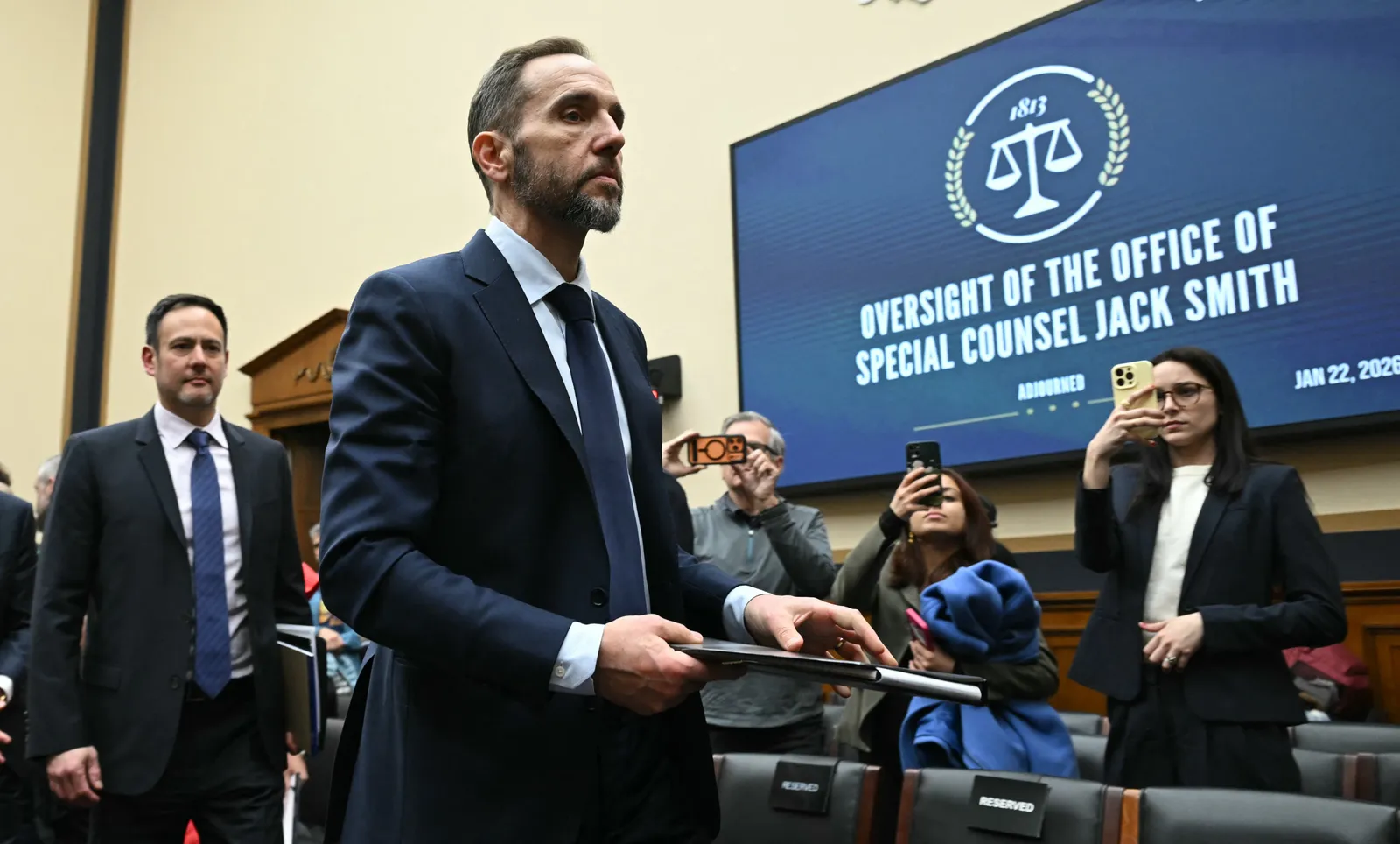
Republicans are urging the Justice Department to investigate former special counsel Jack Smith. Smith previously led two criminal investigations of President Donald Trump and has been a frequent target of Trump's ire on social media.
Republicans are urging the Justice Department to investigate former special counsel Jack Smith. Smith is the former special counsel who led two criminal investigations of President Trump, and he has also been a frequent target of Trump’s ire on social media.
If you’re a decision-maker, the part to watch is not just the name. It is what the request signals about how the political system wants to re-litigate the enforcement chapter that already happened. A DOJ investigation request, even before any outcome, can shift perceptions of fairness, durability, and independence across the public, and that matters for everything from institutional trust to how future cases are framed and staffed.
To understand why this moment lands with extra weight, you have to remember what a special counsel does in the U.S. system. Special counsel investigations are designed to operate at arm’s length from ordinary politics, particularly when the target is central to national power. Smith’s role as special counsel and the fact that he led two criminal investigations of President Trump places him at the center of a high-stakes prosecutorial phase that is already entangled with partisan narratives.
That partisan narrative is exactly where the social media pressure comes in. The source notes that Smith has been a frequent target of Trump’s ire on social media. That matters because social platforms do not just amplify outrage, they compress complexity into symbols. When a former special counsel becomes a repeated target, every mention becomes a talking point, and every talking point becomes an expectation: supporters see it as validation, critics see it as intimidation, and everyone else sees it as a signal that the political fight is far from over.
Now layer in the GOP request to have the Justice Department investigate Smith. The DOJ is not a standalone actor in a vacuum; it sits inside the broader executive branch framework. Requests like these are often about forcing the government to clarify boundaries: What is reviewable? What is internal? What is permitted scrutiny of past conduct? In practice, even if investigations do not produce new legal outcomes, the process itself can generate second-order effects. It can lead to delays in unrelated enforcement priorities, consume internal resources, and create uncertainty about how strictly the government will adhere to certain procedures going forward.
For corporate leaders and board members, the analog is familiar even if the subject is different. When regulators or enforcement bodies enter heightened scrutiny, the whole ecosystem recalibrates. Compliance teams do not only track rules; they track enforcement posture. They ask, “How likely is intervention?” “How politicized is discretion?” “Will timelines stretch?” In this case, the object is a former prosecutor, but the implications spill outward to the credibility of prosecutorial independence and the stability of legal processes that businesses often rely on indirectly.
The broader strategic stake is that high-profile investigations can become self-perpetuating. Smith’s prior work, the fact that it involved two criminal investigations of President Trump, and the public antagonism on social media combine into a cycle where each new political move invites fresh scrutiny. If Republicans are pressing for a DOJ look, Democrats and legal observers will likely respond by emphasizing process and independence, while supporters may interpret any action as accountability. That creates a battlefield where outcomes are less important in the short term than perceived intent.
For peers in similar roles, the lesson is uncomfortable but actionable: reputations of institutions, not just individuals, become part of the narrative infrastructure. Enforcement choices are rarely isolated events; they interact with media dynamics, party strategies, and the incentives of actors who want to define the story. Smith’s case is a clear example of how prosecutorial leadership can become a recurring political asset, and how a new investigation request can reopen questions that many thought were settled.
In the short run, the key question is simple: will the Justice Department investigate, and what will it focus on? In the longer run, the bigger question is harder. How does the system protect the legitimacy of legal decisions when the political environment treats every step as a new opening for conflict? That is the question decision-makers across government, business, and finance will be watching, because trust in process is the foundation beneath almost every other deal, policy, and investment assumption.
This story's Key Insights and Take-aways are locked.
Create a free account to unlock Executive Actions for one credit.
Register to UnlockAlways free for Executives Club members. Join the Club
More in Politics

LA County: DOJ's 20,000 'noncitizen' voter list is 'unreliable,' includes U.S.-born
Preliminary review by Los Angeles County election officials finds errors in the federal list, raising the stakes for voter roll integrity ahead of November.

Trump's $1.5B Pentagon chip investment lands in North Carolina
A $1.5 billion defense infusion for North Carolina chipmaking signals a new era of Pentagon-backed reshoring - here's what it means for the industry.

Nigeria confirms first Ebola case in Abuja, a woman just off a Uganda flight
Health Minister Muhammad Ali Pate says the patient flew in from Uganda, putting Africa's latest outbreak on Nigeria's doorstep.