

Guyana ferry MV Barima capsizes: 27 dead, 83 missing after Georgetown to Essequibo trip
Prime Minister Mark Phillips says 69 passengers were rescued since Saturday’s overturning. Here’s what to watch next.
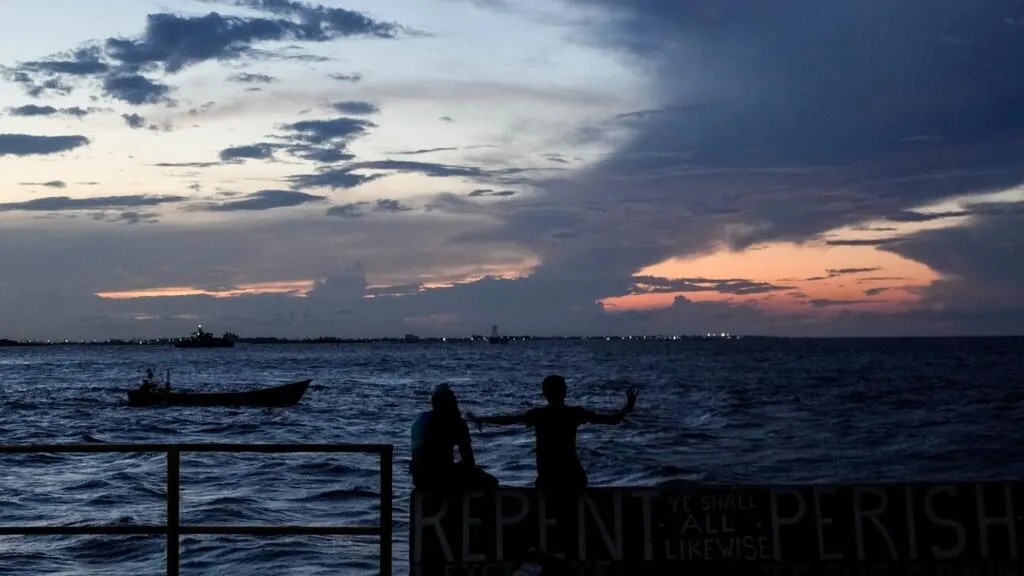
Prime Minister Mark Phillips said at least 27 people died when the ferry MV Barima overturned off Guyana, while 83 others remained missing. Rescuers pulled 69 passengers to safety after the incident Saturday night on the route from Georgetown to the inland Essequibo region.
At least 27 people died after the ferry MV Barima overturned off Guyana, Prime Minister Mark Phillips said Monday, and rescuers were still searching for 83 people reported missing. Since the capsizing Saturday night, 69 passengers have been rescued, Phillips said. In other words: the death count is grim, the missing figure is still large, and the story is still unfolding in real time.
That combination matters for anyone running transport operations, overseeing safety compliance, or making policy decisions in countries where waterways carry a lot of people and freight. The operational picture is incomplete until the rescue mission either finds the missing or confirms they cannot be found, but the baseline facts are already clear: a ferry traveling from Georgetown to the inland Essequibo region overturned, survivors have been found, and families are waiting for certainty as officials respond.
Guyana’s geography makes water routes and inland connections central to daily life. The ferry link from Georgetown to the inland Essequibo region is not just a nice-to-have, it is a practical bridge between communities. When a vessel on such a route capsizes, the impact ripples outward fast, beyond the immediate rescue. People who depend on that service for work, school, or medical access face disruption, and operators are forced into contingency mode while authorities investigate what went wrong and what needs to change.
There is also a broader governance question that executives and boards should not ignore: how quickly do systems translate an incident into actionable safety improvements? Rescues are one track, investigation is another, and regulatory enforcement yet another. In many transportation crises, the hardest part is that the initial casualty and missing numbers are not the only human cost. The uncertainty itself keeps stress high for survivors, complicates reunification, and puts pressure on communications and coordination.
From a risk-management perspective, the facts Phillips shared point to a situation with multiple moving parts. The MV Barima overturned Saturday night. By Monday, rescuers had already rescued 69 passengers and were still searching for 83 missing. That implies a large passenger count and a spread of outcomes, which increases the complexity of tracking manifests, verifying who was on board, and aligning information across rescue teams, local authorities, and any agencies responsible for maritime or river safety.
This kind of incident typically triggers a familiar sequence: emergency response first, followed by scrutiny of vessel condition, crew procedures, route planning, and how safety regulations are enforced in practice. Even without adding new allegations beyond what the source states, the stakes for decision-makers are obvious. Boards and executives in transport-related sectors usually learn the same lesson the hard way: regulators and the public will expect answers that go beyond “it happened.” They will want to know what controls were in place, whether those controls were followed, and how similar risks can be reduced before another ferry capsizes.
There is a second-order implication too for capital allocators and business leaders who fund or partner with transportation providers. Safety events can quickly become financial events. They can lead to service suspensions, insurance disputes, reputational damage, and higher compliance costs. The incident here is still unfolding, with at least 27 dead and 83 missing at the time Phillips spoke, so any financial impact is not stated in the source. But executives should assume that, once investigations begin, the operational and regulatory burden will rise, not fall.
For leaders in similar roles, the strategic takeaway is simple and uncomfortable: you cannot “wait and see” when a large casualty and missing toll is involved. When 69 people have been rescued and 83 are still unaccounted for, your focus needs to be on how fast your system can support emergency response, account for passengers accurately, and then convert the lessons into concrete operational changes. The rescue numbers give you one snapshot of reality, but the decisions made in the days after often determine whether the next incident is prevented or merely delayed.
This story's Key Insights and Take-aways are locked.
Create a free account to unlock Executive Actions for one credit.
Register to UnlockAlways free for Executives Club members. Join the Club
More in Politics

LA County: DOJ's 20,000 'noncitizen' voter list is 'unreliable,' includes U.S.-born
Preliminary review by Los Angeles County election officials finds errors in the federal list, raising the stakes for voter roll integrity ahead of November.

Trump's $1.5B Pentagon chip investment lands in North Carolina
A $1.5 billion defense infusion for North Carolina chipmaking signals a new era of Pentagon-backed reshoring - here's what it means for the industry.

Nigeria confirms first Ebola case in Abuja, a woman just off a Uganda flight
Health Minister Muhammad Ali Pate says the patient flew in from Uganda, putting Africa's latest outbreak on Nigeria's doorstep.