
Hong Kong property distress eases, but refinancing pain persists
Analysts say the worst of the commercial property slump may be passing, yet highly leveraged owners still face a tough refinancing path ahead.
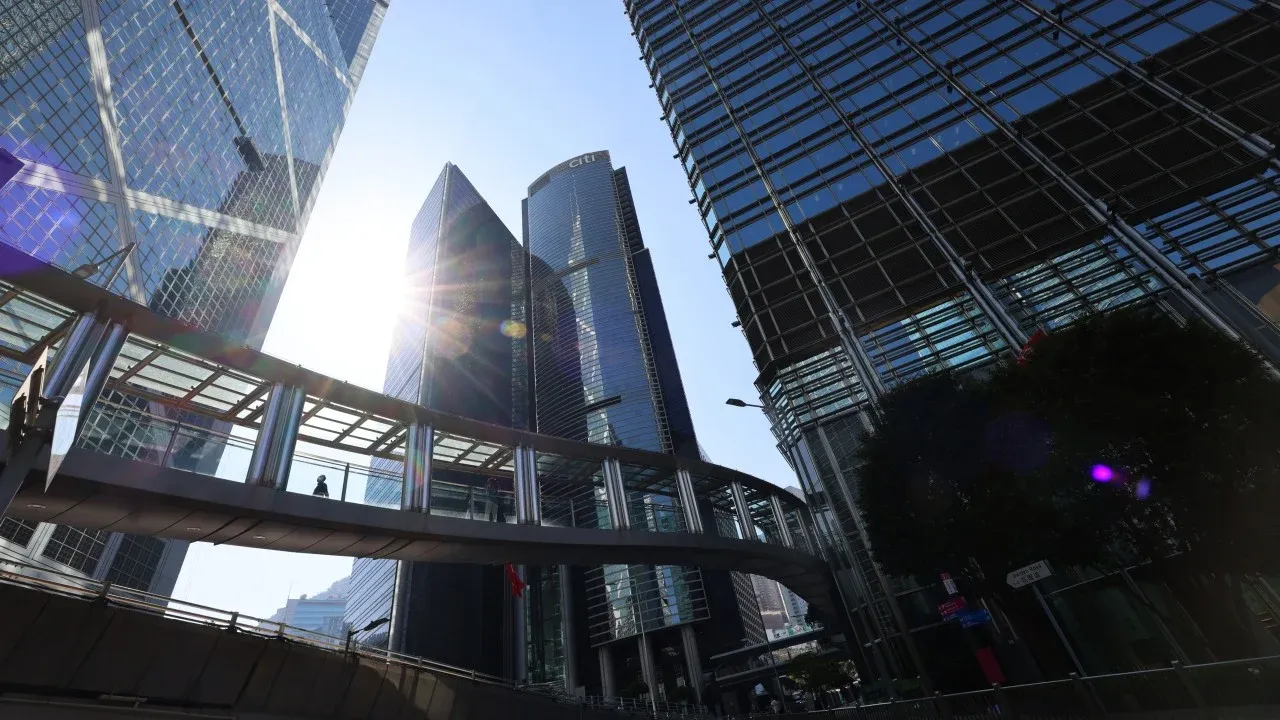
Analysts tracking Hong Kong's commercial property market say financial distress has moderated but not disappeared, with leveraged owners still expected to struggle to refinance. The consequence for decision-makers: creditor-led sales and loan workouts will continue even as asset values stabilise.
Hong Kong's commercial property distress is easing, but the refinancing squeeze is far from over. Analysts tracking the market say financial distress has moderated, not been completely eliminated, and highly leveraged asset owners still face a tough path to refinance their loans. The city's office and retail segments remain mired in a multi-year slump, with new supply outstripping demand in recent years as consumption slowed and interest rates surged, triggering loan defaults. The question hanging over the market: will creditor-led commercial property sales start to fade as assets stabilise? Not yet, and not uniformly.
"We do not expect defaults will increase noticeably from this time," analysts say, but the pressure on leveraged owners remains. That means banks and distressed debt funds should prepare for a slow unwind, not a sudden stop. The default wave that crested in the past few years may be flattening, but the refinancing wall is still there. Owners who stretched to buy at peak leverage now face loans coming due in a higher-rate world, and lenders are still working through the backlog of stressed assets.
The mechanics of the slump are well known: new commercial space has come online faster than tenants can fill it, while higher-for-longer interest rates have made floating-rate debt painful for owners who borrowed aggressively. That combination has already triggered defaults, and while the worst may be passing, the structural mismatch between supply and demand has not reversed. Consumption remains soft, and the pipeline of new office and retail space has not disappeared. Stabilisation, in other words, is not the same as recovery.
For highly leveraged owners, the challenge is now a balance-sheet problem, not just a cash-flow problem. Even if asset values stop falling, refinancing at lower loan-to-value ratios may require fresh equity, a distressed sale, or a negotiated extension. Creditor-led sales, where lenders force a sale or take control of a property, could remain a feature of the market as banks look to clean up their books rather than extend and pretend. The analysts' language of "moderated but not eliminated" is a signal to lenders: expect a longer tail of workouts, not a clean exit.
The broader implication for decision-makers is that this is not a V-shaped recovery. It is a plateau with pockets of distress. Investors looking for distressed assets may find opportunities, but they should underwrite for a multi-year workout period. Lenders should differentiate between assets with real, stabilised cash flows and those still dependent on refinancing hopes. The ones with income can be nursed along; the ones without will need equity or a sale.
For Hong Kong's office and retail landlords, the path forward depends on demand returning. With consumption slow and new supply still coming online, the market needs either a demand catalyst or a supply pause. Until then, the analysts' message is one of cautious stabilisation, not all-clear. The city's property market has been through worse cycles before, and the current moderation is real, but the refinancing calendar for leveraged owners is unforgiving. Creditor-led sales may not rise sharply, but they will not disappear either.
The strategic stakes for peers in similar roles are clear: do not confuse a slower default rate with a healed market. The refinancing challenge is the next battleground. For CFOs and investors watching Hong Kong, the play is to stress-test every asset against a flat demand scenario, not a recovery scenario. And for those looking to buy distressed assets, the window is open, but the patience required is longer than the current cycle suggests. The market is stabilising, yes, but the pain is shifting from default to refinancing, and that is a quieter, longer grind.
This story's Key Insights and Take-aways are locked.
Create a free account to unlock Executive Actions for one credit.
Register to UnlockAlways free for Executives Club members. Join the Club
More in Business

Tim Cook steps down as Apple CEO, stays on as chair with $45M equity
The 'Trump whisperer' keeps his White House and Beijing access as Apple navigates tariffs and a $4.6 trillion market cap.
Snowflake shares surge as AI data demand crushes estimates, lifting full-year forecast
Stocks jumped on stronger-than-expected guidance, signaling enterprise AI workloads are accelerating faster than Wall Street priced in.

Tim Cook's 15-year Apple CEO run ends: 3 lessons for any successor
After 15 years, Tim Cook hands Apple to John Ternus - here's how he turned a $350B company into a $4.6T juggernaut.