
Houthi retaliation escalates after Saudi strikes military targets in Red Sea
Riyadh hits Houthi military targets on Friday. The Houthis call it dangerous escalation after a Red Sea blockade and ship attacks.

The Houthis accused Saudi Arabia, a US ally, of a 'dangerous escalation' after it struck military targets belonging to the group on Friday. The accusation follows the rebels announcing a maritime blockade of Saudi Arabia, the top oil producer, and hitting its ships in the Red Sea.
The Houthis have accused Saudi Arabia, a US ally, of a "dangerous escalation" after it struck military targets belonging to the group on Friday. This is the key move: the Red Sea conflict is no longer just a series of ship incidents. It has shifted into a direct cycle of actions and counter-actions, with each side treating the other as having crossed a line.
What makes Friday's development immediately consequential is the cause-and-effect chain described in the report. The Houthis say the strikes came after they announced a maritime blockade of the top oil producer, Saudi Arabia, and after they hit its ships in the Red Sea. In other words, the Houthis are framing the escalation as retaliation against them, not as a standalone strike. Saudi Arabia, for its part, is being placed in the role of responding to a blockade and attacks by targeting the Houthis' military assets.
For decision-makers, the strategic problem here is that the Red Sea is not just a regional security issue. It is part of how oil and shipping risks translate into money. When a blockade is announced and ships are hit, markets typically start pricing in the possibility of disrupted routes, longer transit times, higher insurance costs, and operational uncertainty. Even without new numbers in the article, the direction of travel is clear: escalation tends to intensify worst-case planning. That matters for energy buyers, logistics companies, and any treasury team that budgets around stable supply lanes.
It is also a regulatory and risk-management story, even if the piece does not cite regulations directly. In practice, governments and compliance teams watch conflict-driven maritime incidents closely because they can trigger or accelerate sanctions risk reviews, shipping due diligence, and “know-your-counterparty” scrutiny. The report’s framing of Riyadh as a US ally is important too. When allies move militarily, the legal and operational assumptions for shipping actors can change quickly, including which routes are considered safe, which counterparties are considered exposed, and which insurers or operators tighten terms.
The Houthi announcement of a maritime blockade of a major oil producer, followed by ship attacks, signals an economic lever. A blockade is designed to create pressure, not just damage. It targets the flow of goods, especially in chokepoints where routing changes can be costly. That is why Friday’s strikes, targeting Houthi military targets, matter beyond the battlefield. They suggest Saudi Arabia is willing to escalate kinetic pressure to protect maritime access and deter further attacks.
But kinetic retaliation has a habit of multiplying complications. Once both sides begin striking, even narrowly defined military objectives can expand in scope, because each incident becomes evidence for the next. That second-order effect is the thing executives should watch, because it is where the original security narrative becomes a supply chain narrative. Logistics managers start rerouting. Contract teams revisit force majeure and liability. Boards ask what happens to costs if uncertainty persists for weeks, not days.
This is also a corporate governance issue, just not in the usual quarterly earnings way. Boardrooms generally do not debate maritime blockade strategy, but they do debate risk appetite, resilience, and continuity planning. If Saudi Arabia is portrayed as the top oil producer being targeted, then the company's customers and counterparties are part of the system too, even if they are far from the Red Sea. Customers may seek alternative supply arrangements. Counterparties may demand better terms or impose additional screening steps.
For peers in energy, shipping, insurance, and large import-dependent businesses, the strategic stake is simple: escalation can turn “operational risk” into “financial risk” quickly. The Houthis are accused of launching actions that involved announcing a blockade and hitting ships. Saudi Arabia is then accused of responding with strikes on military targets. That sequence is exactly the kind of loop that can keep markets nervous even when there is no direct disruption to a specific facility on a given day.
This story's Key Insights and Take-aways are locked.
Create a free account to unlock Executive Actions for one credit.
Register to UnlockAlways free for Executives Club members. Join the Club
More in Politics

LA County: DOJ's 20,000 'noncitizen' voter list is 'unreliable,' includes U.S.-born
Preliminary review by Los Angeles County election officials finds errors in the federal list, raising the stakes for voter roll integrity ahead of November.

Trump's $1.5B Pentagon chip investment lands in North Carolina
A $1.5 billion defense infusion for North Carolina chipmaking signals a new era of Pentagon-backed reshoring - here's what it means for the industry.
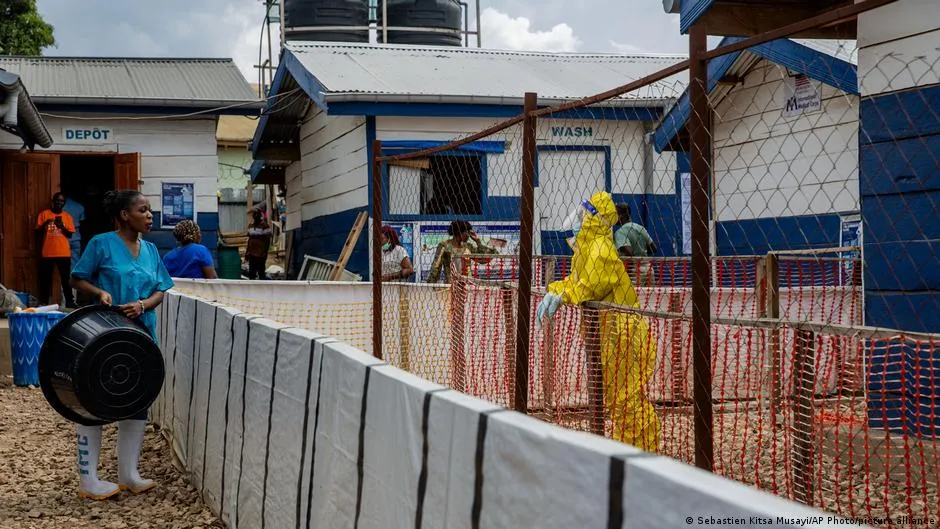
Nigeria confirms first Ebola case in Abuja, a woman just off a Uganda flight
Health Minister Muhammad Ali Pate says the patient flew in from Uganda, putting Africa's latest outbreak on Nigeria's doorstep.