
Trump jokes about 2028 third term at rescheduled White House Correspondents' Dinner
The president uses the comeback gala to lash out at
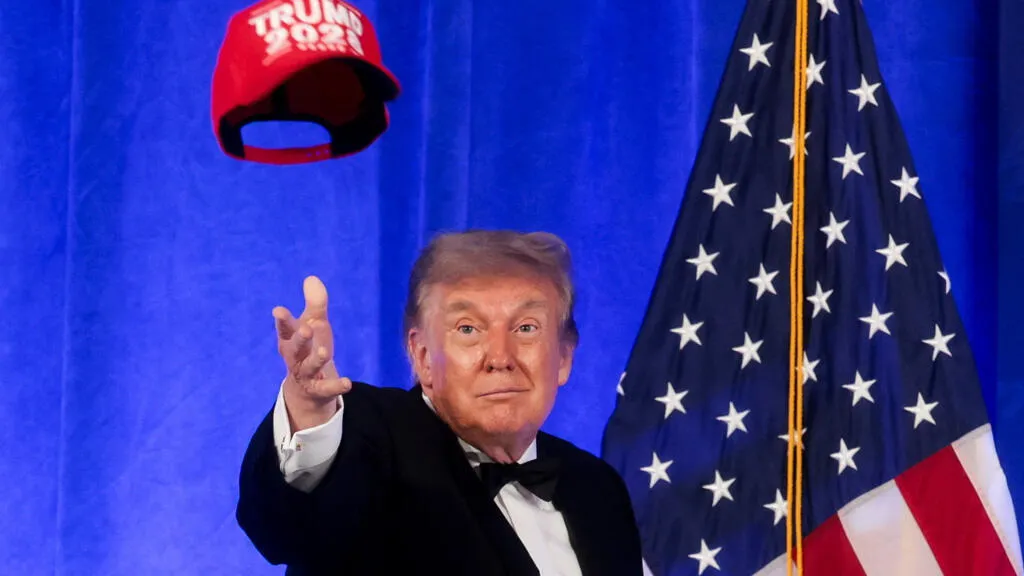
US President Donald Trump delivered an at-times rambling speech at the rescheduled White House Correspondents' Dinner Friday. He joked about a 2028 presidential run and also lashed out at “fake news,” after an alleged assassination attempt halted the event three months earlier.
US President Donald Trump returned to the spotlight at the rescheduled White House Correspondents' Dinner Friday, following an abrupt halt three months earlier after an alleged assassination attempt. In an at-times rambling speech, he also took aim at “fake news,” a refrain that has long functioned as both a messaging frame and a credibility weapon in US politics.
The sharpest headline-worthy moment: Trump joked about running for a third presidential term in 2028. That is constitutionally barred under the US constitution, but the joke still mattered, because it signaled his willingness to test boundaries in public, right at the sort of high-profile media gathering where narratives get stress-tested and then amplified.
To understand why this matters beyond politics, zoom out to how communications and media incentives work in Washington. The White House Correspondents' Dinner is not just entertainment. It is an annual pressure valve and a live-stage for competing realities: the administration tries to shape coverage, journalists push back through humor and scrutiny, and audiences watch for cues about where power is heading next. When an alleged assassination attempt abruptly stopped the normal rhythm, the rescheduled event became more than a redo. It became a symbol of continuity, resilience, and return to normal, with the president in the center of that story.
Now layer on the “fake news” framing. In press and investor ecosystems, credibility is capital. Once “fake news” becomes the default label, it can change how outlets choose to report, how audiences interpret headlines, and how political actors prepare their response plans. Even when statements are not literally new, repeating the frame can move the goalposts. It encourages people inside and outside the White House to pre-emptively discount unfavorable coverage and to treat scrutiny as hostile rather than informative.
Trump’s joke about 2028 also lands in a space businesses and boards recognize: signaling. Whether a third-term run is possible is a constitutional question, but the more relevant management question is what the signal implies about the president’s negotiating posture and timeline thinking. Leaders sometimes use “impossible” ideas to test reactions, measure resistance, and see what institutions will actually enforce. In the US, election eligibility has real legal constraints, but the public theater still affects compliance behavior across the ecosystem, including how agencies communicate, how lawmakers coordinate, and how media organizations decide what tone to use.
From a risk-management standpoint, the second-order effects are about volatility. “At-times rambling” speeches are not just style. They can introduce uncertainty for anyone trying to map policy intent from rhetoric. Markets and organizations dislike ambiguity because it complicates scenario planning. While the source does not provide specific policy announcements tied to the dinner, the fact that the president chose this platform to combine rambling delivery, “fake news” attacks, and a 2028 joke suggests an emphasis on controlling attention rather than clarifying strategy.
For decision-makers who live in the overlap between government and business, the lesson is not to treat every political line as an instruction manual. It is to treat it as an indicator of how the administration may manage legitimacy, messaging, and institutional friction. In environments where regulation, enforcement, and public narratives can shift quickly, communications style can become an early signal of how conflict will be handled, how evidence will be framed, and how quickly institutions will pivot from routine to defensive posture.
In other words, the dinner matters because it is a forecasting instrument disguised as a gala. Trump used the comeback stage to reassert dominance in narrative control, lash out at “fake news,” and float a constitutionally barred 2028 third-term joke anyway. For peers in corporate comms, regulatory affairs, and government relations, the stakes are simple: when credibility is contested and timelines are teased, the cost of misunderstanding rises. The winners are the organizations that can separate constitutional reality from rhetorical strategy, then plan around both.
This story's Key Insights and Take-aways are locked.
Create a free account to unlock Executive Actions for one credit.
Register to UnlockAlways free for Executives Club members. Join the Club
More in Politics

LA County: DOJ's 20,000 'noncitizen' voter list is 'unreliable,' includes U.S.-born
Preliminary review by Los Angeles County election officials finds errors in the federal list, raising the stakes for voter roll integrity ahead of November.

Trump's $1.5B Pentagon chip investment lands in North Carolina
A $1.5 billion defense infusion for North Carolina chipmaking signals a new era of Pentagon-backed reshoring - here's what it means for the industry.

Nigeria confirms first Ebola case in Abuja, a woman just off a Uganda flight
Health Minister Muhammad Ali Pate says the patient flew in from Uganda, putting Africa's latest outbreak on Nigeria's doorstep.