

iPhone Duo screens cracking within hours: How real is the problem?
Apple is quietly swapping early failing displays, but without failure-rate data, the real signal is still buried under anecdotes.
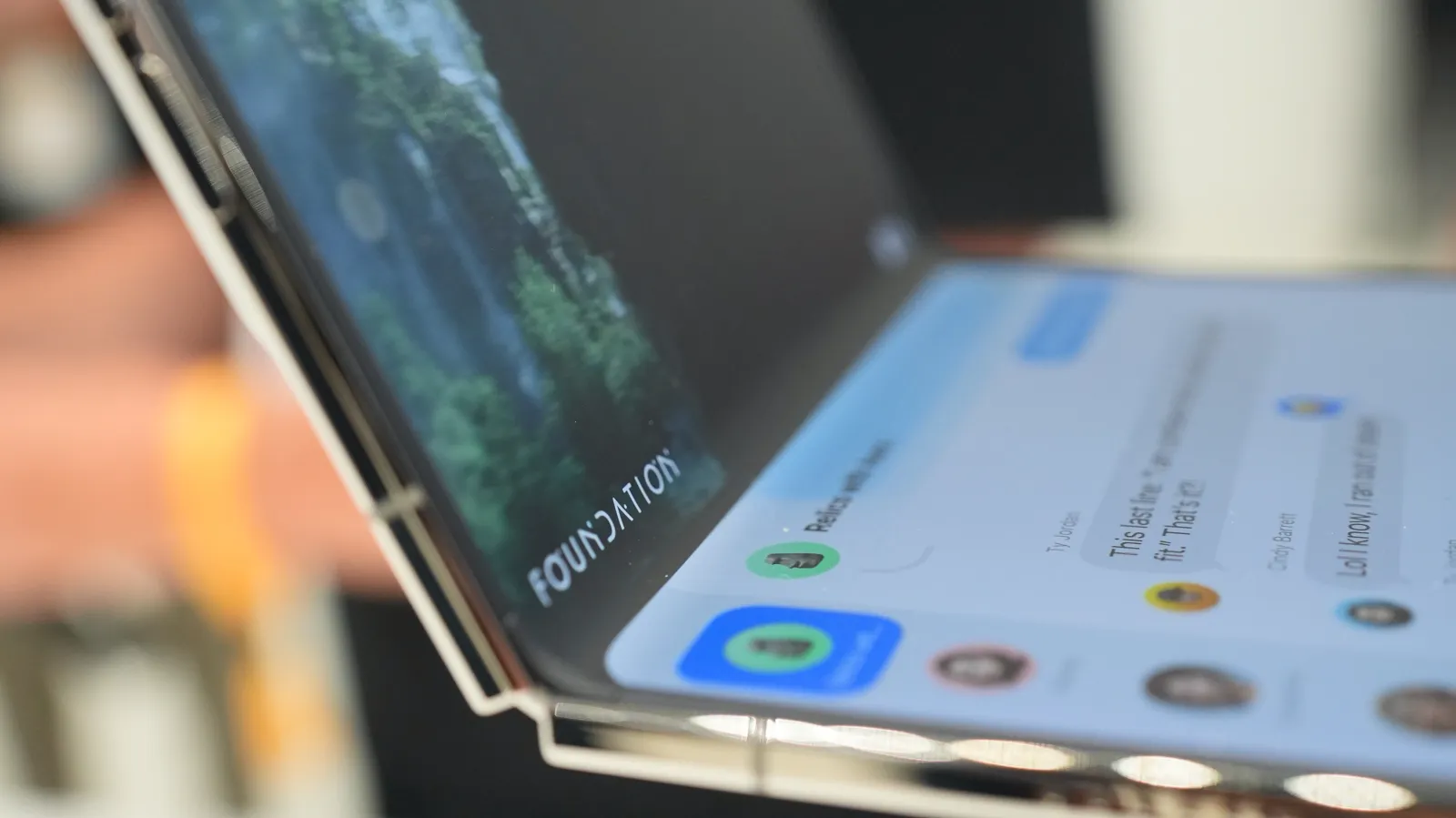
Apple is seeing reports that some iPhone Duo displays are failing within hours of unboxing and is offering replacements. For decision-makers, the open question is whether this is a genuine quality crisis or a noisy early-adopter pattern that will fade.
Apple's newest iPhone Duo is getting unwanted attention: some displays are failing within hours of unboxing, and Apple is offering replacements. The report from ZDNet frames the tension perfectly. A handful of customers are holding a dead or cracked screen right out of the box, Apple is stepping in to make it right, and everyone is asking the same question: is this a serious issue or an overblown moment in the spotlight?
What makes this story tricky is what the public does not see. Apple has not published a failure-rate percentage, a batch number, or a timeline for a fix. Without those details, every support thread and every unboxing video becomes a data point, but not a statistic. A display dying within hours is genuinely alarming to the person holding the device, especially after a premium-price purchase. But for an executive trying to assess operational risk, those individual stories are not enough to declare a defect crisis. The real signal lives in field failure rates, replacement volumes, and manufacturing yields, and none of that is public.
Historically, new hardware launches have occasionally surfaced component-level issues that look enormous in forums and turn out to be isolated to a specific manufacturing batch. The reverse is also true: some issues start small and compound. That is why Apple's replacement policy matters. Offering replacements is the standard response to a known or suspected defect, and it serves two functions at once. It takes care of affected customers, and it gives Apple a channel to collect failed units for analysis. Replacement activity is itself a diagnostic signal. The more units Apple swaps, the clearer the problem becomes, but the company rarely shares those internal numbers with the public.
For the broader industry, display failures are one of the most sensitive failure modes a device maker can face. The screen is the first thing a user touches, the most visible component, and often the most expensive part to repair outside of warranty. A display that fails within hours also feels different from a battery that degrades after a year or a camera that glitches in low light. It undermines the immediate trust that a new product is supposed to build. That is why the photograph of a cracked or black screen spreads faster than a note about a software patch. It is visceral, it is visual, and it is easy to share.
The phrase "within hours of unboxing" is the part that deserves attention. Most product failures follow a bathtub curve, a concept familiar to engineers and operators. Early failures show up quickly and are often tied to manufacturing defects, while later failures appear after months of wear. A spike in very early failures usually points to something specific: a subpar batch of glass, a calibration miss, a thermal or assembly step done slightly wrong. If that is the case, the issue may be limited to a narrow range of serial numbers, and Apple's replacement program would contain the problem. If the failures keep appearing across multiple batches, the calculus changes entirely.
What executives in any hardware or consumer business should watch is not just the headline but the pattern over the next weeks. If reports cluster around a single unboxing day or a single retail channel, that is a hint of a batch issue. If the reports spread across geographies and continue after replacements, that is a stronger signal of a systemic design or supplier problem. Apple has a well-developed logistics and repair network, so replacing units is unlikely to be the bottleneck. The bigger risk is brand confidence, because a defect story that runs for weeks can overshadow the product's actual strengths.
The stakes extend beyond Apple's own P&L. Every hardware launch sends a signal to customers about what quality to expect at a given price point. A high-profile screen failure story, even if statistically small, can push some consumers to wait for the second revision of a product, to buy extended warranty coverage, or to choose a rival device. That dynamic is not unique to phones; it applies across laptops, electric vehicles, appliances, and even software platforms where early bugs get amplified. The lesson for decision-makers is to separate anecdote from data, build fast feedback loops with support and engineering, and respond quickly enough that the story never outruns the fix.
At the moment, the most accurate summary is also the most unsatisfying: some iPhone Duo displays are failing, Apple is replacing them, and the real scale of the problem is unknown. For customers, the practical advice is straightforward: back up the device, contact Apple if a screen fails, and use the warranty period as risk insurance. For executives, the episode is a reminder that product quality is judged in the first hours of ownership, not just in long-term reliability stats. The company that can get the failure rate to zero, or explain it honestly when it cannot, is the one that keeps the next launch on track.
This story's Key Insights and Take-aways are locked.
Create a free account to unlock Executive Actions for one credit.
Register to UnlockAlways free for Executives Club members. Join the Club
More in Technology

Amazon's AI spending spree spooks Wall Street as shares stumble
The e-commerce giant's swelling AI investment is colliding with investor patience, forcing a reckoning over Big Tech's data center cash burn.

Attackers hit 61 GitHub repos in 43 minutes to steal CI/CD secrets
Radware researchers found a coordinated campaign using hidden HTML comments in issues to trigger vulnerable workflows and exfiltrate credentials.

Anthropic and OpenAI Say a Key Computer Science Rule Is Dead
The labs' claim could invalidate decades of research - and leave the field feeling like 'overexcited bunnies' chasing new questions.