
Iran-backed strikes in Jordan reportedly injure several US troops, CBS says
Multiple U.S. service members were reportedly hurt when bases were struck in Jordan this week, with no fatalities reported.
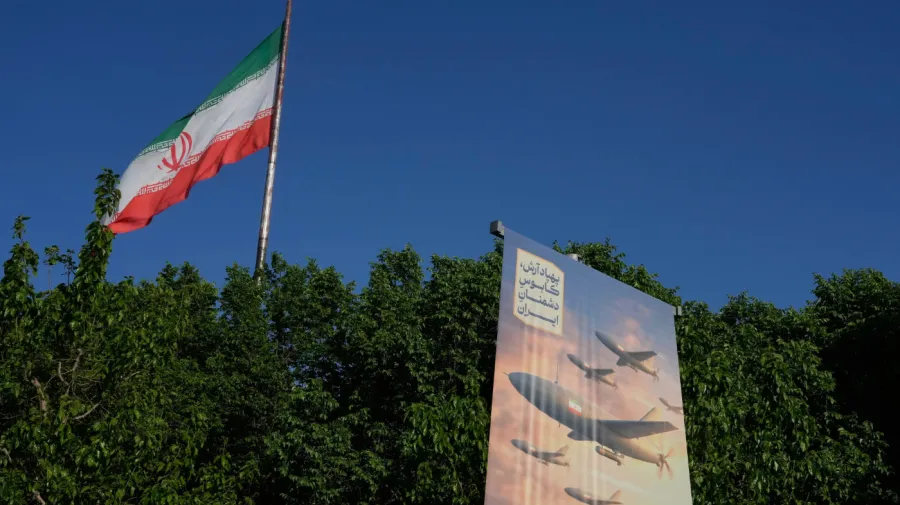
Iranian attacks on at least two military bases in Jordan this week reportedly injured several U.S. service members when their facility was struck, CBS News reported Friday. The unclear injury details and the lack of reported fatalities raise immediate operational and strategic risk questions for defense and regional planning.
Iranian attacks on at least two military bases in Jordan this week reportedly injured several U.S. service members when their facility was struck, CBS News reported Friday. The report says the extent of the injuries is unclear and also does not specify when the incidents occurred. It also notes that both the U.S. and Jordan have reported no fatalities.
So what do you actually know right now, and why should it matter beyond the headlines? First, there is a credible claim that multiple bases in a host country were hit, and at least one strike resulted in U.S. personnel injuries. Second, even without fatalities, injuries to service members are not a “small” outcome in military and diplomatic terms. When a strike lands near U.S. operations, it can trigger immediate reviews of security posture, base hardening, medical readiness, and command-and-control procedures. Those are not abstract concerns. They directly affect how quickly teams can operate, how many systems must be shut or rerouted, and how command leadership reassesses threat patterns.
The report leaves key details open. It does not confirm the severity or number of injured personnel, and it does not pin down the timing. That uncertainty is exactly where executives, investors, and operators get nervous, because incomplete information in a security incident often means you only learn the “real” magnitude later. Sometimes that magnitude shows up in follow-on operational disruptions, expanded defensive measures, or changes to rules of engagement. In other cases, it shows up politically, for example through heightened coordination demands between governments. The story also says the Pentagon did not immediately respond to a request, which is a familiar pattern in fast-moving incidents: initial reporting may go out through media channels, while official statements lag until internal assessments are complete.
Zoom out for context on Jordan and the regional defense ecosystem. Jordan sits in a volatile neighborhood where air defenses, base security, and crisis coordination are not “nice to have.” They are constant work, because the country has long had to balance hosting foreign partners with managing escalations that can come in waves. For the U.S., U.S. service members operating in partner countries mean the risk does not stay inside the borders of the target nation. A strike aimed at one facility can produce second-order impacts on the activities of allies and partners, especially if infrastructure overlap exists, or if strikes are broad enough to affect multiple locations.
There is also a policy and communication angle. The fact that both the U.S. and Jordan reported no fatalities suggests that some initial threshold outcomes are being shared. But when injuries are reported while severity remains unclear, it often indicates that the facts are still being verified. That matters for planning and for public messaging. Overstating or understating outcomes can create diplomatic friction, complicate coordination with medical providers, and increase uncertainty for personnel families. Under-the-hood, it also shapes how quickly military leadership can transition from incident response to longer-term mitigation, such as reassessing patrol patterns, bunker spacing, or how intelligence is fused into operational decisions.
For boards and senior leaders in defense-adjacent industries, this kind of incident tends to ripple into procurement and risk management conversations, even when no fatalities are reported. Why? Because injuries can lead to rapid changes in base security requirements and equipment readiness, which in turn can affect vendor demand for protective systems, communications resiliency, and maintenance cycles. It can also influence contract administration if force majeure or heightened operational risk language becomes part of internal documentation and procurement planning. Even if companies are not directly involved in base operations, defense ecosystems are interdependent, and operational shocks can move budgets and timelines.
Finally, there is the strategic stake for the broader peer set: regional incidents like this are exactly the kind of events that compress decision timelines. If you are responsible for security, compliance, or capital allocation in a region-adjacent portfolio, you need to understand that uncertainty can be operationally expensive. The report is clear that at least two military bases in Jordan were targeted and that U.S. service members were reportedly injured when a facility was struck. The “no fatalities” detail provides partial reassurance. But the unclear extent of injuries and the lack of immediate official confirmation from the Pentagon leaves an open question about how serious and how far-reaching this week’s strikes truly were.
This story's Key Insights and Take-aways are locked.
Create a free account to unlock Executive Actions for one credit.
Register to UnlockAlways free for Executives Club members. Join the Club
More in Politics

LA County: DOJ's 20,000 'noncitizen' voter list is 'unreliable,' includes U.S.-born
Preliminary review by Los Angeles County election officials finds errors in the federal list, raising the stakes for voter roll integrity ahead of November.

Trump's $1.5B Pentagon chip investment lands in North Carolina
A $1.5 billion defense infusion for North Carolina chipmaking signals a new era of Pentagon-backed reshoring - here's what it means for the industry.

Nigeria confirms first Ebola case in Abuja, a woman just off a Uganda flight
Health Minister Muhammad Ali Pate says the patient flew in from Uganda, putting Africa's latest outbreak on Nigeria's doorstep.