
Israel detains 70+ in West Bank after clashes kill 2 soldiers and 4 Palestinians
Troops searched 300+ locations overnight; the crackdown tightens security pressures across the region and its ripple effects.

Israeli forces detained more than 70 people across the occupied West Bank overnight Friday into Saturday after deadly clashes in a northern Palestinian village. The immediate consequence is heightened security operations and renewed uncertainty for the wider political and economic environment.
Israel detained more than 70 people across the occupied West Bank overnight Friday and into Saturday, after violence in a northern Palestinian village killed two Israeli soldiers and four Palestinians. That is the core fact driving the story, and it matters because it signals a fast, large-scale security response: detention, not just investigation.
According to The Associated Press, the Israeli military said in a statement that troops searched more than 300 locations and arrested people it described as suspects. In other words, the incident was not treated as a contained event. It triggered a wide operational footprint across the West Bank, with hundreds of site searches and detentions happening in a short window.
For executives and decision-makers watching from boardrooms far from the region, the reason to pay attention is not the tactical detail, it is what these patterns usually imply: rapid escalation risk and the tightening of controls. Security crackdowns like this can affect travel, supply routes, and the broader investment climate because they raise uncertainty. Even when many businesses are not directly operating inside the West Bank, the region’s political and security stability still feeds into insurance costs, risk premiums, and how quickly governments and institutions move.
There is also a regulatory and governance angle, even if the source is focused on military action. In conflict zones, authorities often respond with sweeping enforcement measures, and those measures can spill into legal processes, civil documentation, and humanitarian operations. Detentions and searches can intensify scrutiny of how authorities handle suspects and evidence. That, in turn, can shape how international stakeholders assess compliance risk, including reputational risk and the administrative burden of operating through intermediaries.
This story has a second-order implication for anyone who allocates capital or manages enterprise risk. When troops search more than 300 locations and detain more than 70 people after casualties on both sides, it suggests a response designed to prevent follow-on attacks. But prevention efforts also tend to change local dynamics quickly. They can increase friction, broaden the circle of affected communities, and prolong instability beyond the initial incident, which then extends the time horizon for uncertainty. Markets and institutions do not always need a new headline to reprice risk; they just need evidence that the situation is moving fast.
The source describes violence that killed two Israeli soldiers and four Palestinians, followed by searches and arrests across the occupied West Bank. That sequencing is important. It indicates that the security decision was made immediately, with an operational scale that went well beyond a single site investigation. When the response is that broad, companies that rely on regional logistics or have employees in or near the area typically face tougher compliance questions around duty of care, evacuation planning, and operational continuity. Boards often do not wait for a full breakdown to start contingency thinking, and this kind of sudden escalation is exactly the sort of trigger that can force faster updates to risk registers.
Beyond companies, the wider stakeholder ecosystem also feels these moments. Governments, NGOs, insurers, and lenders all tend to reassess exposure when conflict events produce detentions at scale. Even if those stakeholders do not publish detailed metrics in every incident, their internal frameworks often incorporate indicators like travel restrictions, site access limits, and enforcement intensity. That means the impact can show up indirectly, through contracting decisions, financing terms, or the timing of investment reviews.
The strategic stakes for peers in similar leadership roles are straightforward: you cannot manage uncertainty only with statements, you manage it with preparedness. In situations where authorities carry out large search and arrest operations after deadly clashes, the likely effect is a period of higher volatility in the operating environment. For executives, the practical question becomes: how quickly can your organization update plans for employees, partners, and operations when the ground truth changes overnight, and when the response includes hundreds of locations being searched and dozens of people detained?
This story's Key Insights and Take-aways are locked.
Create a free account to unlock Executive Actions for one credit.
Register to UnlockAlways free for Executives Club members. Join the Club
More in Politics

LA County: DOJ's 20,000 'noncitizen' voter list is 'unreliable,' includes U.S.-born
Preliminary review by Los Angeles County election officials finds errors in the federal list, raising the stakes for voter roll integrity ahead of November.

Trump's $1.5B Pentagon chip investment lands in North Carolina
A $1.5 billion defense infusion for North Carolina chipmaking signals a new era of Pentagon-backed reshoring - here's what it means for the industry.
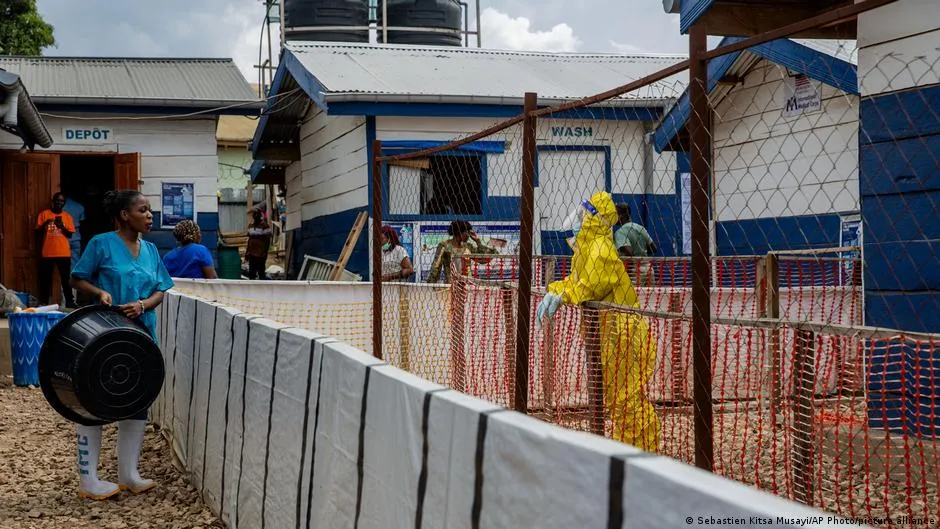
Nigeria confirms first Ebola case in Abuja, a woman just off a Uganda flight
Health Minister Muhammad Ali Pate says the patient flew in from Uganda, putting Africa's latest outbreak on Nigeria's doorstep.