
Justice Kagan rejects “rubber-stamp Trump” claims and defends conservative colleagues
Why Elena Kagan says the Supreme Court has pushed back, and what that means for everyone watching the docket.
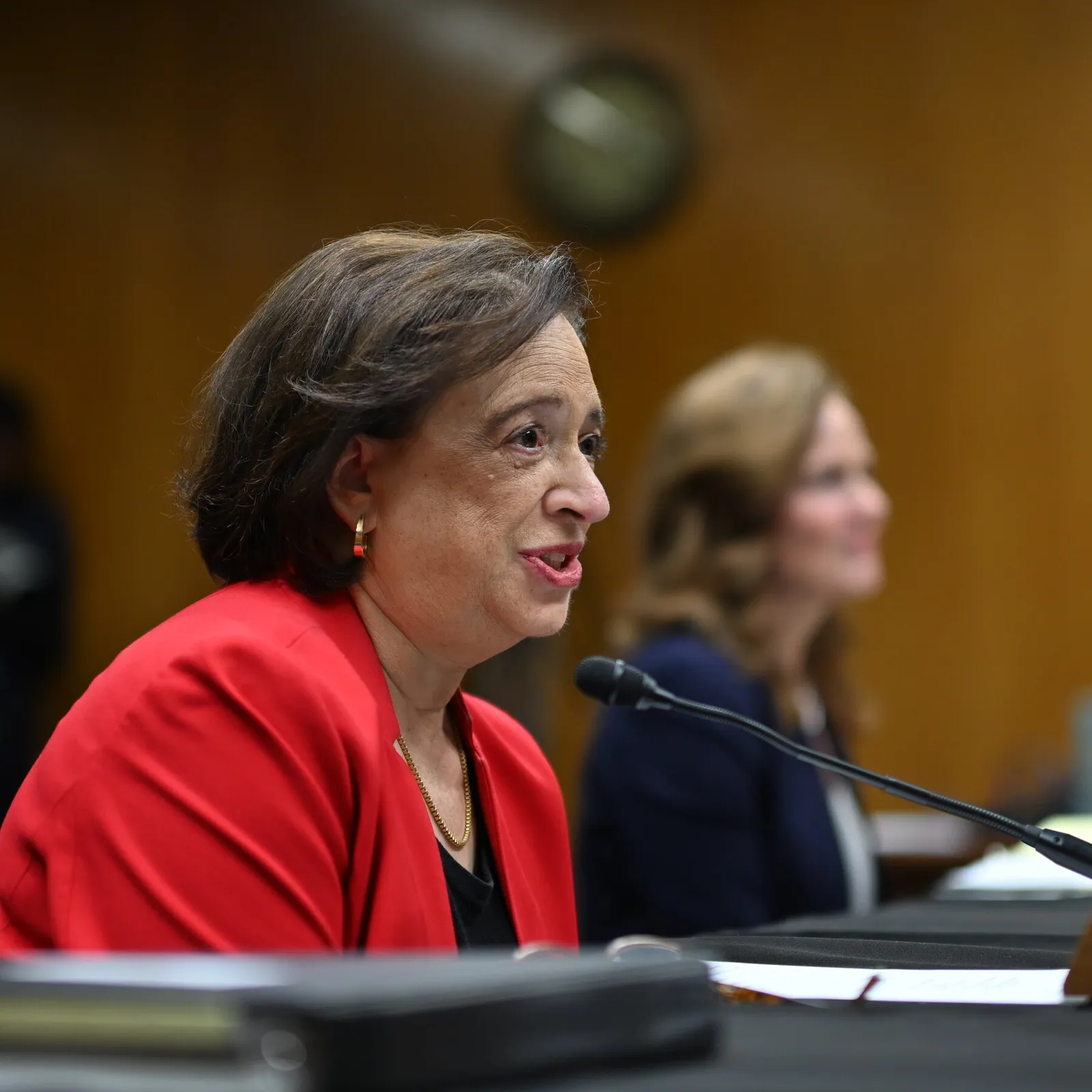
Justice Elena Kagan addressed an annual meeting of judges and lawyers, defending her conservative colleagues against criticism that they have rubber-stamped President Trump’s agenda. For decision-makers, the message is a reminder that the Court’s internal dynamics matter as much as the politics outside the building.
Justice Elena Kagan used an annual meeting of judges and lawyers to push back on a specific political criticism: that the Supreme Court has “rubber-stamped President Trump’s agenda.” Her defense was not about pretending the Court’s politics are irrelevant. It was about rejecting the idea that the Court has simply gone along with whatever the administration wants.
The key point, from Kagan’s remarks at the meeting, is that she argues the Court has actually stood up to Trump in important cases, and that her conservative colleagues deserve protection from the “rubber-stamp” framing. In other words, Kagan’s argument is meant to correct the narrative. She is saying the Court’s record is more complicated, and that simplification does not match what has happened in “key cases.”
This kind of internal defense matters because, at the leadership level, people often treat the Supreme Court like a single voting machine: one side wins, the other side loses, end of story. But Kagan’s point signals that the real story is the coalition and the reasoning inside the building. Even when the Court is divided along ideological lines, the justices do not always agree on outcomes that neatly track party platforms. That is especially relevant for regulated industries and businesses that live in the space between executive action and judicial review.
For executives, the immediate temptation is to translate headlines into risk. If a Supreme Court is said to rubber-stamp a president, boards and compliance leaders tend to plan for a higher odds of swift policy implementation and fewer legal stops. If, instead, the Court is described as having “stood up” to the administration in key cases, that changes the planning assumptions. It implies more than one possible path to enforcement, and it increases the value of building operational resilience into strategies that depend on contested legal authority.
There is also a second layer, and it is the part boards feel in their bones: reputation and certainty. The phrase “rubber-stamp” is not just a legal critique. It is a political accusation that the Court is acting as a tool. When Kagan publicly defends her conservative colleagues from that accusation, she is effectively telling stakeholders that the legitimacy conversation is ongoing, and that the Court is not conceding the argument that it has become partisan machinery.
For lawyers and judges, that legitimacy argument is not cosmetic. It affects how lower courts anticipate Supreme Court guidance, how litigants frame their cases, and how agencies calibrate their positions. For agencies, the incentive usually runs in two directions at once. They need to implement the administration’s agenda, but they also need to anticipate judicial review that can narrow or block the most ambitious moves. When the Supreme Court appears unpredictable or politically captured, agencies may overreach because the downside feels limited. When the Court is seen as willing to “stand up” to a president, agencies may draft and defend regulations more carefully, and they may invest more in the legal rationale that can survive scrutiny.
Kagan’s defense at an annual meeting is also a signal to the legal community. Judges and lawyers gather not just to share updates, but to pressure-test narratives. If the dominant narrative is that conservative justices have rubber-stamped Trump, then conservative justices, even if they remain ideologically aligned on some issues, risk being treated as a monolith in public perception and in legal strategy. By pushing back on the characterization, Kagan is forcing the conversation back toward what the Court actually did in “key cases,” rather than what commentators say it must have done.
So what is the strategic stake for leaders watching from the outside? It is the difference between “policy will happen” and “policy might be constrained.” Even without quoting specific cases in the provided source, Kagan’s framing asserts a boundary: that the Supreme Court did not just rubber-stamp. That boundary matters because it feeds into scenario planning, timeline expectations, and how aggressively boards pursue initiatives that depend on regulatory authority. When the judicial system is described as standing up to an administration, decision-makers have to assume litigation risk can still cut through political momentum. They also get a clearer reason to engage with legal strategy, not just policy strategy.
In short, Kagan is doing two things at once. She is defending colleagues from a damaging oversimplification, and she is reminding the public and the legal system that Supreme Court action can include constraint, not only endorsement. For executives, regulators, and investors who build models around government action, that distinction is not academic. It changes how you plan for enforcement, compliance, and the timing of outcomes.
This story's Key Insights and Take-aways are locked.
Create a free account to unlock Executive Actions for one credit.
Register to UnlockAlways free for Executives Club members. Join the Club
More in Politics

LA County: DOJ's 20,000 'noncitizen' voter list is 'unreliable,' includes U.S.-born
Preliminary review by Los Angeles County election officials finds errors in the federal list, raising the stakes for voter roll integrity ahead of November.

Trump's $1.5B Pentagon chip investment lands in North Carolina
A $1.5 billion defense infusion for North Carolina chipmaking signals a new era of Pentagon-backed reshoring - here's what it means for the industry.

Nigeria confirms first Ebola case in Abuja, a woman just off a Uganda flight
Health Minister Muhammad Ali Pate says the patient flew in from Uganda, putting Africa's latest outbreak on Nigeria's doorstep.