

Union leaders sided with an airline against their own members, then drew backlash
The Hill reports a union failed two members by aligning with an employer’s hostility, revealing how labor power can invert.

The Hill describes a case where union leadership did not stand up for two members, instead joining the airline in hostility toward their beliefs. For executives and boards, it signals how labor disputes can turn into governance, reputational, and legal risk when incentives are misaligned.
Union leadership was supposed to be the adult in the room. In the story reported by The Hill, instead of standing up for two members, the union joined an airline in hostility toward their beliefs. That single reversal is the whole point, and it matters because it flips the basic bargain that labor institutions are built on: collective representation for individual members, even when it is uncomfortable.
The headline promise is simple and the payoff is immediate. Rather than serve its purpose by standing up for these two members, union leadership joined the airline in its hostility toward their beliefs. When your own representatives align with the employer against your interests, you do not just lose one grievance. You lose trust in the process, and without trust, the “union as a channel” model collapses.
To understand why this can happen, you have to look at how labor relationships actually function in practice. Unions and employers typically manage disputes through a mix of contracts, bargaining structures, grievance procedures, and negotiated norms. Those systems are designed to convert conflict into procedure. But procedure does not automatically produce advocacy. If leadership calculates that backing certain members will destabilize negotiations, threaten broader agreements, or make internal coalition-building harder, it can choose silence or alignment. The Hill’s report describes precisely that kind of failure of expected duty: leadership did not just fail to intervene, it sided with the airline.
There is also a second-order effect executives should care about: once members believe a union can turn hostile under pressure, the employer inherits an opening. Even if the employer is the one with operational leverage, a union’s participation can legitimize or accelerate the employer’s actions in the eyes of workers and outside observers. That is when a workplace dispute stops being a normal labor disagreement and starts becoming a credibility crisis for the entire system. For decision-makers, that is not just “bad PR.” It can become a magnet for complaints, outside scrutiny, and internal labor unrest.
Regulatory context matters here too, even though The Hill summary does not specify which formal legal claims were raised. In many jurisdictions, labor rights and fair employment principles are regulated through overlapping frameworks: labor law governs collective bargaining and union conduct; employment discrimination and related rules govern treatment based on protected characteristics and other belief-linked protections, depending on the facts. When union leadership appears to collaborate with an employer’s hostility toward a member’s beliefs, it invites questions about whether advocacy obligations and nondiscrimination expectations are being respected.
Boards and senior executives should also note how this kind of story spreads. In the labor world, precedent is everything. A pattern where leadership selectively defends members can change member behavior. Workers can withdraw participation, escalate disputes beyond standard grievance channels, or seek new representation. None of those are good outcomes for an employer or a union, but the governance lesson lands hardest on leadership teams: institutional credibility is a balance sheet. You can spend it slowly and still be surprised when it evaporates.
For similar decision-makers, the strategic stakes are straightforward. The union exists to represent, not to harmonize with the employer at the expense of members. When that boundary blurs, the conflict does not disappear. It just shifts outward, into courts, regulators, media attention, and workplace morale. The Hill’s account is a reminder that labor partnerships are not just transactional bargaining relationships. They are fiduciary in spirit, reputational in consequence, and operationally material when trust breaks.
In short, the report is about more than one dispute. It is about the inversion of a core function: rather than serve its purpose by standing up for two members, union leadership joined the airline in hostility toward their beliefs. For executives, the message is to treat labor relations as governance, not a nuisance. If you operate in a system where representation can turn, every stakeholder should assume that next time, the backlash will not be contained to the workplace. It will reach the boardroom, the compliance team, and the public record.
This story's Key Insights and Take-aways are locked.
Create a free account to unlock Executive Actions for one credit.
Register to UnlockAlways free for Executives Club members. Join the Club
More in Politics
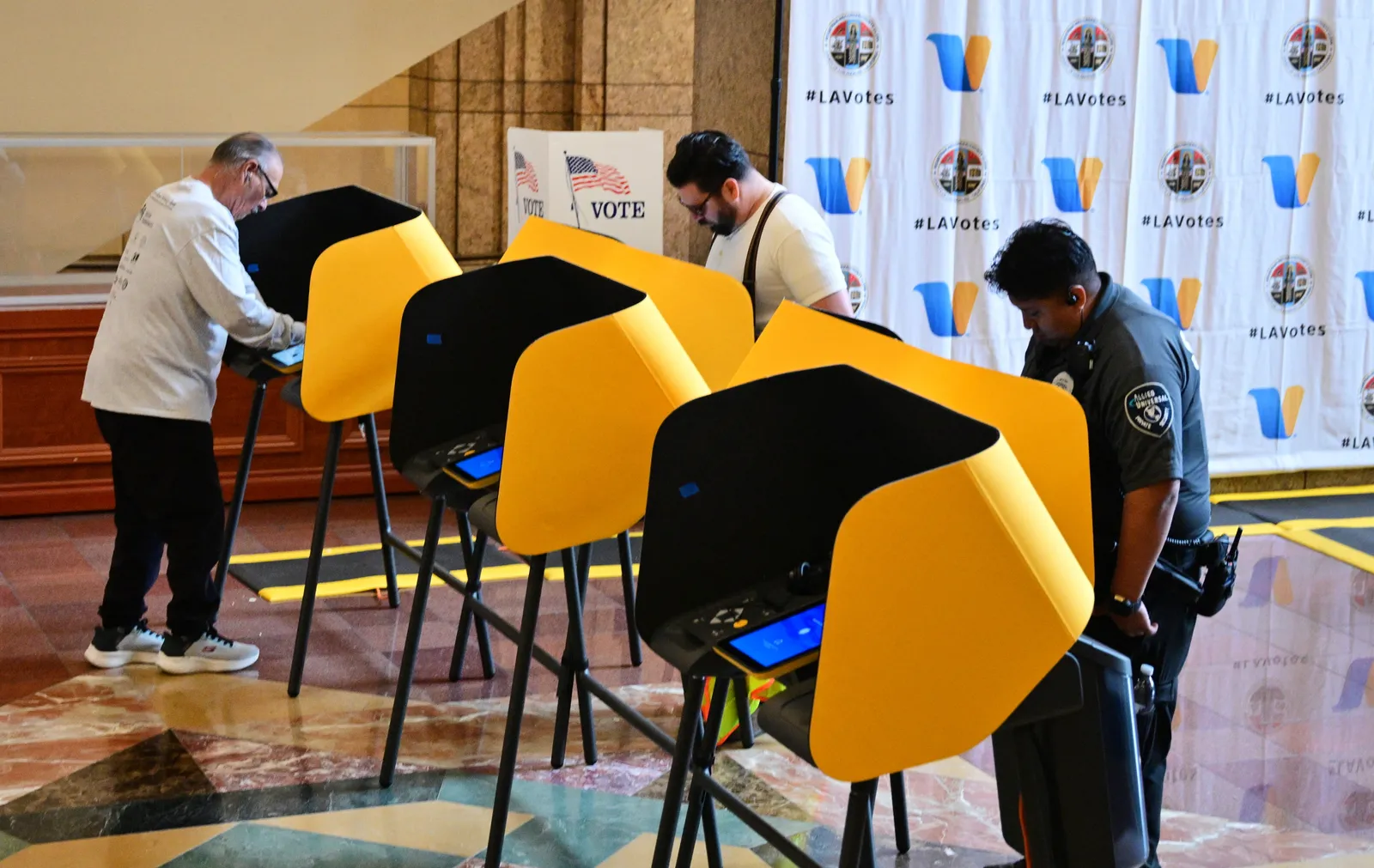
LA County: DOJ's 20,000 'noncitizen' voter list is 'unreliable,' includes U.S.-born
Preliminary review by Los Angeles County election officials finds errors in the federal list, raising the stakes for voter roll integrity ahead of November.
Trump's $1.5B Pentagon chip investment lands in North Carolina
A $1.5 billion defense infusion for North Carolina chipmaking signals a new era of Pentagon-backed reshoring - here's what it means for the industry.

Nigeria confirms first Ebola case in Abuja, a woman just off a Uganda flight
Health Minister Muhammad Ali Pate says the patient flew in from Uganda, putting Africa's latest outbreak on Nigeria's doorstep.