
Keith Richards says Mick Jagger “won’t bloody stop” on new Rolling Stones album
What keeps Jagger moving and why Foreign Tongues, July 10, is the Stones’ momentum business case in public.
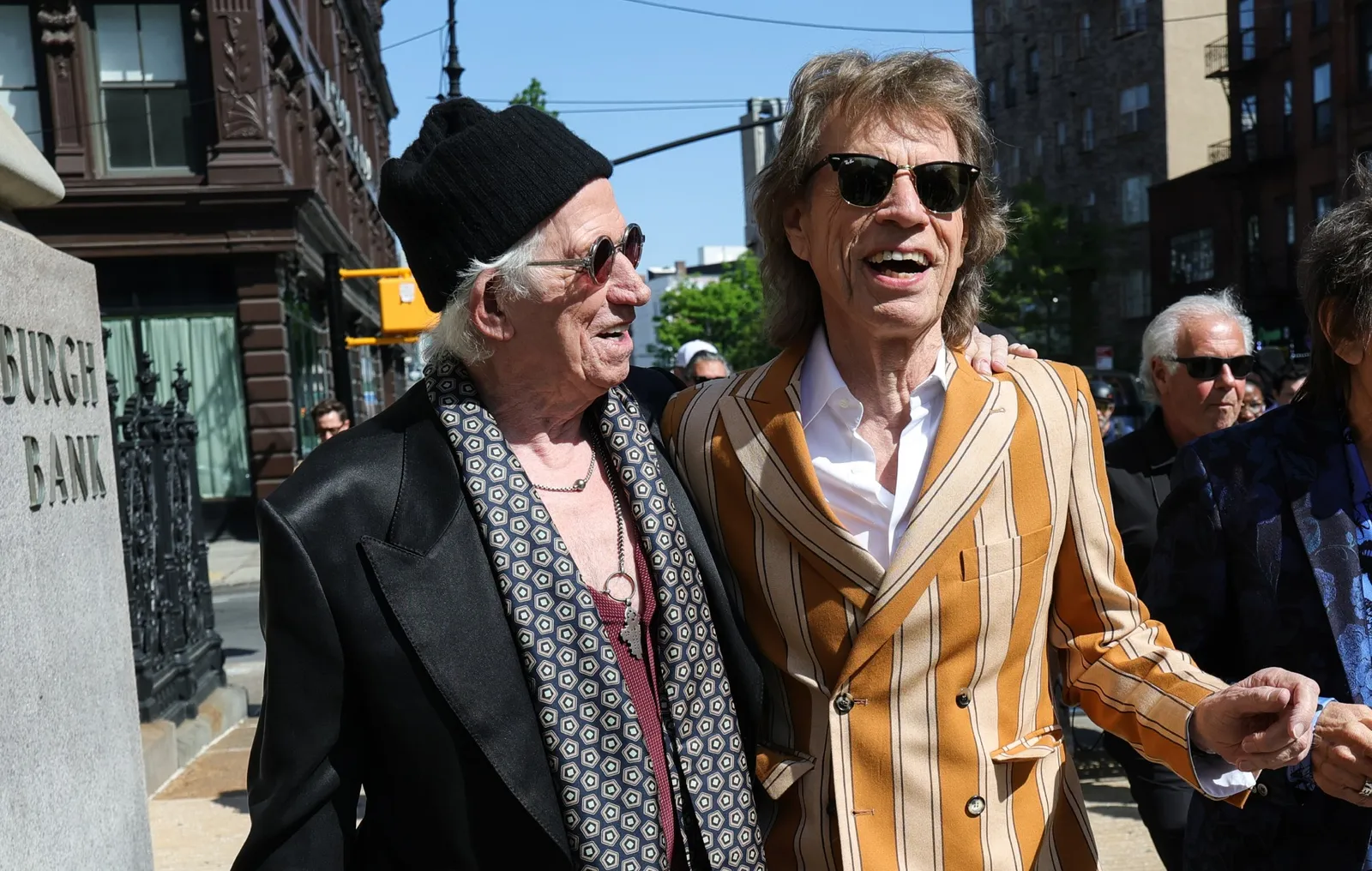
Keith Richards says Mick Jagger “won’t bloody stop” making new music, attributing the fast turnaround to Jagger’s “momentum” from Hackney Diamonds. The July 10 release of Foreign Tongues, plus a Marvel vinyl push and a new podcast, turns creative velocity into a full-throttle audience strategy.
Keith Richards does not sound like a man worried about the Rolling Stones’ creative engine slowing down. In an interview with the Guardian, Richards praised Mick Jagger’s “momentum” and said Jagger “won’t bloody stop” making new music, crediting that energy for how quickly the band’s next album came together.
Richards laid out the practical reason in plain terms: “We had enough stuff if we wanted to keep pushing, and so Mick and I gave each other the usual wry look and said: ‘Yeah, let's keep pushing.’” In other words, this is not just a vibe. It is a momentum loop, where prior material exists, Jagger stays prolific, and the band uses that runway to move fast. That context matters because the Stones are now gearing up to release their 25th studio effort, Foreign Tongues, on July 10 via Polydor/Universal Music.
Foreign Tongues is set to feature guest appearances from Paul McCartney, Robert Smith, Steve Winwood, and the band’s late drummer Charlie Watts. Richards also specifically singled out producer Andrew Watt, calling him “a breath of fresh air and a kick up the ass.” He described Watt as someone who “knows his stuff musically and technically” and “doesn’t put up with any bullshit,” adding that Watt is “a bit impetuous at times.” Richards said Watt has never had to challenge him directly, though “he may have given somebody a talking-to.”
Zoom out for a second, because this is where it stops being just music gossip. In most creative industries, the bottleneck is rarely talent. It is friction: decision delays, alignment problems, and production cycles that drag past the point where attention spans and release windows keep shrinking. The Stones are essentially publicly demonstrating how to reduce that friction. Their story, per Richards, is that they had enough material to keep going, Jagger’s output kept the pressure on in a good way, and Watt kept the process moving. For operators and investors watching how long-tenured brands stay relevant, that is the mechanism to pay attention to, not the celebrity quote.
The album’s rollout strategy is also doing work. The tracklist for Foreign Tongues was revealed last month with song titles appearing on streaming devices, “but in actual foreign tongues,” and the record includes previously released singles “Rough And Twisted” and “In The Stars.” It also includes a cover of Amy Winehouse’s “You Know I’m No Good.” Before release, the band will launch Speaking In Tongues, a new podcast featuring interviews with Jagger, Richards, and Ronnie Wood, narrated by Norah Jones. The podcast will run across six episodes, with behind-the-scenes insight into making Foreign Tongues, including studio techniques, creative influences, and the band’s songwriting process. It will also feature studio outtakes and never-before-heard new songs, plus contributions from Watt, Robert Smith, and Steve Winwood, and the record’s cover artist, Nathaniel Mary Quinn.
If you have ever wondered why legacy artists increasingly treat “content” like infrastructure, this is a clear example. The Stones are not only selling an album. They are building a parallel media layer that extends discovery and keeps fans close to the creation process. That matters because the promotional calendar can be the difference between a release that spikes and one that sustains. Here, the Stones are stacking an audio series, a multi-guest album narrative, and a packaging moment, rather than relying on one traditional campaign.
And then there is the brand collaboration. Ahead of the release, the Stones teamed up with Marvel to launch a special vinyl collector series for the record, featuring new limited edition artwork with Spider-Man, The Hulk, Captain America, and more. The band also revealed how they ended up working with The Cure’s Robert Smith. These moves are not random. They turn a music release into a cross-audience event, pulling in fans of comics and adjacent pop culture ecosystems who might not follow the Stones day to day. It is a distribution strategy dressed up as fun.
Creative direction, too, is being framed as intentional breadth. At an album launch event in New York City that NME attended last month, Jagger talked about the diversity of sound on Foreign Tongues and specifically referenced a country track called “Ringing Hollow.” Jagger shared that when he and Richards were young, both liked country music a lot, and they would play it and liked Hank Williams. He said you cannot really imitate those people, but they absorbed the style. He described “Ringing Hollow” as “a love song to America,” saying he didn’t want to express it in a rock way and thought it was better as country.
Jagger also discussed the album’s inspiration: he said this record is interesting because, yes, the Stones are a rock band, but they also have the ability to do ballads and country music and dance music, spanning all these styles. He emphasized that over the years they have loved all kinds of music, and they express that in how they record and what songs they write. Richards added: “It’s quite possible that there’s more in there. And that’s what we’re looking for.” That line lands differently after the “won’t bloody stop” comment. It is the same idea in reverse: the creative pipeline is not merely active. It is expected to keep yielding.
Finally, there is the live element. Jagger recently opened up about the possibility of a new Rolling Stones tour being announced and said he hopes to do some “shows next year.” Ahead of that, he also surprised fans in Oxford by playing an impromptu gig with students at a local pub.
For executives, founders, and board-level readers, the second-order lesson is simple: velocity compounds when three things line up. You need existing creative assets, a leader who stays prolific and confident about continuing, and a production environment that removes nonsense and keeps decisions moving. The Stones are showing that playbook in public, with a July 10 release, a multi-guest lineup, a podcast scaffold, and a Marvel collector push to convert attention into sustained demand. If you manage a brand, a platform, or an investment thesis in any creative or consumer category, this is a reminder that momentum is not just an aesthetic. It is an operational choice.
This story's Key Insights and Take-aways are locked.
Create a free account to unlock Executive Actions for one credit.
Register to UnlockAlways free for Executives Club members. Join the Club
More in Entertainment

FIFA will red-card mouth-covering at World Cup confrontations to curb racism
FIFA says players who cover their mouths during confrontations will get a red card, with other 2025 Qatar match drama piling up.

Saudi’s Planes warns Spain: 0-0 with Cape Verde proves Group H is harder now
After Spain stumbled to a 0-0 draw, Ramon Planes says Saudi’s improved mix could decide Sunday’s World Cup clash in Atlanta.

Tony Leung at Shanghai Film Festival: why “Silent Friend” must be seen in cinemas
At a packed Shanghai International Film Festival masterclass, Tony Leung Chiu-wai argues his subtle acting only lands on the big screen.