
Saudi’s Planes warns Spain: 0-0 with Cape Verde proves Group H is harder now
After Spain stumbled to a 0-0 draw, Ramon Planes says Saudi’s improved mix could decide Sunday’s World Cup clash in Atlanta.
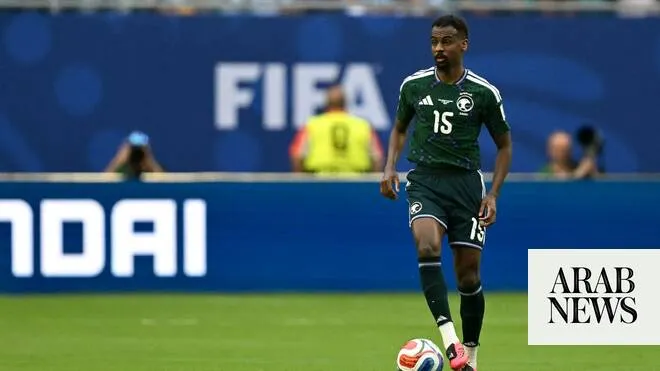
Ramon Planes, the former sports director of Al-Ittihad, argues Saudi Arabia’s current squad is more dangerous than the team that beat Argentina 2-1 in 2022, and warns Spain not to underestimate it. The consequence for decision-makers: the Group H race is tightening, and the tactical and leadership choices made last month could determine who reaches the 2026 knockout stages.
Spain and Saudi Arabia are about to meet again in a 2026 World Cup group that already looks like it wants to embarrass anyone who wrote it off. After the opening matches in Group H, Spain and Saudi are level on points, with Spain held to a 0-0 draw by debutants Cape Verde and Saudi drawing 1-1 with Uruguay. Sunday’s crucial clash in Atlanta is not just a scoreboard moment. It is a test of whether Spain’s early rhythm survives Saudi Arabia’s reset, and whether Saudi’s leadership gamble translates into knockout-stage momentum.
The person closest to that story is Ramon Planes, who spent the past two years as sports director of Jeddah giants Al-Ittihad. He is using his inside perspective to warn his countrymen to expect a tougher match than what Saudi faced in their earlier Group H matchup. Planes also frames Saudi’s improvement as a specific blend: he says this squad is “a mix between that (2022) generation” that is nearing its end and a newer crop that will form the base for the 2034 World Cup in Saudi Arabia. In his view, more experience plus young talent does not soften the challenge for Spain. It makes it “slightly more dangerous.”
That matters because Spain’s early results created a very real pressure pocket. The 0-0 against Cape Verde brought criticism in Spanish media directed at coach Luis de la Fuente. This is the kind of pressure that can either unlock a team or freeze it. Spain now have to perform, but not in a clean, predictable way. Planes points to what makes Saudi different from Cape Verde, and he does it with two concrete angles: he says Saudi have a slightly higher tactical understanding and they are technically superior. In match terms, that implies Spain will face an opponent with more offensive damage potential than Cape Verde managed to threaten.
Planes also argues that the biggest swing factor will be game-state control in the first half, and he offers a tactical logic for why. He says Georgios Donis, the Greek tactician appointed to replace Herve Renard in April, has a manager who knows Saudi football very well because of his experience, and that this should help Saudi stay very organized. He adds that “the fact that Spain can open the first half will determine the course of the match.” Then he gives the playbook implication for Spain: against teams that concede possession, Spain must be more vertical, swift, and have higher offensive intensity. Translate that out of soccer shorthand and it becomes a management lesson. If Spain does not score early, they may lose the tempo advantage and spend more time reacting.
Saudi’s own decision-making tells you they are not treating this match as a learning exercise. Planes says Saudi are looking for a result that puts the knockout stages within reach, and he stresses that “The Saudi mentality does not conceive of going as a mere participant.” He ties that directly to the coaching change. In his framing, Saudi would not have changed the coach a month and a half before starting the tournament unless they believed the previous setup might not deliver the competitiveness they wanted. That is a statement about institutional incentives: when expectations include reaching the knockout stages, leadership changes are not cosmetic. They are supposed to raise the team’s floor.
The second voice reinforcing that emphasis on organization and mindset comes from Jason Remeseiro, a former Valencia winger who joined Al-Fayha in 2025. He describes Saudi Arabia as “very passionate about football” with a “winning mentality,” and he echoes the short-term caution: in the long term, he says he expects Saudi to organize “one of the best World Cups in history,” but “in the short term... Spain shouldn’t get complacent.” That combination is important. It acknowledges the 2034 planning horizon while still warning that the immediate competitive standard is what will decide Sunday.
If you zoom out from the match, there is a bigger second-order story for executives in sport and adjacent industries: early group results are reshaping how pressure is allocated. Spain’s 0-0 with Cape Verde brought criticism for Luis de la Fuente. Saudi’s 1-1 with Uruguay, by contrast, gave them a platform to build confidence and urgency. Planes says that from what he hears, Saudi are very confident because they earned that confidence through their good performance against Uruguay, and he believes they have a chance to progress because they drew with a direct rival. In other words, Saudi’s path is not just “hope for a favorable outcome.” It is a strategy built on tactical organization, early scoring sensitivity, and a leadership decision that is still being cashed out.
Sunday in Atlanta will show whether Planes’s warning holds up under the highest-pressure conditions. For Spain, the question is whether the early stagnation can be corrected without losing control of the match. For Saudi, the question is whether the Donis organizational model and the squad mix Planes described translate into concrete advantage when it counts. Either way, Group H’s tightness is already a reminder to decision-makers everywhere: in high-stakes tournaments, the first results do not simply set standings. They set narratives, pressure, and the operating behavior of every team in the room.
This story's Key Insights and Take-aways are locked.
Create a free account to unlock Executive Actions for one credit.
Register to UnlockAlways free for Executives Club members. Join the Club
More in Entertainment

FIFA will red-card mouth-covering at World Cup confrontations to curb racism
FIFA says players who cover their mouths during confrontations will get a red card, with other 2025 Qatar match drama piling up.

Keith Richards says Mick Jagger “won’t bloody stop” on new Rolling Stones album
What keeps Jagger moving and why Foreign Tongues, July 10, is the Stones’ momentum business case in public.

Tony Leung at Shanghai Film Festival: why “Silent Friend” must be seen in cinemas
At a packed Shanghai International Film Festival masterclass, Tony Leung Chiu-wai argues his subtle acting only lands on the big screen.