

Kemi Badenoch slams incoming PM Burnham for not knowing the country's priorities
In a Laura Kuenssberg interview, the Conservative leader attacks Burnham's “airy fairy” approach and urges a harder focus.
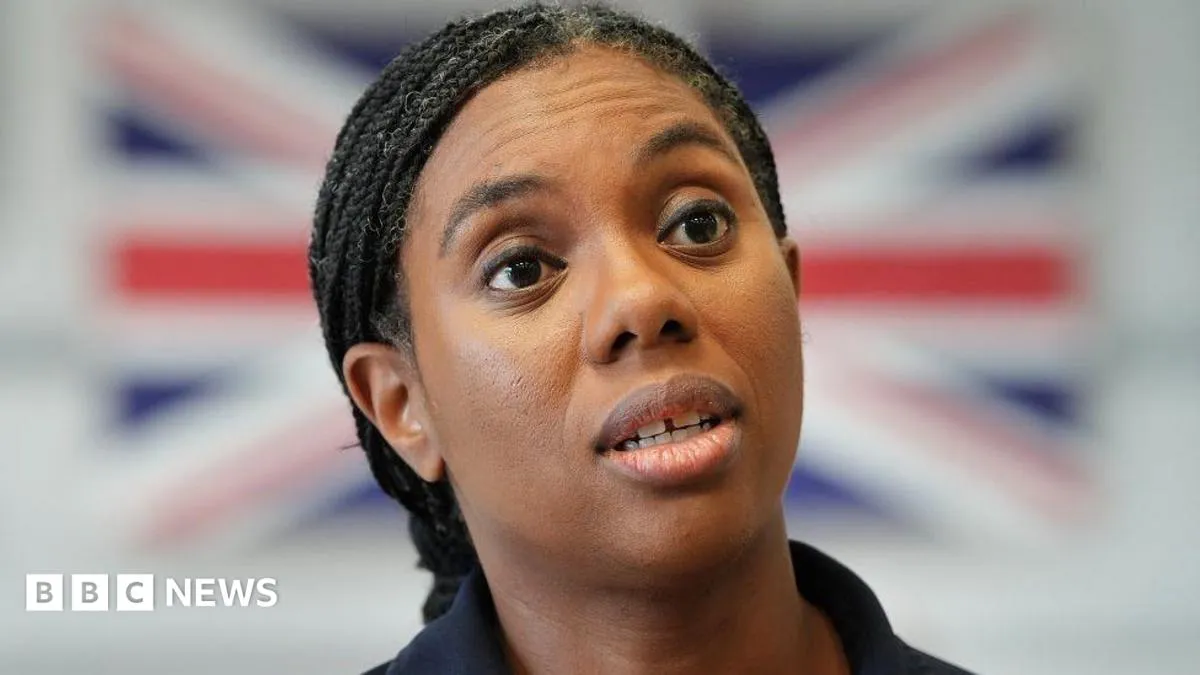
Kemi Badenoch, speaking to Laura Kuenssberg, accused the incoming PM of not knowing “what the country's priorities are.” She branded Burnham a “people pleaser” with “airy fairy” plans, signaling a sharper clash over governance priorities.
In an interview with Laura Kuenssberg, Conservative leader Kemi Badenoch delivered a pointed attack on the incoming PM. Her charge was blunt: Burnham, she said, does not know “what the country’s priorities are.” She went further, calling him a “people pleaser” with “airy fairy” plans. Translation for anyone who spends their life watching strategy and execution: Badenoch is arguing that the new political leadership is too focused on sounding right and pleasing audiences, and not focused enough on deciding what actually matters.
Why does that land like a hand on the back of your neck for decision-makers? Because “priorities” is not a vibes word. In politics, it is a budget word. In regulation, it is a sequencing word. In markets, it is a policy risk word. When a major opposition leader publicly frames the incoming PM as lacking a clear sense of the country’s priorities, it creates a new baseline for how investors, businesses, and public-sector stakeholders plan for what comes next. Will policy be coherent, or will it be reactive? Will implementation match announcements, or will there be drift? Badenoch’s rhetoric is trying to force the conversation into that risk lens immediately.
The phrase “people pleaser” is doing work here. Leaders who try to satisfy everyone often end up satisfying nobody decisively. In corporate terms, it is the difference between a roadmap and a mood board. If Burnham is indeed being criticized for plans that are “airy fairy,” the implied contrast is with concrete, grounded commitments that can be translated into procurement, legislation timelines, regulatory rulemaking, and enforcement capacity. And when the opposition can characterize the incoming administration this early, it can influence not just the news cycle, but also internal planning across government departments that will be inheriting mandates and targets.
There is also a timing angle. Badenoch chose to raise these accusations in a live, high-visibility interview format with Laura Kuenssberg. That suggests intent beyond day-to-day partisan messaging. In governance transitions, the first narratives often become the fallback language later, when policies are delayed or contested. If the incoming PM is branded as someone who does not understand the country’s priorities, then subsequent compromises and trade-offs are likely to be interpreted through that skepticism. That can harden bargaining positions inside Parliament, complicate cross-party coalition building, and raise the temperature around any policy packages that require buy-in.
Look at the incentives operating around this moment. The Conservative leader is not merely disagreeing with Burnham. She is attempting to define what “good leadership” means in practice: selecting priorities and committing to them. Meanwhile, the incoming administration has every incentive to project clarity and competence, because early uncertainty is expensive. Businesses price uncertainty into investment timing. Regulators manage uncertainty by tightening guidance and building more cautious compliance pathways. Even public services can be affected, since departmental teams often need a stable sense of direction to set delivery schedules.
This kind of critique matters for second-order reasons that executives and boards feel even if they are not paying attention to political interviews. When opposition leaders publicly question an incoming PM’s grasp of priorities, it can alter expectations around regulatory direction and fiscal posture. Firms then adjust risk models. They ask whether upcoming regulations will be designed to grow, to protect, or to reshuffle. They consider whether enforcement priorities will change. And because many UK policy areas connect across departments, unclear leadership priorities can ripple through procurement, staffing, and compliance planning.
For decision-makers at companies that rely on government procurement, subsidies, licensing, or regulatory approvals, the stakes are straightforward. You are not just tracking what policies get proposed. You are tracking what will get implemented, on what timeline, and with what consistency. Badenoch’s criticism attempts to preemptively frame Burnham’s tenure as less coherent, more performative, and less grounded. That could shape how stakeholders interpret the administration’s first moves, and it can influence the political space in which negotiations happen.
If you are a CEO, CFO, or board member, the strategic takeaway is about timing and information. This is an early-stage narrative attack, and those attacks can become operational realities. The question is whether the incoming PM counters the critique with concrete priority-setting that can be verified through policy sequencing and delivery. If not, uncertainty could persist long enough to affect investment decisions, hiring plans, and compliance roadmaps. In short, Badenoch’s accusations are not just political theater. They are an attempt to define the execution risk of the next government before it even takes full control.
This story's Key Insights and Take-aways are locked.
Create a free account to unlock Executive Actions for one credit.
Register to UnlockAlways free for Executives Club members. Join the Club
More in Politics

LA County: DOJ's 20,000 'noncitizen' voter list is 'unreliable,' includes U.S.-born
Preliminary review by Los Angeles County election officials finds errors in the federal list, raising the stakes for voter roll integrity ahead of November.

Trump's $1.5B Pentagon chip investment lands in North Carolina
A $1.5 billion defense infusion for North Carolina chipmaking signals a new era of Pentagon-backed reshoring - here's what it means for the industry.

Nigeria confirms first Ebola case in Abuja, a woman just off a Uganda flight
Health Minister Muhammad Ali Pate says the patient flew in from Uganda, putting Africa's latest outbreak on Nigeria's doorstep.