
Knicks smash Game 5 ratings: 24.5 million viewers, biggest since 1998
A 157% jump lifts the NBA Finals audience, resetting what ABC and ESPN can expect from Game 5.
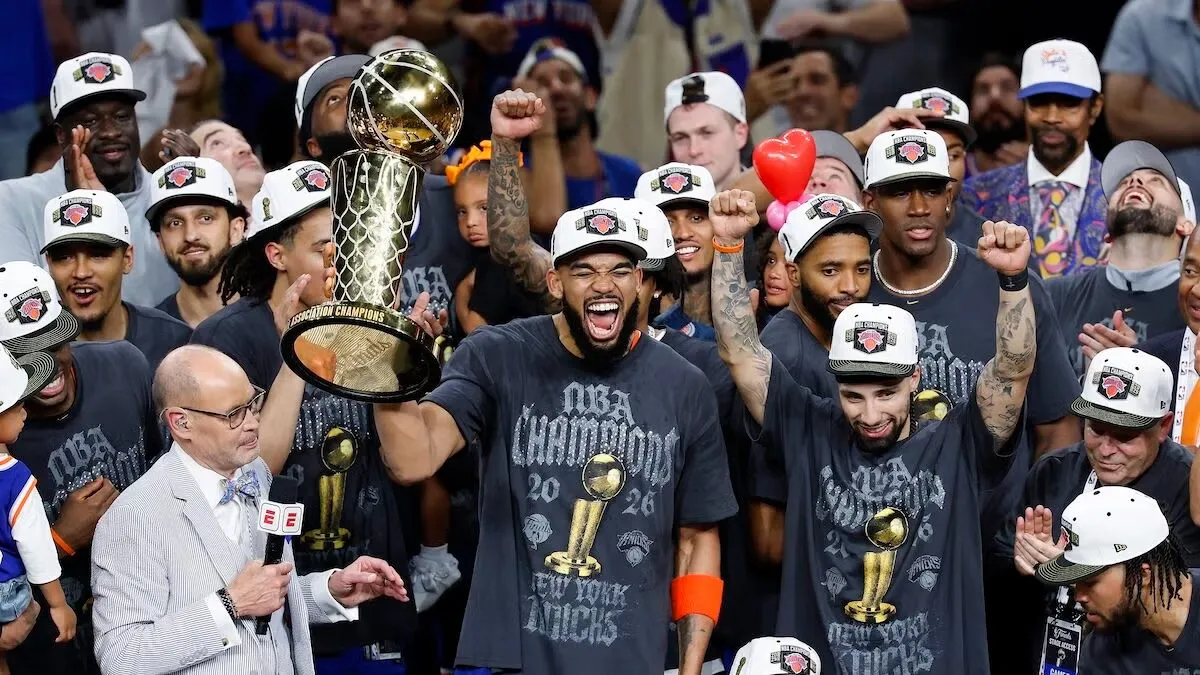
The New York Knicks beat the San Antonio Spurs 94-90 in Game 5 on Saturday, June 13, drawing 24.5 million viewers, the biggest Game 5 audience since 1998. The result pushed the NBA Finals average to 20.6 million across five games, a record for ABC and ESPN.
The Knicks' 94-90 win over the San Antonio Spurs on Saturday, June 13, landed 24.5 million viewers for Game 5, the most-watched Game 5 since 1998. That is not just a sports flex. It is a streaming-proof ratings datapoint that advertisers, media strategists, and league executives watch like hawks, because Game 5 is where casual interest turns into committed attention.
And the audience story only gets bigger. Nielsen big-data-plus-panel figures show Game 5 viewers peaked with 33 million as fans tuned in to the final moments, while overall viewership soared 157% from last year's Game 5. In other words, this was not a mild rebound. It was a clear ratings acceleration, and it closed the Finals with force.
If you are a media executive, marketer, or board member trying to plan revenue around sports content, the timing matters as much as the number. TheWrap reports that Game 5 also delivered the largest audience of the day across all television, plus the biggest figures in every key male and adult demo. That means it was not limited to one audience segment, which is what makes the win commercially valuable. In the language of ad sales, broad-based reach usually translates into stronger inventory confidence and more pricing power.
Zoom out one layer and the same theme shows up. Across five games, the NBA Finals averaged 20.6 million viewers, described as a record for ABC and ESPN and the most-watched championship series since 1998. The Finals were also up 100% from last year's seven-game NBA Finals. So the Knicks and Spurs did not just win a game. They anchored a championship run that outperformed a comparable recent baseline by a full factor of two. For decision-makers who manage budgets across the television calendar, those year-over-year comparisons are the difference between “good performance” and “rewrite the forecast.”
The Game 5 momentum also builds on earlier matchups, suggesting the audience did not evaporate after an initial spike. The first two matchups brought in ABC's most-watched Game 1 and Game 2 since 2018, with 16.93 million viewers for Game 1 on Wednesday, June 3 and 16.43 million viewers for Game 2 on Friday, June 5. Then Game 3 delivered 23.8 million viewers, the biggest Game 3 audience since 1998, and Game 4 posted 20.9 million viewers, also described as the biggest Game 4 audience since 1998. Put together, the Finals ran hot for multiple games, not just one lucky outlier.
There is another practical angle here for executives: when a league series posts record or near-record viewership repeatedly, it changes how everyone else bids for attention. Networks and platforms can justify premium ad inventory, sponsors can underwrite bigger campaigns, and production teams can plan with less uncertainty. Meanwhile, the league benefits when it can point to sustained performance across multiple games and demos, not just a single marquee moment. In a market where content is crowded and measurement is increasingly scrutinized, “largest audience of the day across all television” is the kind of phrase that sales teams love because it makes the value legible.
Even regulators and industry stakeholders feel this indirectly. While the source does not cite any regulatory action, ratings and measurement frameworks matter in policy discussions about media markets, advertising reach, and how households are counted. Nielsen big-data-plus-panel figures are part of the industry’s standard measurement ecosystem, and clear performance benchmarks like “most-watched since 1998” help align expectations for how sports viewing is tracked over time. That alignment matters because future distribution deals, rights negotiations, and measurement contracts tend to rely on consistent, comparable data.
For peers in similar roles, the strategic takeaway is simple and immediate: Game 5 is a high-stakes ratings gate, and this one cleared it at a level not seen in decades. When a championship series averages 20.6 million viewers and Game 5 hits 24.5 million with a 157% year-over-year jump, it signals demand that is broad, sustained, and monetizable. Tomorrow’s programming, rights strategy, and ad planning will chase the conditions that made this possible, because that is how you turn “viewership” into a business case that holds up in boardrooms.
This story's Key Insights and Take-aways are locked.
Create a free account to unlock Executive Actions for one credit.
Register to UnlockAlways free for Executives Club members. Join the Club
More in Entertainment

Sword Art Online returns July 2026 with an all-new adventure
A July 2026 return signals franchise momentum. Here is what it means for fans, studios, and IP investors.

Mbappe becomes France's joint record scorer at 27, rewriting the meaning of longevity
A quick timeline of Kylian Mbappe's rise to France's joint scoring record, and why it matters for football’s next generation.

deadmau5 adopts Cathulhu after Humane Society plea, adding a fourth cat on June 16
The producer confirms he took in a new tabby during Adopt a Cat Month after a $30,000 rescue effort.