
Lenovo’s modular ThinkPad X1 Carbon Aura Edition adds a double-sided motherboard at CES
The 14th-gen ThinkPad redesign makes repairs easier by swapping in modular components, changing the maintenance calculus.
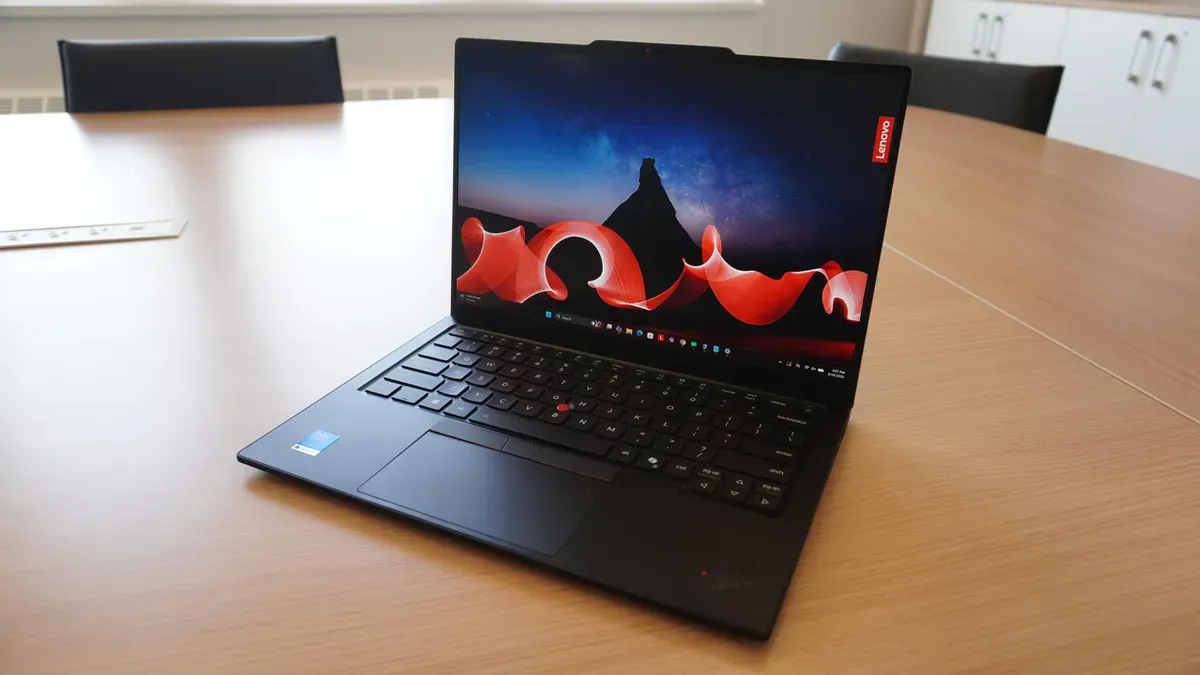
Lenovo unveiled the 14th-gen ThinkPad X1 Carbon Aura Edition at CES, featuring a redesigned double-sided motherboard and modular components. For decision-makers, this signals a more repairable path for enterprise laptops, with real implications for lifecycle cost and uptime.
At CES, Lenovo pulled the spotlight toward a part of the laptop most buyers barely think about: how painful repairs are. The company unveiled the 14th-gen Lenovo ThinkPad X1 Carbon Aura Edition, and the headline feature is a redesigned double-sided motherboard paired with modular components.
That design choice matters because it directly targets the usual failure mode of modern thin-and-light systems. Instead of treating the internals like an unserviceable blob, the ThinkPad X1 Carbon Aura Edition is built around modules that can be swapped as part of a repair. The shift is small on paper and huge in practice, especially for IT teams and finance leaders who get stuck paying for replacement devices when a fix should be possible.
To understand why this is a big deal, you have to zoom out to how enterprise hardware works. Organizations run laptops on schedules that are rarely aligned with the lifespan of the device components. A battery can age out. A storage drive can fail. A wireless card can go flaky. In a world where components are hard to access or not meant to be replaced, the “repair” option often becomes “replace the whole system.” That is a cost problem, but it is also an operational problem, because downtime is downtime, even if the replacement ships fast.
This is where Lenovo's modular approach starts to look like more than a design flourish. By using a redesigned double-sided motherboard and modular parts, the company is effectively reducing the friction between something breaking and getting it fixed. For buyers, that can change how you evaluate total cost of ownership. Instead of treating the laptop as a throwaway at the first sign of trouble, you can model scenarios where only the failing component gets swapped.
There is also a policy tailwind forming in the background. Across multiple regions, governments and regulators have increasingly pushed toward repairability through right-to-repair style rules and extended expectations for spare parts availability. While the CES reveal itself is not a regulation announcement, it aligns with the direction the market is moving. When regulations or customer procurement policies begin to reward repairable designs, hardware vendors that build modularity into the platform have a head start. They can point to practical serviceability rather than just marketing language.
Now, zoom in on the motherboard detail. A double-sided motherboard is not inherently the same thing as modularity, but in this ThinkPad it is part of the redesign that enables modular components to fit into a serviceable architecture. In plain English: the physical layout is being organized so that servicing does not require demolishing the entire system. That matters because repairs are usually limited by what technicians can access quickly and accurately without risking collateral damage to nearby parts.
For executives, the second-order implications show up in procurement, service contracts, and fleet strategy. If modular repairs become more viable, IT leaders can negotiate different service expectations. Finance leaders can revise depreciation schedules and refresh cycles with more confidence that component failures do not automatically translate into device replacement. Procurement can also factor repairability into vendor evaluations, especially when large organizations are standardizing fleets and need consistent service workflows.
Peer companies watching Lenovo’s move will take note of the signal it sends: modularity is becoming a competitive dimension, not just a “nice to have” for enthusiasts. The ThinkPad line has long been associated with enterprise practicality, and this CES announcement doubles down on it through hardware design choices. If the modular, double-sided motherboard approach holds up in real-world servicing, it could reshape how enterprise laptops are specified, how long fleets are kept, and how quickly businesses recover when something breaks.
This story's Key Insights and Take-aways are locked.
Create a free account to unlock Executive Actions for one credit.
Register to UnlockAlways free for Executives Club members. Join the Club
More in Technology

Nvidia's $89B data center quarter: the 9 companies cashing in
The AI buildout is minting fortunes beyond GPUs, and memory, cloud, and cooling suppliers are riding the same wave.

Google quietly links your phone number to every Android account on your SIM
Adding a SIM now ties your phone number to all Google accounts - and future accounts inherit it. Here's the security and privacy stakes.

Hijacker AI 'Skynet mode' runs 100,000 attack steps against exposed models
Symantec caught a criminal AI agent that borrows other models, steals data, and mines crypto; the only relief is no confirmed victims yet.