
Mark Cuban's ultimatum to employers: share stock or pay higher taxes
The billionaire investor wants a tax penalty for companies that refuse to give every employee equity, and he has the receipts to prove it works.
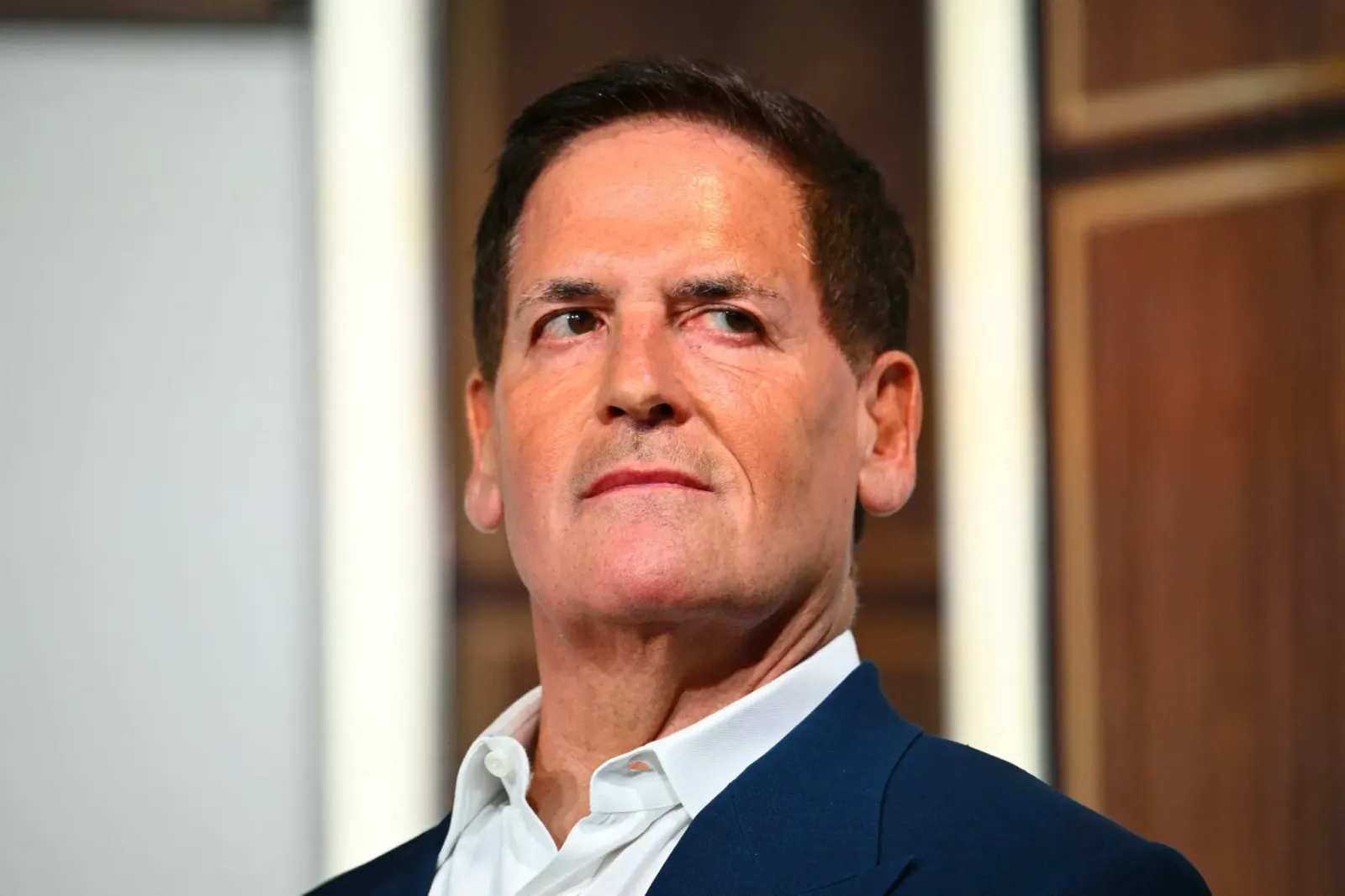
Mark Cuban proposed on X that any company not offering equity to every employee on a pro rata basis should face higher corporate taxes. The idea lands as wealth concentration reaches new extremes, with the top 0.1% holding $25.07 trillion in assets versus $4.27 trillion for the bottom 50%.
Mark Cuban, the billionaire investor and Shark Tank star, has a new answer to wealth inequality: make employers choose between handing out stock to every employee or paying higher corporate taxes. Writing on X, Cuban said the tax code should "increase the taxes of any company that doesn't offer equity to every employee on a pro rata basis to non-founder executives." His logic is blunt: "If they get rich from the market, so do they." The proposal is not hypothetical for Cuban, who says he gave stock to 330 employees at Broadcast.com before Yahoo acquired the company for $5.7 billion in 1999, and 300 of them became millionaires as a result. He also awarded equity and cash bonuses at his first IT consulting company, MicroSolutions.
Cuban's proposal is a direct challenge to founders and CEOs who hoard equity while their companies scale. He argues that most wealthy people get rich by selling their companies or taking them public, and that workers who helped build the value should share in the windfall. The mechanism he proposes is a tax penalty, not a mandate: companies that refuse to spread equity would face higher corporate taxes, while those that do would be rewarded. Cuban acknowledges the trade-off, writing that "each entrepreneur decides what margins, gross or net, they are willing to accept," and that some founders realize taxes are "still a value for the community, which can help your business." He frames equity alignment as a competitive advantage: "Every founder worth a damn knows that the greatest success, economic and personal, comes from aligning the goals and interests of as many stakeholders as possible. Everyone will benefit more, when everyone benefits more."
The timing is no accident. Wealth distribution in the U.S. has tilted sharply toward the top over the past decade, and the AI boom is accelerating the shift. Federal Reserve data shows the bottom 50% of the wealth distribution owned $1.02 trillion in assets in Q1 2016, versus $10.75 trillion for the top 0.1%. By Q1 2026, the bottom 50% owned $4.27 trillion, a more than 300% increase, while the top 0.1% owned $25.07 trillion, a much larger leap in absolute value. The gap is even starker in corporate equities and mutual funds: the 90th to 99th percentile owns $20.5 trillion, while the bottom 50% owns under $0.6 trillion. Cuban's stock-for-everyone proposal is, in effect, a plan to move more of that equity wealth down the income ladder before the AI-driven concentration gets worse.
Cuban is not alone in thinking about this. Jensen Huang, CEO of Nvidia, has seen his wealth rocket alongside his company's stock, and members of his leadership team have joined him in billionaire rankings. Per the Bloomberg Billionaires Index, Nvidia's CFO Colette Kress and executive vice president of worldwide field operations Jay Puri are now each worth more than a billion dollars thanks to their stock holdings. Huang told a panel hosted by the All-In podcast last year that he reviews compensation for all 42,000 employees and "100% of the time, I increase the company's spend on [operating expenses]." His reasoning: "You take care of people, everything else takes care of itself."
The obvious criticism of Cuban's tax idea is that higher corporate taxes get passed to customers, as consumers have learned with tariffs. But Cuban rejects that, arguing that entrepreneurs choose their own margins and that competitive pressure, not tax policy, ultimately sets prices. He also makes a broader social argument: "If we continue to see growing disparity in income, you risk unrest and further division, which is the most expensive tax on every business." That line frames wealth inequality not as a moral issue alone, but as a systemic risk to the business environment itself.
For founders and CEOs, the proposal is a preview of a policy debate that is likely to intensify as AI concentrates wealth further. Even without a tax change, the strategic question is already live: how do you keep teams motivated when early employees are already worth eight or nine figures? Huang's answer is to keep increasing total compensation, but Cuban's answer is to give everyone a piece of the upside from day one. The two approaches are not mutually exclusive, but they point to a broader shift in how founders think about equity distribution.
Cuban's track record gives the idea weight. He has actually done what he is proposing, and the Broadcast.com example is a concrete proof point: 300 employees became millionaires from a single acquisition. That is the kind of outcome that turns employees into advocates and makes recruiting easier. The policy mechanism may be controversial, but the underlying principle, that broad equity ownership aligns incentives and reduces inequality, is gaining traction as the AI boom concentrates wealth at the top.
For boards and executives, the takeaway is not to wait for a tax penalty. The conversation is already shifting toward broader equity participation, and companies that proactively share ownership may find it easier to attract talent, retain employees, and avoid the political backlash that comes with extreme wealth concentration. Cuban's proposal is a warning shot: if business leaders do not voluntarily spread the wealth, the tax code may do it for them.
This story's Key Insights and Take-aways are locked.
Create a free account to unlock Executive Actions for one credit.
Register to UnlockAlways free for Executives Club members. Join the Club
More in Business
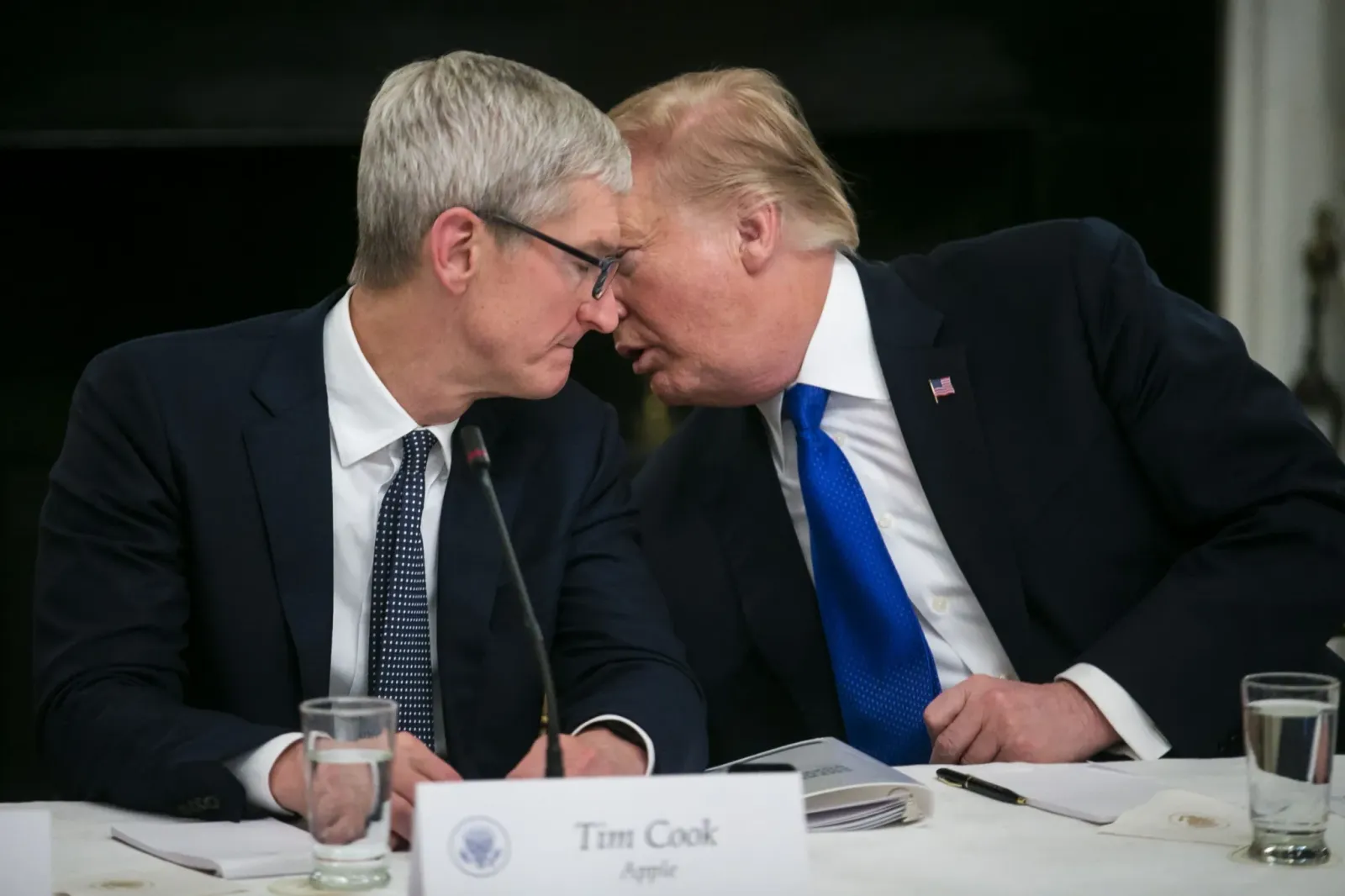
Tim Cook steps down as Apple CEO, stays on as chair with $45M equity
The 'Trump whisperer' keeps his White House and Beijing access as Apple navigates tariffs and a $4.6 trillion market cap.

Snowflake shares surge as AI data demand crushes estimates, lifting full-year forecast
Stocks jumped on stronger-than-expected guidance, signaling enterprise AI workloads are accelerating faster than Wall Street priced in.
Tim Cook's 15-year Apple CEO run ends: 3 lessons for any successor
After 15 years, Tim Cook hands Apple to John Ternus - here's how he turned a $350B company into a $4.6T juggernaut.