

Mark Lamb’s GOP primary win puts Arizona’s 5th seat in play after Biggs
A projected Decision Desk HQ result sets up a post-Andy Biggs reshuffle, with Trump backing and scandal drag in the mix.
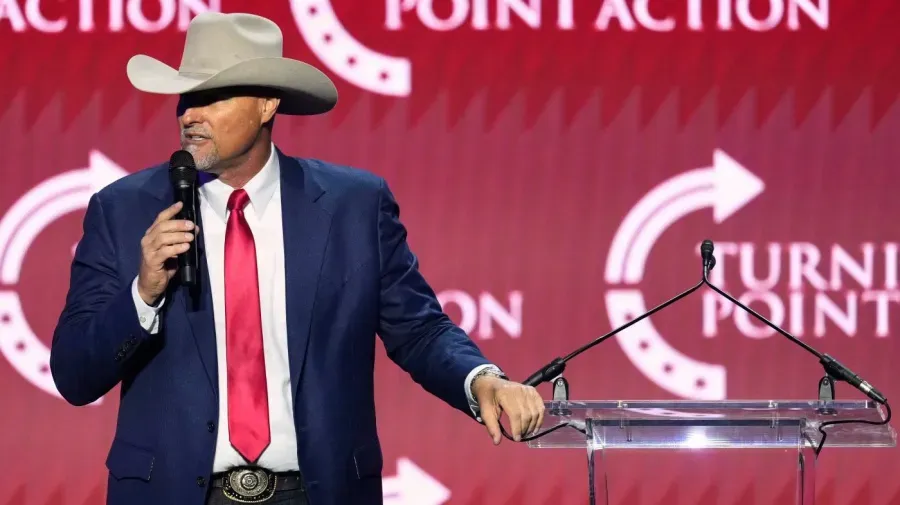
Former Pinal County Sheriff Mark Lamb is projected by Decision Desk HQ (DDHQ) to win the Republican primary for Rep. Andy Biggs’s seat in Arizona’s 5th Congressional District. The likely successor outcome matters for anyone tracking how endorsement, loyalty, and controversy shape control and messaging in safe seats.
Mark Lamb, the former Pinal County Sheriff dogged by reported sex scandal coverage, is projected to win the Republican primary for Rep. Andy Biggs’s (R) seat in Arizona’s 5th Congressional District, according to Decision Desk HQ (DDHQ). The immediate implication is simple: if DDHQ’s projection holds, the next U.S. representative from Arizona’s 5th will not be Biggs’s continuation, but a swap to Lamb.
Lamb is not new to high-stakes partisan primaries. He previously ran for Senate and lost to Republican Kari Lake in the 2024 GOP primary. In this current race, he secured President Trump’s endorsement and also drew support from conservative outlets, as the article notes, two signals that tend to matter in Republican base politics where endorsements can help candidates consolidate donors and volunteers quickly. The question for decision-makers is less “who gets the nomination” and more “how does the messaging and coalition behind the seat evolve once the endorsed favorite is the probable winner.”
To understand why this primary projection matters beyond the district, you have to look at how safe-seat dynamics work in the U.S. House. When a district is heavily tilted toward one party, the primary often functions like the real election. That shifts power to the GOP electorate and to the networks that can mobilize them early. Endorsements, name recognition, and rival contrasts become strategic levers. If Lamb is the projected nominee, the odds favor him clearing the general election barrier, making the primary outcome effectively a leadership transition for the district.
There is also a second layer: what happens when a candidate is carrying controversy while still winning momentum. The headline frames Lamb as dogged by reported sex scandal coverage. Even without new details in this source, the key is the political math. Base voters and endorsement-aligned donors are often willing to tolerate reputational risk if they believe the candidate is ideologically aligned and institutionally useful. That is not always true in every contest, but the fact pattern here is that Lamb combined a prior loss in 2024 with a Trump endorsement and conservative support to reach a projected primary win, according to DDHQ.
This also helps explain why primaries can feel like corporate board fights, just with different incentives. Factions ask, “Do we get the person we need to drive the agenda?” Endorsements act like proxy votes, and controversy becomes a stress test for coalition durability. In practical terms, parties and advocacy groups tend to prioritize candidates who can raise funds and lock in organizational support. When DDHQ projects a win, it signals that enough of those organizational pieces have already moved or that the coalition has hardened around the endorsed route.
For Biggs, the seat switch is the immediate storyline, but the broader consequence is how quickly the ecosystem adjusts after a long-serving representative becomes a past-tense reference point. Biggs’s departure creates an opening not just for voters, but for donors, staff networks, and ideological messaging. In many cases, the new nominee inherits the party’s existing infrastructure and then reshapes it to match their own playbook. If Lamb is projected to replace Biggs after the primary win, that suggests the district’s public-facing policy posture could shift toward Lamb’s brand, while still benefiting from continuity with the national GOP alignment he attracted through Trump’s endorsement.
Executives and investors often track U.S. politics because government outcomes can move regulation, investigations, procurement decisions, and public-private partnerships. While this particular story is about a House-seat nomination, it sits inside the same system: primary outcomes influence committee composition, which influences oversight agendas, and oversight influences compliance costs for industries that get dragged into hearings. Even if a district is “safe,” the representative’s identity affects who gets airtime, which bills find champions, and how quickly certain priorities move.
The strategic stakes for people in the orbit of these races are straightforward: if Lamb is projected to win, the GOP’s next messaging platform for Arizona’s 5th will likely be built around him, not Biggs. That matters to anyone watching how endorsements, ideological alignment, and controversy are balanced inside the Republican nomination process. The question is not just whether Lamb clears the primary. It is whether the coalition that supports him can maintain discipline once the general election spotlight, media attention, and opposition research intensify.
This story's Key Insights and Take-aways are locked.
Create a free account to unlock Executive Actions for one credit.
Register to UnlockAlways free for Executives Club members. Join the Club
More in Politics

LA County: DOJ's 20,000 'noncitizen' voter list is 'unreliable,' includes U.S.-born
Preliminary review by Los Angeles County election officials finds errors in the federal list, raising the stakes for voter roll integrity ahead of November.

Trump's $1.5B Pentagon chip investment lands in North Carolina
A $1.5 billion defense infusion for North Carolina chipmaking signals a new era of Pentagon-backed reshoring - here's what it means for the industry.

Nigeria confirms first Ebola case in Abuja, a woman just off a Uganda flight
Health Minister Muhammad Ali Pate says the patient flew in from Uganda, putting Africa's latest outbreak on Nigeria's doorstep.