
Meta names Scale AI founder Alexandr Wang chief AI officer for superintelligence push
Zuckerberg’s $14.3B bet hands Wang Meta’s AI org, including Meta Superintelligence Labs and a talent raid.
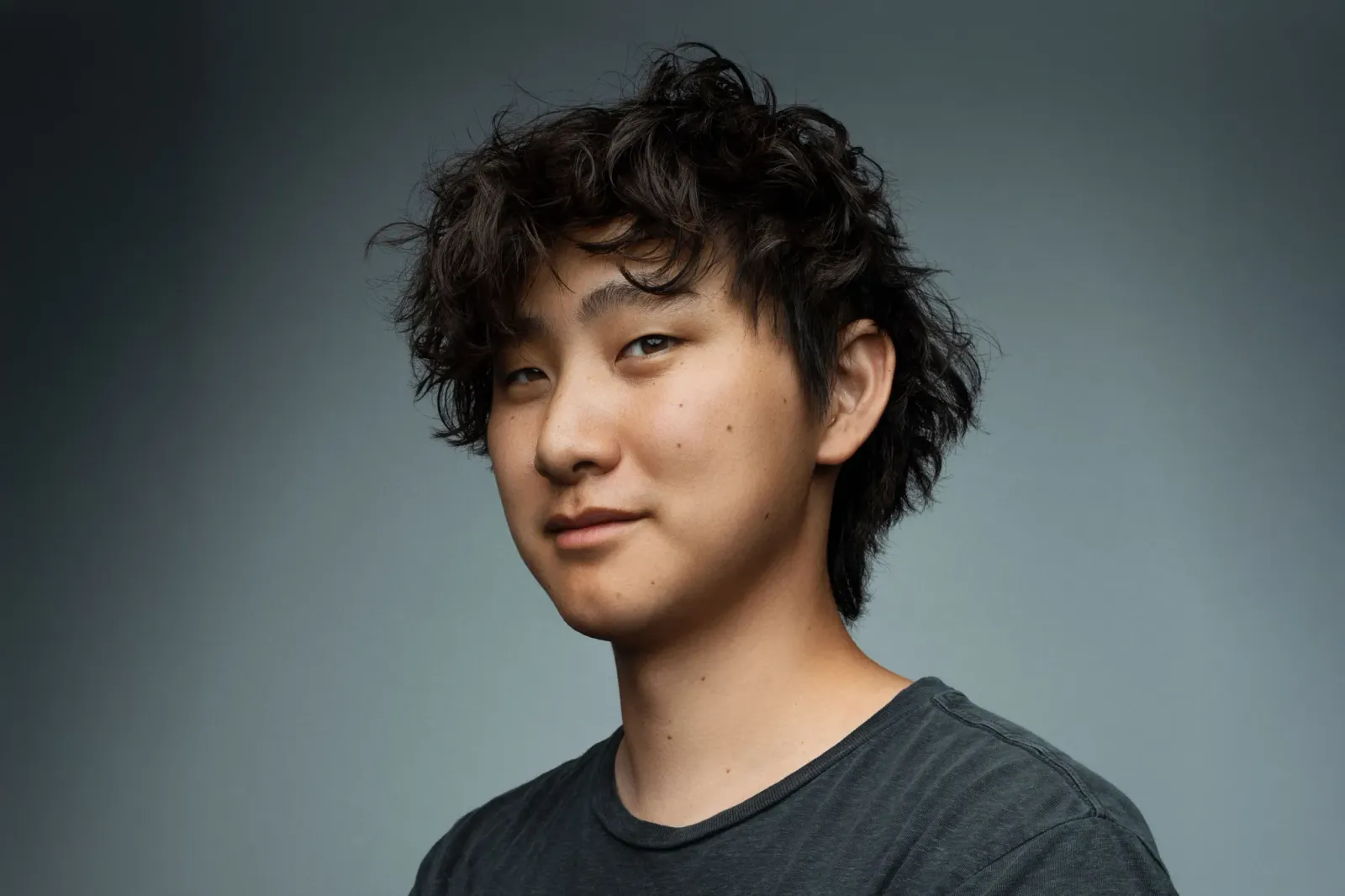
Mark Zuckerberg has made Alexandr Wang Meta’s first-ever chief AI officer, placing him in charge of Meta Superintelligence Labs and Meta’s AI product and research teams. For decision-makers, this is a high-budget talent and compute race meant to beat rivals in frontier model progress and the elusive quest for superintelligence.
In June, Mark Zuckerberg tapped Alexandr Wang to lead Meta’s entire AI effort, appointing him Meta’s first-ever chief AI officer as part of Meta’s $14.3 billion investment in Scale AI. Wang, now 28, was handed responsibility not just for models and research, but for a newly formed superintelligence team called Meta Superintelligence Labs.
The mandate matters because Meta is explicitly trying to do something bigger than “improve the chatbot.” Meta’s superintelligence effort is aimed at the still-theoretical concept of superintelligence, typically described as AI that vastly surpasses human capabilities across domains like scientific creativity, general wisdom, and social skills. That means Wang is inheriting a race where timelines are fuzzy, definitions are unsettled, and the competition is not waiting around.
Wang’s appointment is also a moment of cultural and organizational whiplash for the AI industry. The story of Scale AI starts like a Silicon Valley origin myth: in summer 2016, Wang was 19, building Scale AI in a Silicon Valley pool house with cofounder Lucy Guo while they ran through Y Combinator. By the time Meta made its move, they were no longer startups living on air mattresses. They were the kind of operator-backed success that can fund and attract the attention of the world’s biggest AI buyers.
Meta’s play is basically “combine capital, compute, and recruitment into one command structure.” Zuckerberg is going all-in on AI infrastructure and hiring, describing a plan in his July Threads post to build an elite, talent-dense team. Fortune reports that Zuckerberg wrote he was focused on building the most elite and talent-dense team in the industry, and the broader hiring push includes former GitHub CEO Nat Friedman, Daniel Gross (former CEO and cofounder of Safe Superintelligence), and researchers poached from OpenAI, Anthropic, Google, and Apple. The article also notes compensation packages rumored to be north of $100 million, and it specifically references Ruoming Pang, an engineer leading Apple’s foundation models team, reportedly pocketing $200 million over four years.
If you are sitting on a board or running a competing product org, this is where the second-order effect shows up. This is not only about hiring researchers. It is about compressing decision cycles and centralizing authority. Wang is not arriving as a career lab scientist; Fortune emphasizes that Zuckerberg chose an entrepreneur, not a traditional computer scientist, to captain a research-heavy organization. The upside, according to people close to Wang described in the piece, is that entrepreneurs tend to win talent and translate ambition into execution.
Fortune includes additional context on why Meta thinks the odds favor them. Zuckerberg’s memo, obtained by Fortune, claims Meta is “uniquely positioned to deliver superintelligence to the world,” pointing to the computing power in its data centers compared with smaller labs that have fewer resources. Zuckerberg also cited massive, multi-gigawatt data centers with named projects like “Prometheus” and “Hyperion,” plus scale claims such as one data center’s footprint being nearly as big as Manhattan. He also said Meta will invest hundreds of billions of dollars into compute to build superintelligence, and that Meta has the capital from its business to do this.
The competitive pressure is not subtle. Fortune points out that Microsoft and Google are each deploying tens of billions in capital expenditures for AI infrastructure, and that OpenAI, alongside its partnership with Microsoft, has said it intends to invest $500 billion with partners including SoftBank to build out the Stargate network of AI data centers over the next few years. In other words, Wang’s job is happening in a market where the winners likely control both talent and compute bottlenecks.
Then there is the conceptual problem that makes this even harder to “manage”: the industry does not agree on what superintelligence means or when it arrives. For context, superintelligence is typically positioned as going beyond artificial general intelligence (AGI). AGI is described in the article as human-level intelligence across a wide range of work-related tasks, including reasoning, planning, understanding language, and learning in a generalizable way. But estimates for achieving AGI vary widely, from a few months to a decade or more, while superintelligence timelines range from a few years to never. Zuckerberg, in the memo cited by Fortune, reportedly wrote that developing superintelligence is coming into sight, but he provided no specific estimate.
The strategic stake for decision-makers is straightforward: Meta is trying to reset its position in a “week-to-week contest for AI market share and mindshare” while also pursuing a mission that is difficult to measure with ordinary KPIs. Wang is tasked with locking in Meta’s large language models at the front of the pack and, simultaneously, proving progress toward a goal that the whole industry admits is theoretical. If Meta pulls it off, it reshapes the AI race not just in model quality, but in who gets to define the future of artificial intelligence. If it does not, rivals with comparable capital and researchers will keep accelerating, and Meta’s bet will have to compete against time itself.
This story's Key Insights and Take-aways are locked.
Create a free account to unlock Executive Actions for one credit.
Register to UnlockAlways free for Executives Club members. Join the Club
More in Business

Anthropic’s Levant Alpöge cracks the Jacobian conjecture after 87 years
A Harvard valedictorian used Claude to hit a 1939 breakthrough, but the missing “why” is the real problem.

Uber buys Delivery Hero for nearly $15B, vaulting to top food delivery outside China
The deal doubles Uber's dual-services footprint and pushes a ride-and-eats bundling play into 50 more markets.

Epic and Google drop settlement bid, forcing rival Android app stores by July 22
Google told the court it is ready to carry third-party app stores starting Wednesday, July 22.