

Microsoft's internal AI tracker: $28K monthly usage, zero pay bump
A leaked spreadsheet of 350 employees shows median AI spend of $300/month, but no link to compensation - here's what it means for your AI strategy.
Microsoft employees are self-reporting AI usage costs, revealing a median of $300/month and a top spender at $28,000, yet the data shows no correlation with raises or promotions. For decision-makers, this signals that AI adoption is not yet a differentiator in talent rewards, and companies must rethink how to incentivize AI fluency.
Microsoft's internal spreadsheet, viewed by Business Insider, shows hundreds of employees voluntarily reporting their AI usage costs - and the numbers are eye-popping. The median monthly AI spend across 350 entries is about $300, but one employee in the Customer and Partner Solutions organization racked up $28,000 in a single 28-day period. Yet here's the twist: none of that usage appears to translate into bigger raises, bonuses, or promotions. Business Insider's analysis found no meaningful correlation between reported AI usage and compensation outcomes. Higher AI usage did not correlate with higher bonus ratings, merit increases, or a greater likelihood of promotion.
The spreadsheet is part of a long-standing tradition at Microsoft, where employees voluntarily and anonymously share pay details each year to promote transparency. This year, a new column asked them to self-report their "AI $ Usage Per Month" using an internal tool that tracks the dollar value of AI tools consumed over the last 28 days. A Microsoft spokesperson said the tool is still in early testing. The document had nearly 600 entries from US employees when Business Insider analyzed the data, covering base pay, raises, cash bonuses, and stock awards. About 350 of those entries included AI usage figures, offering a rare glimpse into how AI is actually being used inside a tech giant racing Meta, Google, OpenAI, and Anthropic to build AI products.
The data reveals dramatic variation across teams. CoreAI, the unit focused on the company's AI platform, had a median monthly usage of $975, while Microsoft Customer and Partner Solutions had a median of just $134. The highest spender in that latter group hit $28,000, suggesting some roles are far more AI-intensive than others. Even within the same organization, the spread is wide - from $1 to $15,000 in Cloud + AI, and from $40 to $16,000 in CoreAI. This uneven adoption pattern underscores that AI usage is not yet uniform across the workforce, even at a company that is betting its future on it.
The lack of correlation between AI usage and rewards is a cautionary tale for executives. Microsoft is spending hundreds of billions of dollars on AI infrastructure and pushing employees to weave AI into daily work, but the current incentive structure does not appear to reward that behavior. If employees see no tangible benefit from becoming power users, adoption could stall, undermining the company's strategic bet. The spokesperson's note that the tracking tool is in early testing suggests Microsoft may be gathering data to eventually tie AI fluency to performance, but for now, the signal is mixed.
This isn't just a Microsoft story. Across Big Tech, companies are increasingly tracking AI consumption as they spend billions building models and infrastructure. The challenge is how to measure productivity gains and reward them. If AI usage is a proxy for efficiency, companies need to find ways to recognize it - otherwise, the adoption curve could flatten. The spreadsheet offers a real-world data point: even when usage is measured in dollars, it doesn't automatically map to compensation decisions.
For decision-makers, the takeaway is clear: don't assume AI usage will naturally align with pay. You may need to explicitly design incentives to encourage the behavior you want. That could mean incorporating AI fluency into performance reviews, offering usage-based bonuses, or creating recognition programs for teams that demonstrate measurable productivity gains. The data also highlights the importance of context - a $28,000 monthly bill might be justified in a customer-facing role, while a $300 median suggests most employees are still experimenting.
Finally, the caveats matter. The data is self-reported and may contain errors, and with 223,000 employees as of June 30, a spreadsheet of 350 figures is a tiny snapshot. But it's a starting point for a conversation every company will need to have: how to measure AI adoption, what it's worth, and how to reward it. Microsoft's own employees are already comparing notes - and the verdict so far is that AI usage doesn't move the needle on pay. That's a signal worth heeding.
This story's Key Insights and Take-aways are locked.
Create a free account to unlock Executive Actions for one credit.
Register to UnlockAlways free for Executives Club members. Join the Club
More in Business

Tim Cook steps down as Apple CEO, stays on as chair with $45M equity
The 'Trump whisperer' keeps his White House and Beijing access as Apple navigates tariffs and a $4.6 trillion market cap.

Snowflake shares surge as AI data demand crushes estimates, lifting full-year forecast
Stocks jumped on stronger-than-expected guidance, signaling enterprise AI workloads are accelerating faster than Wall Street priced in.
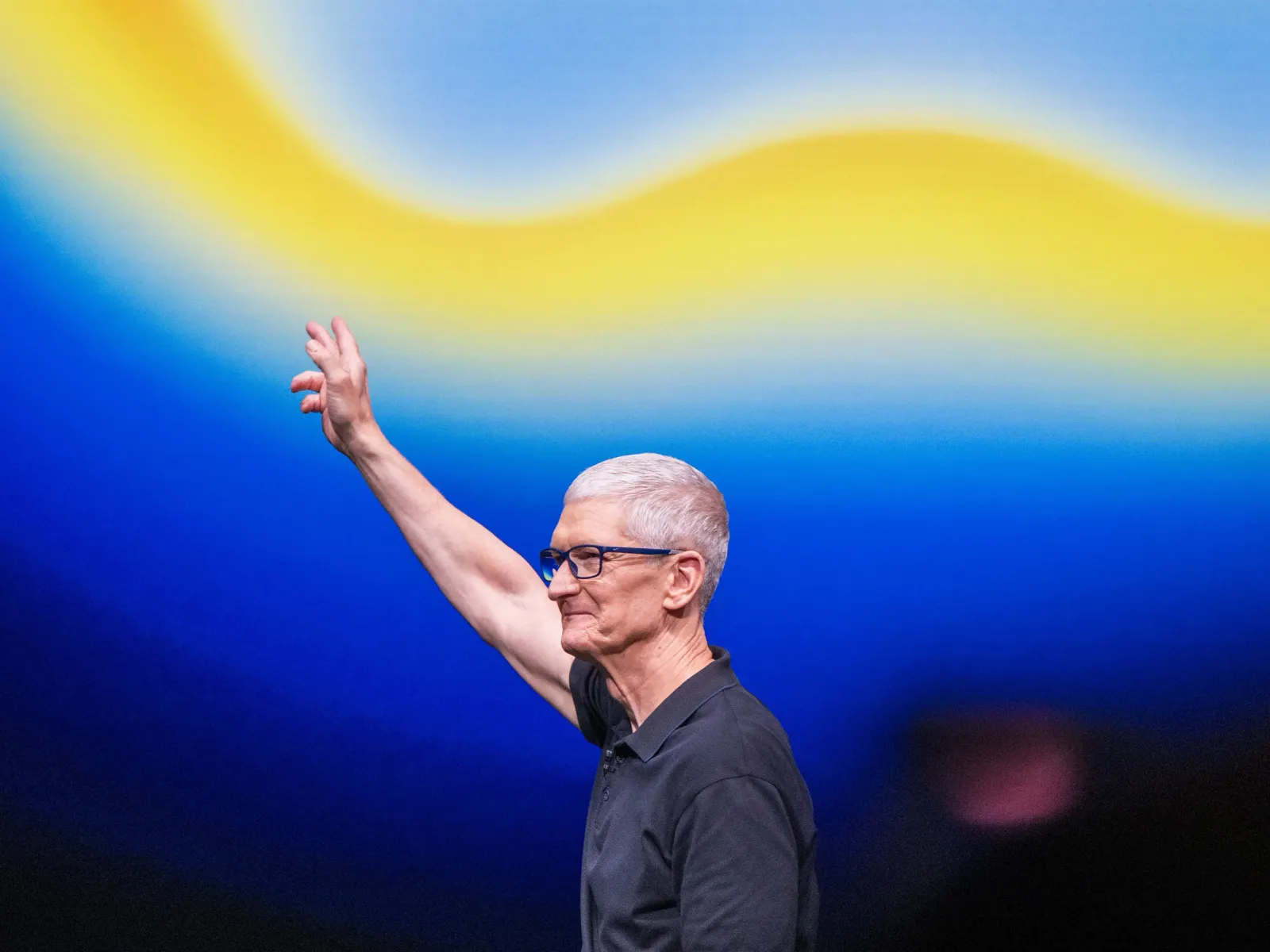
Tim Cook's 15-year Apple CEO run ends: 3 lessons for any successor
After 15 years, Tim Cook hands Apple to John Ternus - here's how he turned a $350B company into a $4.6T juggernaut.