
Mina the Hollower turns a tiny burrow into a whole world
Yacht Club Games uses one signature move to turn retro visuals into a surprisingly deep design lesson for studios and leaders.

Yacht Club Games’ Mina the Hollower leans on one distinctive ability, burrowing underground, to power both combat and exploration in a Game Boy Color-style adventure. For decision-makers, it is a reminder that a sharp core mechanic can do more than decorate a product - it can define the world, the pacing, and the player’s reason to keep going.
Mina the Hollower does something deceptively simple: it makes one move feel like a whole business model. The game centers on Mina, a cloaked mouse with a hammer twice her size, who can delve downward into soil or floorboards, tunnelling underfoot for a moment or two before popping back up. That burrow-jump is not just a gimmick. It is the engine of the entire experience, powering combat, movement, treasure hunting, and discovery in one neat stroke. In a market where so many games pile on systems until the design starts wheezing, Yacht Club Games has built an adventure around one mechanic that looks playful, feels precise, and does a lot of heavy lifting.
The review makes clear why that matters: the move works because it is tactile and useful at the same time. The released button springs back against your thumb, and the sensation matters as much as the function. Mina jumps, moves quickly, and uses the burrow-jump to hop over gaps, reach high spots, and squeeze into tiny hidden spaces where more treasure almost invariably waits. That makes the mechanic an excavation tool and a navigational one. For executives, the lesson is familiar even if the setting is not: when a product’s core interaction is strong enough, it can carry discovery, progression, and delight without needing constant reinvention. In other words, a small feature with a big feel can do the work of a much larger system.
Visually, Mina the Hollower is also betting on coherence over spectacle. You could mistake it for something found on the liquid-crystal display of a Game Boy Color around the turn of the millennium. Like the pocketable Zelda and Pokémon games of that era, it presents a kind of snow-globe reality viewed from above, where the player has to use imagination to decode two-colour clumps of pixels into trees, skeletons, and the world around Mina. That old-school look is not just nostalgia bait. It is part of the product’s identity, and it helps the game create a whole world out of limited visual language. For studios, that is a useful reminder that constraint can sharpen brand rather than weaken it - especially when the mechanic and the art style are pulling in the same direction.
That alignment is what gives the game its vintage magic. The source describes it as a brilliant adventure, and the emphasis is on how the pieces fit together rather than on raw technical showmanship. Mina’s speed, her ability to burrow, and the tiny hidden pockets of treasure all reinforce the same promise: explore, experiment, and keep moving. In the retro game business, that kind of clarity matters. Players do not just buy a visual aesthetic, they buy a feeling of mastery. If the control is crisp and the world responds in a way that feels elastic, the nostalgia becomes an asset instead of a crutch. Yacht Club Games appears to understand that the strongest retro projects are not museum pieces. They are tuned systems that use familiar surfaces to deliver fresh interaction.
There is also a broader industry lesson here about how content earns attention. In a crowded marketplace, a game needs a hook that can be explained fast and remembered even faster. Mina the Hollower has one: a mouse that burrows through the world, not around it. That is instantly legible, and it creates a clear expectation of how the game will behave moment to moment. For publishers, founders, and creative leads, that kind of legibility is valuable because it shortens the distance between curiosity and purchase. It gives marketing something concrete to point at, and it gives the design team a center of gravity when everything else threatens to sprawl.
The bigger takeaway for peers in games and beyond is that originality often comes from recombining simple parts with discipline. Mina the Hollower does not sound complicated on paper. A top-down adventure. A retro look. One mouse with a hammer. But the review shows how those ingredients can become memorable when the signature ability is integrated into every layer of play. The burrow-jump is treasure hunt, movement system, and identity all at once. That is the sort of product architecture leaders should notice: not maximal feature count, but maximum usefulness per idea. In a field where audiences have endless options, the winners are often the ones that make one thing feel so good that the rest of the experience organizes itself around it.
This story's Key Insights and Take-aways are locked.
Create a free account to unlock Executive Actions for one credit.
Register to UnlockAlways free for Executives Club members. Join the Club
More in Entertainment
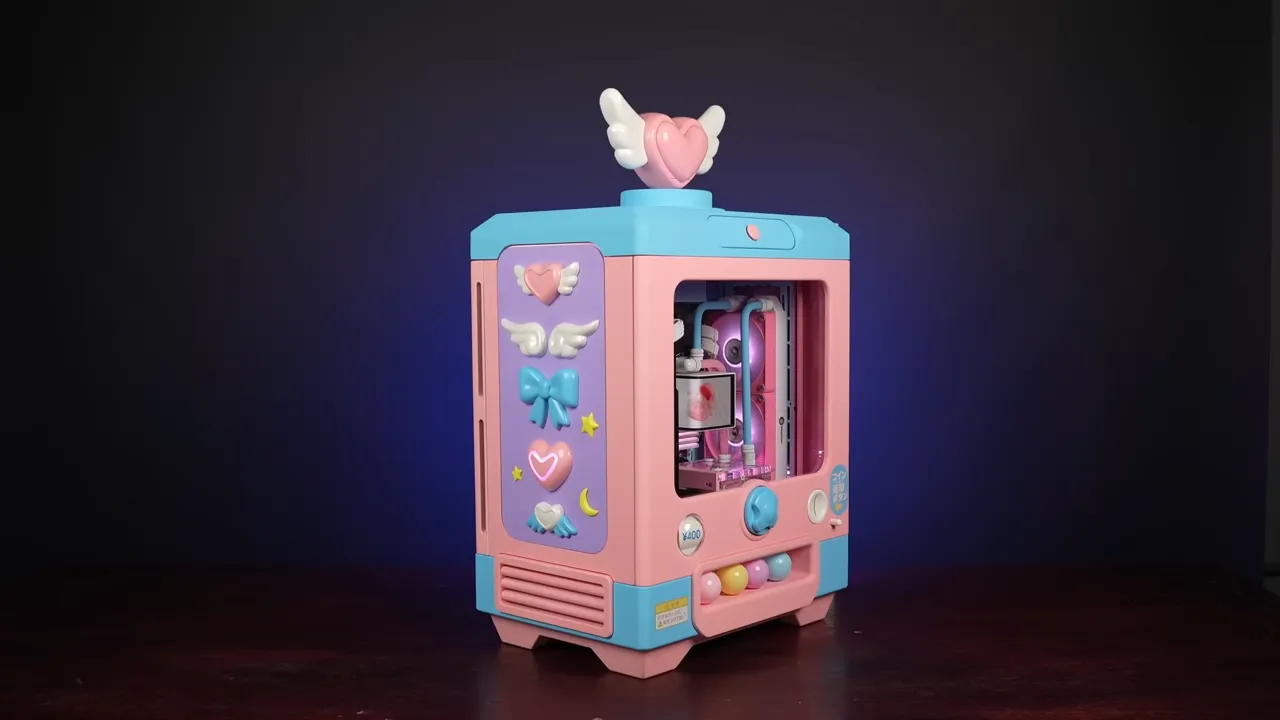
Computex’s gacha PC hides RTX 5060, Ryzen 5 9600X, and tiny RAM capsules
TechLin’s custom build turns a Thermaltake Tower 600 into a vending-machine parody, showing how show-floor hardware now competes on story as much as specs.

Primavera Sound cancels Doja Cat, Massive Attack after rain wrecks opening night
Heavy rain and technical issues forced Primavera Sound to pull opening-night sets, triggering fan backlash over communication and refunds.

Shaboozey’s 19-week hit powers a darker, bigger outlaw era
The “Cowgirl” video with Ciara Miller does more than add a face to the rollout - it deepens the story behind Shaboozey’s July 31 album and shows how breakout hits can finance ambitious world-building.