
Montana's Alani Bankhead and South Dakota's Julian Beaudion refuse Senate dropout calls
Their “no plans” stance collides with Democratic math, withdrawal deadlines, and a path for independents to win.

Democratic Senate hopefuls Alani Bankhead in Montana and Julian Beaudion in South Dakota told POLITICO they have no plans to drop out despite pressure to clear the field for independents. The refusal could reshape November’s odds for regaining Senate control and force Republicans and donors to rethink how they allocate attention and cash.
Democratic Senate hopefuls Alani Bankhead of Montana and Julian Beaudion of South Dakota are digging in against mounting party pressure to step aside. Both told POLITICO they have no plans to clear the way for independents Seth Bodnar and Brian Bengs, even as national Democrats push the “crowded field” logic that insists dropping out is the only way to win.
The stakes are immediate, not theoretical. In South Dakota, the deadline to withdraw is Tuesday, and Montana’s is shortly after, on Aug. 10. Democrats across Washington and within the states are asking Bankhead and Beaudion to leave the race to give an independent at least a shot of beating the Republican. Bankhead’s response to the idea of any change of mind was blunt, framed in faith rather than polling: “I'm a person of faith. If a lightning bolt from God struck me and was like, ‘Alani, get out of the race,' sure,” she told POLITICO. Otherwise, she said there’s “absolutely nothing.” Beaudion echoed the same posture: “To be clear, we are not considering dropping out of the race,” he told POLITICO.
Why does this matter so much right now? Because the Democratic argument is basically arithmetic with election mechanics attached. Numerous polls, along with stronger fundraising and campaign operations for the independents, suggest Bodnar and Bengs have a stronger path to victory, even if it’s “still muddied.” If the Democrats stay on the ballot, it will be “almost impossible” to claw those Senate seats away from Republicans in Mountain West states where President Donald Trump dominated in 2024.
This is not just about who personally believes what. It is also about how party leaders and rivals think voters will interpret the ballot. In a two-party system, a “D” label typically signals alignment with national Democrats. But in these races, multiple Democrats argue the label itself is a liability. In the party’s internal logic, a crowded Democratic field doesn’t just split votes. It also forces the party to defend its brand, while independents can position themselves as something else.
The Democrats calling for exits also say the consequences are bigger than this fall. There is “broad agreement” across factions within the Democratic Party that a crowded race relinquishes hope of victory. Bennett, a co-founder of the centrist think tank Third Way, put it in stark terms: “The math is inescapable. If it's impossible for a Democrat to win, it is vital that the Democrats step aside and give the independent at least a shot of beating the Republican.” He added that “Beating the MAGA Republicans is priorities one, two and three,” and that “who we beat them with is pretty far down the list.”
Even within Democratic circles, the pressure has personal edge. Bengs has argued that Beaudion staying on the ballot jeopardizes his chance of winning against GOP Sen. Mike Rounds. Bodnar has maintained he has a viable path either way and says he could be helped if the Libertarian candidate pulls votes from Republican Kurt Alme. But the “step aside” calls are not abstract. They come with attempts to assign blame if Democrats lose. Third Way’s Bennett said that if Democrats fail to flip the Senate in November, blame would lie at the hands of Bankhead and Beaudion. He warned they could become “pariahs.” Nancy Keenan, the former executive director of the Montana Democratic Party, endorsed Bodnar and wrote in a June op-ed that “there is not a viable path for a Democratic victory in this race.”
What makes this situation particularly complicated is that the withdrawals are being debated as a strategic tradeoff, but the candidates themselves frame the tradeoff differently. Bankhead insisted she can win, expecting to ride “anti-incumbency and pro-outsider” sentiment. She also argued that election outcomes are not pre-written: “Nobody ever knows what’s actually going to happen in an election. The people decide on November 3.” Beaudion credits relationships with voters throughout the state. In other words, the party sees the ballot as a funnel for votes and resources. The candidates see it as a contested terrain where a “D” label might not be the decisive factor.
There is also an ideological dimension to the debate inside the Democratic coalition. Faiz Shakir, a longtime adviser to Sen. Bernie Sanders (I-Vt.), did not go as far as calling for Bankhead and Beaudion to step aside. But he agreed that independents who are not “stuck with the Democratic brand’s baggage” can have opportunity in rural and conservative-leaning areas. He tied that to dissatisfaction beyond party lines: “There's frustration and anger with Trump, and there's not as much of a love and appreciation for the Democratic Party.” Shakir also suggested there may be second-order effects even if independents lose, because competitive races can force Republicans to pull resources out of battlegrounds.
Still, Shakir warned Democrats against over-rotating into the independents’ fundraising and establishment backing. He cautioned it could tie them to a “donor class” and “turning them into a worse version of what people assumed of a Democrat.” His framing is telling because it explains the strategic compromise Democrats want and the one they fear: give independents space to be “independent in mind and in spirit,” while still aiming to keep the focus on beating Republican candidates.
Outside groups and Republicans are actively exploiting these tensions. Republicans are working to paint independents and Democrats as the same, while also trying to elevate Democrats to undermine the independents’ momentum. Trump attacked Bankhead on social media in July, ignoring Bodnar entirely. Joanna Rodriguez, the communications director for the National Republican Senatorial Committee, said in a statement: “Democrat-backed independents all support the same socialist policies and middle-class tax hikes that made Democrats toxic across the country.” She added: “Republicans will defeat them in November.”
The bigger industry lesson for anyone running campaigns, investing in political-adjacent strategies, or building influence: this is not just a set of candidates refusing a request. It is a live test of whether party infrastructure can adapt to battlefield reality in time. If Bankhead and Beaudion stay in the race through the withdrawal deadlines, Democrats may be choosing a fight on brand preservation rather than vote consolidation. If independents still win, the Democrats who pushed for exits will look prescient. If they lose, Bennett and others will argue the party’s Senate majority plans were derailed by “no hope” candidates that “fumble away” the opportunity. For executives and operators watching political volatility as a signal for consumer and donor behavior, these Mountain West races are a real-time case study in how brand labels, coalition incentives, and timing rules can either unlock an upside or quietly slam the door before November.
This story's Key Insights and Take-aways are locked.
Create a free account to unlock Executive Actions for one credit.
Register to UnlockAlways free for Executives Club members. Join the Club
More in Politics
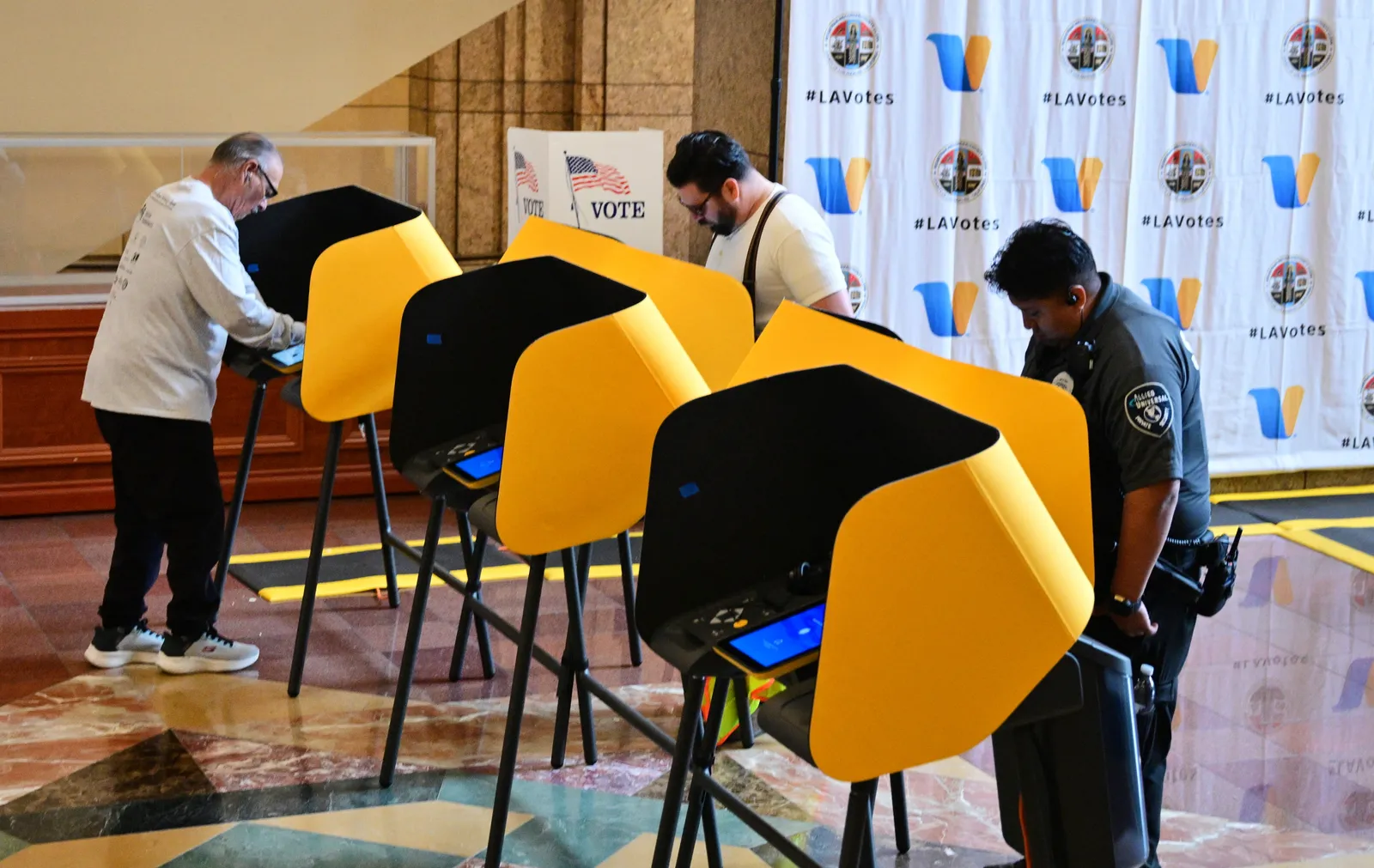
LA County: DOJ's 20,000 'noncitizen' voter list is 'unreliable,' includes U.S.-born
Preliminary review by Los Angeles County election officials finds errors in the federal list, raising the stakes for voter roll integrity ahead of November.
Trump's $1.5B Pentagon chip investment lands in North Carolina
A $1.5 billion defense infusion for North Carolina chipmaking signals a new era of Pentagon-backed reshoring - here's what it means for the industry.

Nigeria confirms first Ebola case in Abuja, a woman just off a Uganda flight
Health Minister Muhammad Ali Pate says the patient flew in from Uganda, putting Africa's latest outbreak on Nigeria's doorstep.