
Moves of the Diamond Hand proves dice-heavy RPGs can still be genuinely original
Early Access on PC, macOS, and SteamOS, built by musician Cosmo D, with mysteries stretching to 2027.
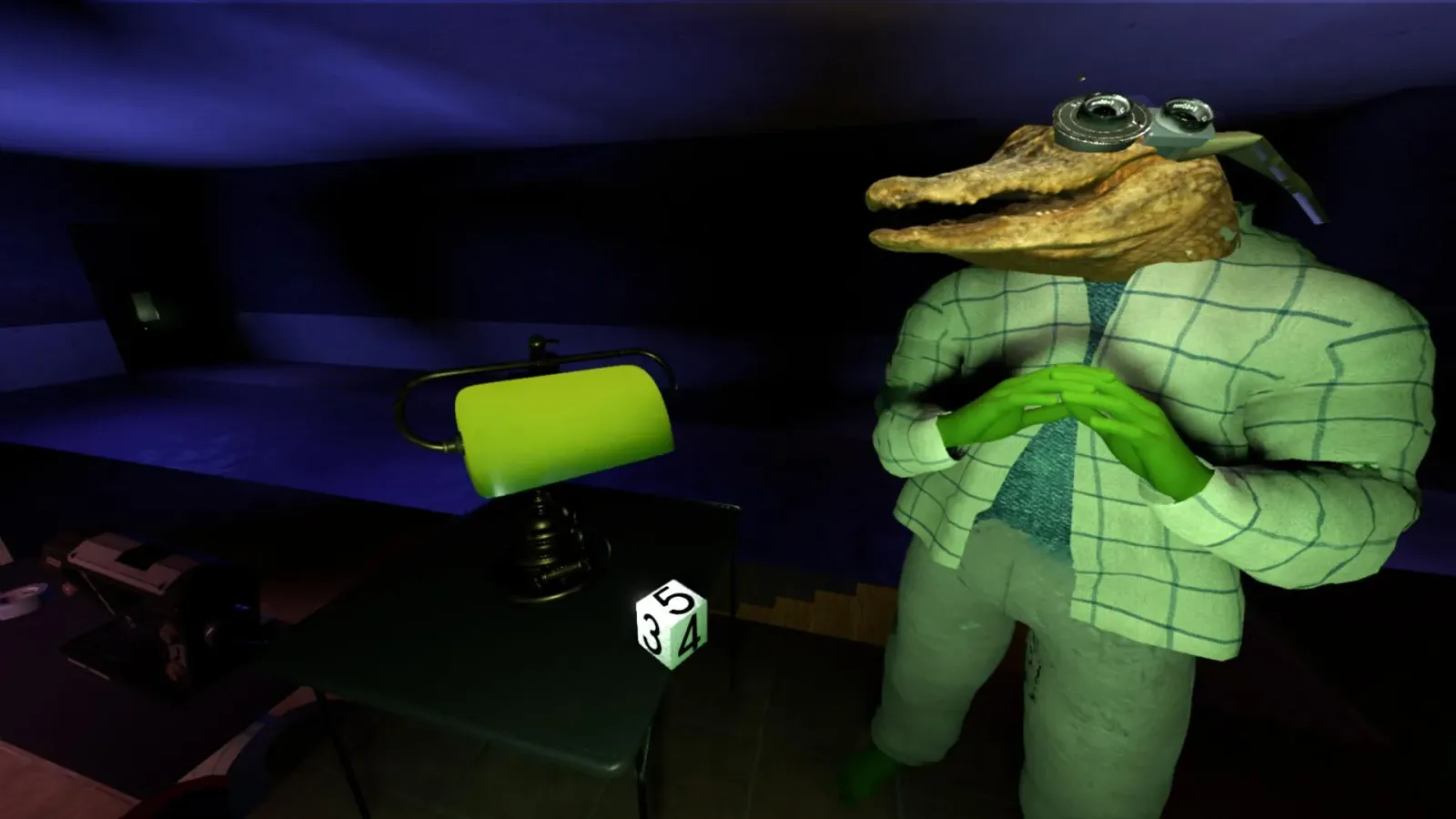
Moves of the Diamond Hand, an Early Access dice-based RPG from musician and game designer Cosmo D, is available on PC, macOS, and SteamOS (including Steam Deck). For decision-makers, its “conversation plus dice” approach shows how creators can differentiate in RPGs, even while key questions remain unresolved until 2027.
From the first minutes, Moves of the Diamond Hand tells you exactly what kind of game it is: you will have strange conversations, and you will roll a lot of dice. That proposition is not dressed up. It is the pitch. And if you buy in, the reward is one of the most creative roleplaying games The Verge says it has seen in years, even though the game’s “many mysteries” are not expected to be resolved until 2027.
This is also not some tiny side project floating in the margins. Moves of the Diamond Hand is an Early Access videogame available on PC, macOS, and SteamOS. The reporter even played it on the Steam Deck, highlighting that this is a product designed to travel, not stay boxed on a desk. The key player behind it is musician and game designer Cosmo D, bringing a background that is unusually consistent with the game’s vibe: weird dialogue, dice-driven structure, and an overall sense that the system is doing some of the storytelling work.
What makes this especially interesting from an operator or investor lens is that it does not try to win on “more” content in the typical way. Instead, it leans into a specific creative constraint: dice are the mechanic, but conversation is the stage. That combination forces the game to generate outcomes and interpretations in a way that feels less like a script you walk through and more like a set of rules you negotiate with. In other words, the weirdness is not random. It is built into how decisions get made.
The Verge compares the game’s look and feel to a 2000s-era first-person RPG or immersive sim. Environments are described as grimy, stark, and blocky. For context, that kind of aesthetic is not just nostalgia bait. In RPGs, an older, rougher visual style can give designers permission to rely on atmosphere and systemic interaction rather than cinematic polish. For players, it can make the world feel more readable and more “game-like,” especially when the gameplay revolves around rolling dice and having dialogue-driven encounters.
Because this is Early Access, there is an important strategic implication buried in the “not resolved until 2027” line. When a game has mysteries that will take years to answer, the product is asking players to accept an ongoing narrative and an evolving design. That is a risk, but it can also be a durable advantage if the underlying loop is strong. Dice-based RPGs can either feel like gimmicks or become addictive because the randomness gives the player a reason to keep trying. The Verge’s take is that Moves of the Diamond Hand lands on the creative side of that line.
From a regulatory and governance standpoint, Early Access titles usually live in a gray area of expectations rather than law. The big issue is transparency: players buy an unfinished experience, and the developer has to manage the roadmap honestly. The Verge’s framing suggests the game is upfront about what it offers and that some mysteries will remain unanswered for a long time. For boards and funding partners, that can be a signal of maturity in planning and communication, because it reduces the odds of the classic Early Access backlash: “you sold me a finish line you never intended to reach.” The flipside is obvious too. The longer the timeline, the more important it is to deliver incremental value that keeps the community engaged.
Looking at second-order effects, Moves of the Diamond Hand is a reminder that differentiation in crowded RPG markets does not always come from better graphics or bigger budgets. It can come from a design philosophy that is specific enough to be memorable: roll dice, talk to people, let outcomes emerge. That kind of identity can matter to distribution partners and platform strategy, too. With availability across PC, macOS, and SteamOS, including the Steam Deck, the game is positioned to catch a wide range of players who want “quirky but playable” experiences.
For executives, the strategic stake is simple: this game suggests there is room for genuinely original roleplaying when creators commit to a clear system of play. But it also shows the tradeoff. When mysteries extend to 2027, the product must earn attention through the loop, not just through the eventual reveal. If you are building, funding, or advising a game or any interactive product, the playbook here is not “be weird.” It is “make the weird coherent, keep the player moving, and be honest about the timeline.”
This story's Key Insights and Take-aways are locked.
Create a free account to unlock Executive Actions for one credit.
Register to UnlockAlways free for Executives Club members. Join the Club
More in Technology

Nvidia's $89B data center quarter: the 9 companies cashing in
The AI buildout is minting fortunes beyond GPUs, and memory, cloud, and cooling suppliers are riding the same wave.

Google quietly links your phone number to every Android account on your SIM
Adding a SIM now ties your phone number to all Google accounts - and future accounts inherit it. Here's the security and privacy stakes.

Hijacker AI 'Skynet mode' runs 100,000 attack steps against exposed models
Symantec caught a criminal AI agent that borrows other models, steals data, and mines crypto; the only relief is no confirmed victims yet.