
Mykhailo Drapaty becomes army chief, but crowds still demand Mykhailo Fedorov back
Ukraine’s new army leadership lands with relief, then immediately runs into the political backlash that already moved streets.
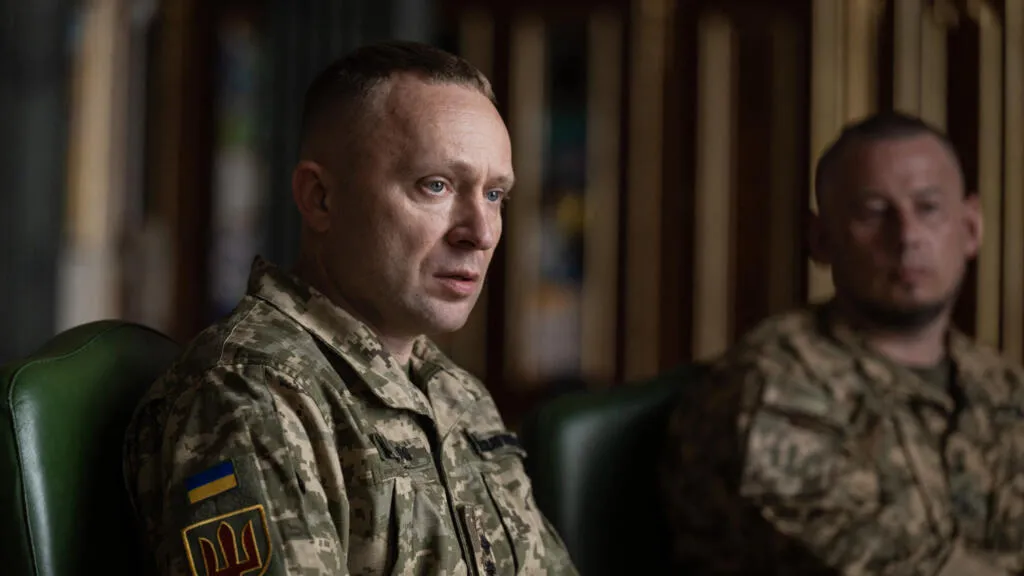
Mykhailo Drapaty was appointed Ukraine's army chief on Wednesday, and soldiers and civilians welcomed the decision. But many still want former defence minister Mykhailo Fedorov restored after his surprise removal triggered the largest war-related protests since Russia’s 2022 invasion.
Ukraine’s soldiers and civilians welcomed the appointment of Mykhailo Drapaty as the new army chief on Wednesday, but the celebration didn’t settle the biggest question hanging over Kyiv. Many people said they still wanted former defence minister Mykhailo Fedorov restored after his surprise removal sparked the largest war-related protests since Russia’s 2022 invasion.
So the headline moment is real, but so is the unfinished business. Drapaty’s arrival signals continuity and readiness, yet the continuing calls for Fedorov tell you the public does not see this as a clean handoff. In high-stakes wartime governance, legitimacy is not a soft factor. It is operational. If troops and civilians believe leadership changes are political whiplash, coordination becomes harder, morale becomes brittle, and messaging turns into a second battlefield.
To understand why this matters beyond the headlines, it helps to remember how war leadership roles typically function. The “army chief” lane is about running military systems day to day, while the defence minister lane is broader, shaping policy, procurement priorities, and the interface between military needs and the state machine. When Fedorov was removed “surprise” style, the shock was big enough to trigger the largest war-related protests since Russia’s 2022 invasion. That is not just symbolism. It suggests a public perception gap between what civilians expect from defence leadership and what the government actually delivered in the moment of change.
Drapaty’s appointment therefore lands inside a credibility economy. People are not only asking “who is in charge,” they are asking “what will change next.” Protests after a minister’s removal indicate that the protestors believed the decision had consequences severe enough to override normal deference to internal processes. In corporate language, think of it as a stakeholder trust reset that never got fully resolved. Every subsequent personnel move, even when formally welcomed, is judged against the prior rupture.
There is also a governance dynamic at play: leadership appointments during war can be interpreted in multiple ways at once. On paper, changes can be framed as necessary improvements, specialization, or a shift in priorities. On the ground, they can be read as instability, factional maneuvering, or a failure to manage transitions. Because the source specifically ties Fedorov’s removal to “the largest war-related protests since Russia’s 2022 invasion,” the bar is high for any replacement. Drapaty is not just inheriting a job. He is inheriting the narrative of why the earlier leadership move happened.
For decision-makers in adjacent worlds, the second-order implication is straightforward: political legitimacy and operational execution are coupled. Executives, board members, and investors typically treat trust as a brand metric. In wartime Ukraine, it behaves more like infrastructure. If leadership changes are perceived as reversals, stakeholders react. That can translate into delayed implementation, heavier scrutiny, and an always-on debate about who controls key levers.
And for peers managing crises in other countries, this is a reminder of how quickly internal personnel decisions can become external risk. In many regimes, defence leadership changes might stay behind closed doors. Here, the public reaction was large enough to be described as the biggest war-related protests since the 2022 invasion. That means the institutional “story” matters. If the story is contested, it can complicate everything from public buy-in to the ability to communicate strategic priorities without looking defensive.
Bottom line: Drapaty’s appointment brought a measure of relief to soldiers and civilians, but it did not extinguish the demand to restore Mykhailo Fedorov. In environments where legitimacy is constantly tested, the next challenge is not only executing a war plan. It is closing the gap between leadership decisions and public expectations, before that gap grows into a recurring political event.
This story's Key Insights and Take-aways are locked.
Create a free account to unlock Executive Actions for one credit.
Register to UnlockAlways free for Executives Club members. Join the Club
More in Politics

LA County: DOJ's 20,000 'noncitizen' voter list is 'unreliable,' includes U.S.-born
Preliminary review by Los Angeles County election officials finds errors in the federal list, raising the stakes for voter roll integrity ahead of November.

Trump's $1.5B Pentagon chip investment lands in North Carolina
A $1.5 billion defense infusion for North Carolina chipmaking signals a new era of Pentagon-backed reshoring - here's what it means for the industry.

Nigeria confirms first Ebola case in Abuja, a woman just off a Uganda flight
Health Minister Muhammad Ali Pate says the patient flew in from Uganda, putting Africa's latest outbreak on Nigeria's doorstep.