
Nancy Mace drops out of Lindsey Graham's Senate race, siding with the fight she’s already in
Her decision reshapes South Carolina’s special election field as Darline Graham, Trump-endorsed, runs for a full term.
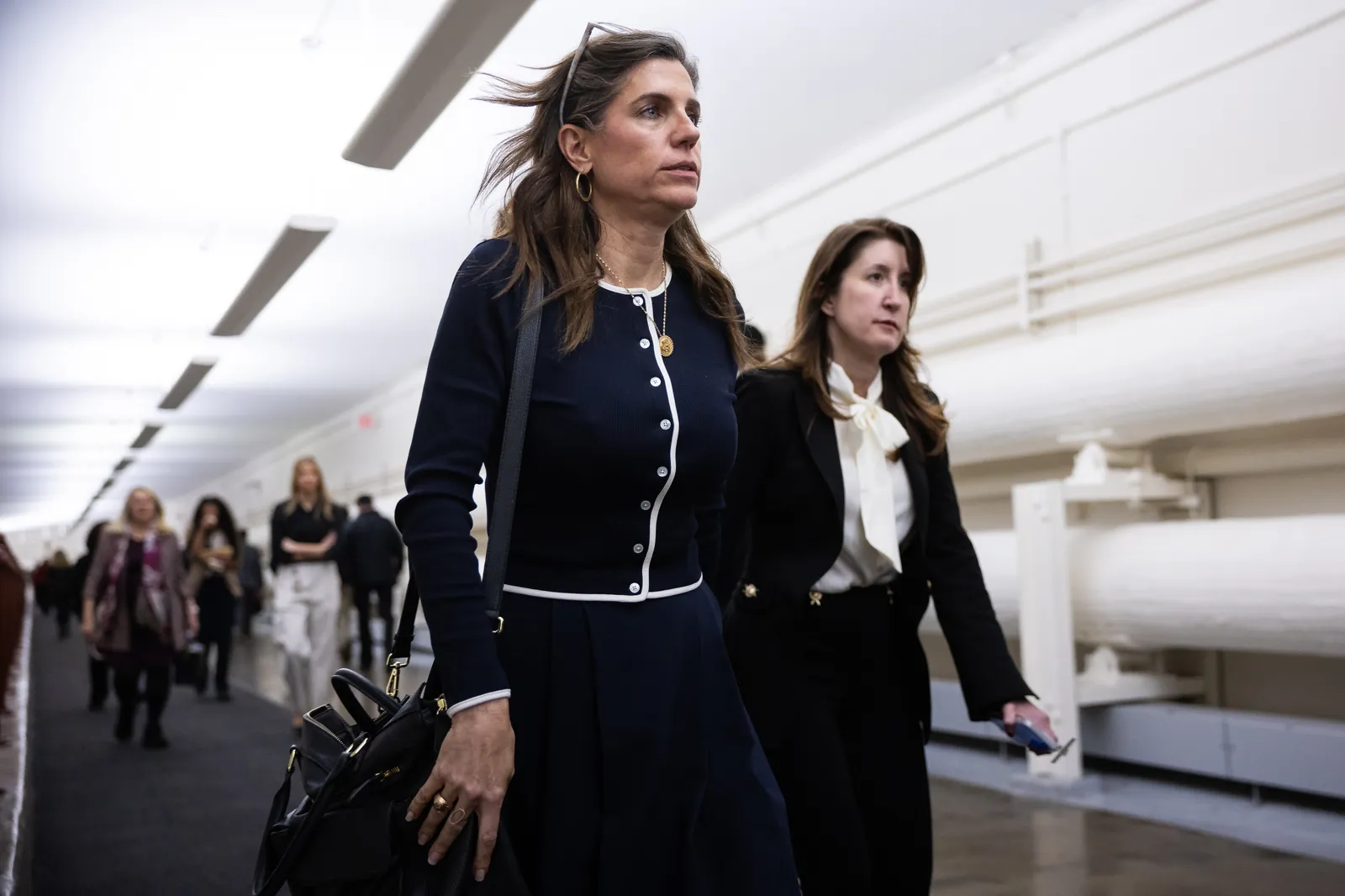
Rep. Nancy Mace says she will not run for the U.S. Senate seat held by late Lindsey Graham. Her withdrawal comes after an unsuccessful governor primary bid and after President Donald Trump backed Sen. Darline Graham for a full term.
Rep. Nancy Mace announced Monday that she will not run for the U.S. Senate seat held by the late Lindsey Graham. In a video announcement, Mace said, “I'm not running for the U.S. Senate, not because I'm backing down from a fight, but because the one I'm already in matters right now.” She framed the move as a continuation of her current work, not a retreat, while also signaling how intensely she views the stakes for women and lawmaking in South Carolina.
Mace’s decision effectively guarantees she will not be serving in elected office once her term ends early next year. It also lands right as the race to succeed Graham is turning into an organized scramble: Sen. Darline Graham, Lindsey Graham’s sister who was appointed to serve out the remainder of his term shortly after his death, has announced she is running for a full term and has already secured President Donald Trump’s endorsement. GOP Reps. Russell Fry and Ralph Norman have also announced bids as the field crystallizes quickly.
To understand why this matters, start with the incentive structure of special elections. When a seat opens unexpectedly and the party wants a quick consolidation, endorsements and perceived inevitability often matter more than long-shot narratives. Mace’s withdrawal removes a potential statewide competitor who had already tested statewide viability earlier in 2024, finishing fifth in the Republican primary for governor. That finish is not just a trivia point. It is a signal about how difficult it is to convert attention into votes beyond one’s existing base when the entire political ecosystem compresses into one election cycle.
Mace’s timing also has a second-order effect: she began exploring the viability of a potential bid just hours after Graham’s death became public, according to two people familiar with her thinking who spoke to POLITICO at the time. But she decided against a second statewide bid in as many months. That decision is a reminder that candidates are not only weighing ideology and messaging, they are also weighing bandwidth, money, and the practical calculus of recruiting, fundraising, and organizing in a compressed window. In other words, the question is not whether she could run. It is whether running again that quickly was worth the risk of losing both the office and the political momentum she already had.
In her video, Mace made her rationale explicitly tied to her broader policy fight. She said, “the laws meant to protect me and other women failed us, and I won't stop until that changes.” She also said, “Serving South Carolina has been the honor of my life, and I will continue to voice our values everywhere I can; I’m even going to shit post from time to time, because someone has to call out the dumbasses,” per the source. That blend of policy grievance and personal brand energy is not just culture-war flavor. It speaks to the strategy of staying in the House to keep shaping her message while waiting out the Senate reshuffling rather than jumping into a high-visibility race where outcomes are binary.
Now zoom out to the election mechanics that will determine who becomes the favorite for November. The filing window for the special primary election opens Tuesday and closes one week later. The election will be held Aug. 11, and there will be a runoff for the top two candidates if no one wins 50 percent of the vote Aug. 25. The person who wins the special GOP primary will be the heavy favorite to secure a full term in November. That makes the special primary not a side quest, but the decisive gate. If you are an executive or board member watching political risk, this is the version of regulatory timing you cannot ignore. Process windows compress, coalitions lock faster, and the “who controls the next committee seat” question becomes a near-term operational reality.
For Darline Graham, the path is clearer than for most. She was appointed to serve out the remainder of Lindsey Graham’s term shortly after his death, then announced Monday that she is running for a full term and has already secured President Donald Trump’s endorsement. In party politics, an endorsement is not merely symbolic. It is a signal to donors, local organizers, and voter outreach teams about where unified support will coalesce. That can affect how quickly challengers gain traction, and it can indirectly steer voters who are trying to simplify a complicated decision under time pressure.
For the other entrants, Russell Fry and Ralph Norman, the field is now narrower and the media narrative tighter. With Mace out, they are no longer competing with a high-profile House member who had just shown evidence of statewide ambition, albeit not success. The strategic stake for every candidate and every observer is simple: in a compressed special election cycle, the winner of the GOP primary effectively controls the momentum into November. Mace’s refusal to run, therefore, does not just remove one name from the ballot. It accelerates the consolidation around Trump-endorsed Darline Graham, reshapes how Republicans allocate attention, and leaves less space for a disruptive alternative to grow.
The most important implication for anyone in a leadership role, whether in politics, business, or policy-driven organizations, is how quickly the environment can flip. One death, one appointment, one endorsement, and a compressed filing timeline can redraw power maps in weeks. Mace’s statement that “the one I'm already in matters right now” becomes more than personal strategy. It is a reminder that in elections, timing is a form of leverage, and choosing the fight you can actually influence can be more effective than chasing the headline of another race.
This story's Key Insights and Take-aways are locked.
Create a free account to unlock Executive Actions for one credit.
Register to UnlockAlways free for Executives Club members. Join the Club
More in Politics

LA County: DOJ's 20,000 'noncitizen' voter list is 'unreliable,' includes U.S.-born
Preliminary review by Los Angeles County election officials finds errors in the federal list, raising the stakes for voter roll integrity ahead of November.

Trump's $1.5B Pentagon chip investment lands in North Carolina
A $1.5 billion defense infusion for North Carolina chipmaking signals a new era of Pentagon-backed reshoring - here's what it means for the industry.

Nigeria confirms first Ebola case in Abuja, a woman just off a Uganda flight
Health Minister Muhammad Ali Pate says the patient flew in from Uganda, putting Africa's latest outbreak on Nigeria's doorstep.