

NASA’s OCHMO builds a VTE Risk Score algorithm after altered astronaut blood flow data
A new working group conclusion turns stasis and retrograde flow into prophylaxis triggers, weighted from terrestrial literature.
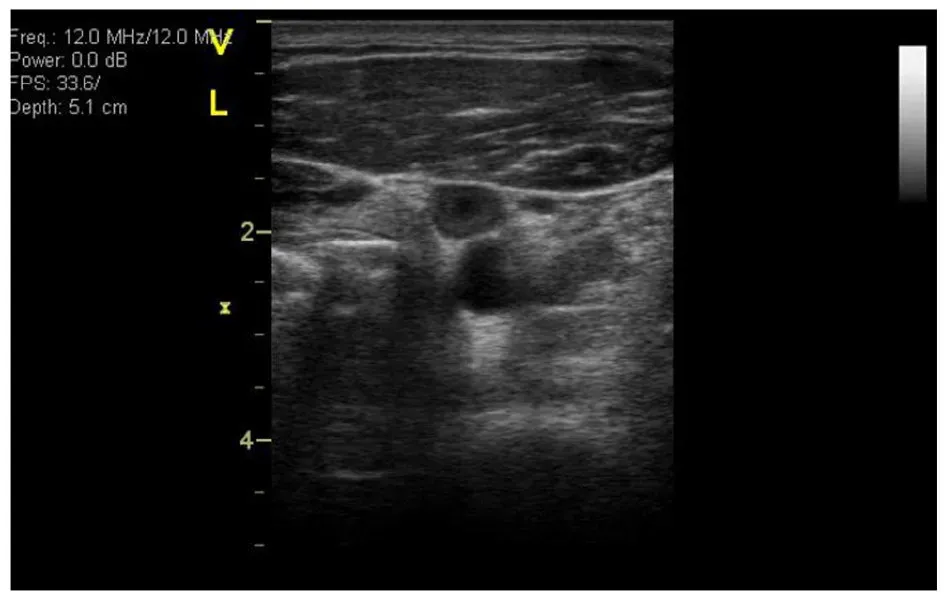
NASA’s Office of the Chief Health and Medical Officer (OCHMO) launched an April 2026 working group to review updated VTE case information, new data showing altered blood flow status in astronauts, and progress on mitigation research. The result is a “VTE Risk Score for Astronauts Algorithm” that determines when to provide anticoagulation prophylaxis.
In April 2026, NASA’s Office of the Chief Health and Medical Officer (OCHMO) kicked off a working group to re-check the evidence on venous thromboembolism, or VTE, risk during spaceflight. The trigger was not just more case data. NASA also referenced additional data revealing altered blood flow status within a cohort of astronauts, prompting a fresh look at what the body is really doing in microgravity and how clinicians should respond.
The working group’s recommendations quickly narrowed to a practical question: when should astronauts get anticoagulation prophylaxis, and based on which in-flight ultrasound signals? The panel emphasized that stasis in the left internal jugular vein (IJV) is consistently viewed as a dominant VTE risk factor in microgravity, but they also flagged that there is active debate about the relative contributions of slow qualitative flow, endothelial factors, and/or retrograde flow. With that uncertainty on the table, NASA’s group ultimately landed on a clear operational path: prophylaxis should be used when stasis and retrograde flow are present, alongside assessment of other risk factors.
Why does this matter so much for decision-makers, beyond the medical science? Because spaceflight medicine is where “clinical evidence” has to become “clinical procedure” under brutal constraints. You cannot run a full suite of lab tests the way you would on Earth. Instead, flight teams and ground clinicians depend heavily on in-flight ultrasound. The working group explicitly cited limitations of current in-flight ultrasound capabilities to accurately measure stasis or slow flow. That is a big deal in protocol design. If your measurement tool cannot reliably distinguish the signal you care about, the risk scoring system has to compensate without pretending the uncertainty does not exist.
That uncertainty is exactly why NASA included a recommendation to do additional review of assessing stasis with ultrasound in-flight. It also explains the panel’s approach to building the risk algorithm. The working group developed a “VTE Risk Score for Astronauts Algorithm” based on a literature review and a summary of the panel contributions. The algorithm includes giving anticoagulation prophylaxis for stasis alone, or for a combination of other thrombosis risk factors. Those other factors are weighted by terrestrial literature, meaning NASA is using Earth-based evidence to translate multifactorial risk into an actionable score, then adapting it to the spaceflight context.
So what did they decide about the relative importance of different physiological contributors? The working group conclusions highlighted ongoing debate, but they still converged. After the risk factor review and subsequent discussions, the majority of the panel agreed that stasis and retrograde flow warranted use of prophylaxis. They also recommended assessing all other risk factors other than stasis to determine when prophylaxis is warranted. In other words: stasis is the headline risk marker, but it is not the only one that should drive the clinical decision. The algorithm is a structured way to handle the messy reality that VTE risk is not one-variable. It is a portfolio.
NASA also put this work on the timeline of its broader medical governance. NASA initially formed a working group in October 2024 after diagnosing VTEs in astronauts during ISS missions. Experts reviewed case data, updated Clinical Practice Guidelines, and examined possible causes. The April 2026 working group is essentially the next iteration of that governance loop, now incorporating updated VTE case information, new data about altered blood flow status in an astronaut cohort, and progress on research and clinical activities intended to mitigate VTE risk during spaceflight with new evidence-based clinical practice recommendations.
For executives and boards overseeing human spaceflight programs, the second-order implication is straightforward: medical protocols are becoming more algorithmic, and the bar for “defensible” decision-making is rising. When prophylaxis triggers depend on ultrasound findings that have known limitations, organizations need to ensure the clinical workflow, training, and documentation are tight enough to match the algorithm’s assumptions. That is not just patient safety. It is operational reliability. It affects mission planning, medical staffing expectations, and how teams explain risk management to regulators and stakeholders.
If you oversee anything human-spaceflight adjacent, watch how this evolves: the “dominant risk factor” framing for stasis in the left internal jugular vein (IJV), combined with a practical inclusion of retrograde flow and weighted terrestrial risk factors, signals that NASA is formalizing a repeatable pathway from evidence to action. The strategic stake is preventing VTE while avoiding unnecessary prophylaxis. NASA’s working group is trying to close the gap between what clinicians believe, what flight instruments can measure, and what an algorithm can safely operationalize.
This story's Key Insights and Take-aways are locked.
Create a free account to unlock Executive Actions for one credit.
Register to UnlockAlways free for Executives Club members. Join the Club
More in Science

2026 Nikon Small World Winners Reveal the Hidden Machinery of Everyday Life
A mycologist's frozen Edinburgh garden became the backdrop for vivid views inside cells, a reminder of what advanced imaging now makes visible to researchers and the industries built on biology.

Study: 1 in 4 depression cases may be a body-clock problem, not a chemical one
A 10,000-person study finds standard antidepressants often fail these patients, but melatonin and morning sunlight may hit the real root cause.

Start-Up Says A.I. Designed a Virus to Attack One Patient's Superbug
If the claim holds up, personalized phage therapy could become a new frontline weapon against antibiotic resistance - but proof is far from final.