
NBA The Run nails street-style highlights, then sabotages them with an over-sweaty squad grind
Steam last week, 3-on-3 squads feel chaotic without communication, until solos finally let the arcade joy breathe.
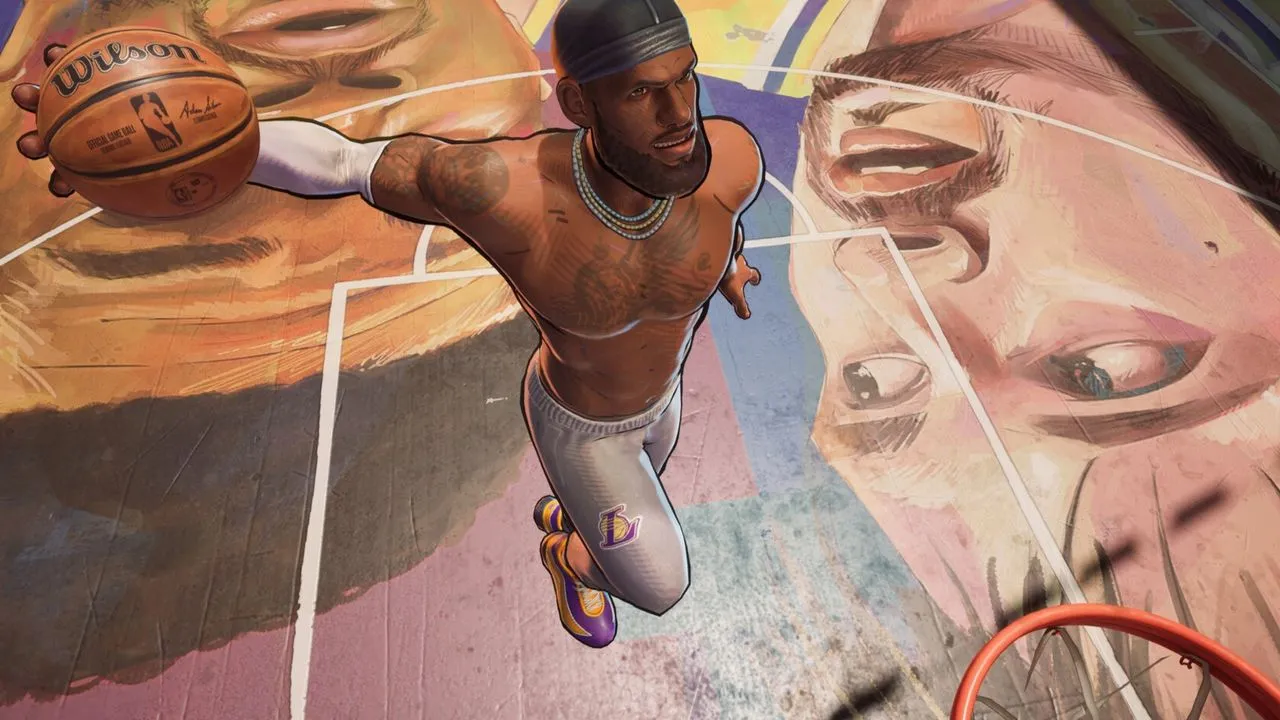
NBA The Run, released on Steam last week, brings arcade streetball energy but stumbles with its 3-on-3 squads format. For decision-makers, the key consequence is simple: the game’s best ideas show up most clearly when you remove the friction of matchmade team coordination.
NBA The Run launched on Steam last week, and its core promise is immediately obvious: 3-on-3 basketball that plays more like NBA Jam and Street than like a simulation. Dunks are moon-jump friendly. Tricks look gaudy on purpose. Commentary hits you with streetball flavor, including narration by Bobbito Garcia (AKA DJ Cucumber Slice), known for NBA Street Vol. 2. The problem is that the game’s “street” vibe gets undercut by how it routes you into matchmade online tournaments, especially in its default squads mode.
In squads, the structure itself creates the mess. Instead of one player controlling a whole trio, six players each control a different character on the court. The playable cast mixes real pro players with different stats and personalized animations, plus unlockable “street legends” with wackier playstyles, like the 7'7 El Gigante. On paper, that sounds like variety. In practice, it becomes point-hungry chaos: players rush the ball, fire Hail Mary shots from half-court on every possession, and sprint around aimlessly. When your team is uncoordinated, squads turns “streetball freedom” into “comically nonfunctional basketball.”
This is the exact tension The Run seems to misunderstand. The source calls out that the game should be a contrast to the “two-bit esports” grind many players endure in other titles, but the matchmaking tournament context pushes performance and mastery over expressive, all-in-good-fun antics. The on-screen swagger is there, but the incentives are pointed elsewhere. That mismatch matters because streetball, in real life, is a rejection of stuffy structure. The Run strips away some of basketball’s depth to spotlight cool, flashy stuff. Then it quietly reintroduces structure through ranks, win rate tracking, and online tournament emphasis, making it harder to treat a match like an escape.
And yes, the action can still hook you. The game balances Jam’s simplicity with Street’s trickier feel, landing on a “simple button presses” approach for dunks, blocks, and steals. But there’s expressiveness too. You can swerve around defenders with stamina-guzzling ankle breakers. You can shove other players, since “street rules-it’s legal.” It even lets you pass via the backboard or an opponent’s face using off-the-heezay style throws. The “in the zone” meter is supposed to reward flashy maneuvers, and the game celebrates stylish play without requiring “much fuss.” When it clicks, it’s exactly the kind of frantic arcade sports fantasy this genre survives on.
Still, squads fights the player. The review explicitly notes that it felt wrong to not have voice chat or a ping system. If your teammates can’t coordinate, the game’s tools get used in the lowest-communication way possible. Second-order effect: the tournament framing encourages risk-minimizing, go-to play. In a mode built for creativity, that pushes players into rushing dunks, pump fakes baiting blocks, and hunting consistent point output. The game tries to counter this with changing win conditions, but those rulesets can also make style feel irrelevant.
Those win-condition twists are arguably The Run’s strongest design move and the part the review calls out as a “trick up its sleeve.” Every match has different rules around points, which deliberately upend go-to strategies. One game makes every shot not a three-pointer worth one point. Another makes dunks worth three points, turning play more aggressive. It’s clever because it changes where defenders gravitate and what risk feels worth it. But the same review points out the boundary: when a random ruleset removes the “in the zone” meter from play, there’s less reason to attempt flashy maneuvers. In a system where ranks are awarded after every match and your win percentage is tracked, the question becomes unavoidable: why risk losing the ball just to do something cool? That question is less about player attitude and more about game economy.
Solo mode, though, is where the review’s mood flips. The source says it’s “less of a problem” in solos and that the author is liking it a lot more than squads. Solo is a 1v1 where both players control their entire team, swapping between them with passes. That design removes the “silent randos” issue and gives you agency over your match plan, including roster composition. The review even describes how you can keep a tall center like Victor Wembanyama in the paint to block shots, then dish to Jaylen Brown for a reliable swish. Suddenly, the game feels like basketball again, not just streetball button mashing on a random partner. If you want off-the-heezays and alley-oops, your successes and failures become yours.
But the product package still shows a single-player gap. The review compares The Run unfavorably to NBA Street Vol. 2’s Be a Legend mode and NBA Hangtime’s create-a-player and offline progression loop. Instead of a “meaty” solo campaign, The Run offers fewer offline-oriented hooks. Online modes, as described, do not lend themselves to casual enjoyment, and the author concludes there’s “not really a way to unwind” while playing it. That’s the strategic stake: a game can nail arcade streetball feel, yet still struggle to retain players if the modes that amplify joy are replaced by friction, performance pressure, and coordination demands.
For peers watching this space, the lesson is not that arcade sports should be more realistic. It’s that the incentives and mode structure have to match the fantasy. The Run’s style-first tools, rotating win conditions, and recognizable voice persona are strong levers. The friction comes from squads coordination and the tournament-first context that rewards mastery over street swagger. If you’re building or funding a competitive arcade sports product, this is a reminder that “fun” is not just mechanics. It’s also how the game routes players into teams, pressure, and progression.
This story's Key Insights and Take-aways are locked.
Create a free account to unlock Executive Actions for one credit.
Register to UnlockAlways free for Executives Club members. Join the Club
More in Entertainment

Mexico-South Africa pulls 20M+ viewers, shattering FIFA opening-game records
The tournament starts with a runaway ratings win across Telemundo, Peacock, Fox, and Tubi, plus huge 2022 lift.

Saudi unveils Qiddiya’s National Tennis Centre: 30 courts, 33,000 seats
A new Populous-designed arena aims to pull global tournaments to Qiddiya and build a Saudi tennis pipeline from grass roots to elite.

Devil Wears Prada sequel crosses $1B worldwide as Disney readies Toy Story 5 record run
The 20th Century Studios sequel is in week seven with $676M global and $217.9M domestic, pushing the franchise past $1B.