

Newsom says Trump’s election-security doubts are “tin foil,” warns of midterm meddling
In a 53-second takedown, California’s governor argues Trump is laying groundwork for election interference.
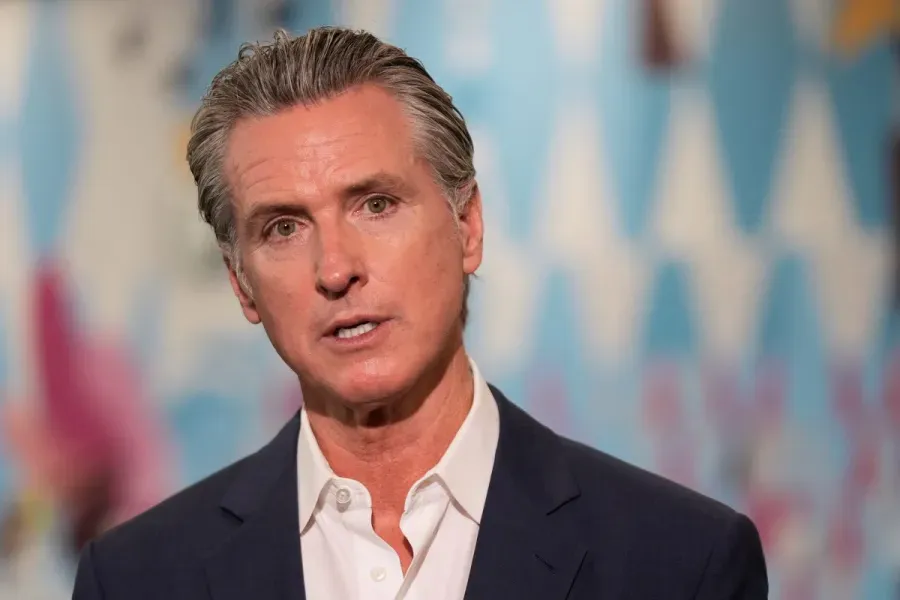
California Gov. Gavin Newsom blasted President Trump’s primetime speech casting doubt on the security of U.S. election systems. He warned it would be used as a precursor to meddle in the upcoming midterms.
California Gov. Gavin Newsom hit President Trump’s Thursday primetime speech with a sharp verdict: Newsom said the only thing missing was “tin foil.” In a 53-second video, the Democratic governor argued Trump’s public doubts about U.S. election system security are not just rhetoric, they are a setup, a precursor to meddle in the upcoming midterms.
Newsom’s core claim is direct and time-bound. He did not frame the speech as a general complaint about technology or election administration. He framed it as a warning sign of intent, saying Trump would use doubts about election security as the lead-in to interference as the midterms approach. And by calling it “ramblings of a mad king,” Newsom tried to deny the speech the seriousness it was trying to borrow.
To understand why this exchange matters beyond cable-news volume, zoom out one layer: elections are the one national system where trust is the currency. Voting systems are complex, but the public story around them is simpler. If leaders cast uncertainty on whether results are legitimate, they can create confusion even if no one breaks anything. That is the problem with planting seeds of doubt. The harm does not require a single hacked database. It can come from the environment itself.
Regulators and election administrators spend most of their time doing boring work. They secure infrastructure. They certify procedures. They manage hardware and software and, crucially, they stress-test processes under tight legal timelines. In normal political disputes, courts, audits, and administrative safeguards are where issues get resolved. But when a president publicly casts doubt on election systems, it changes the incentives for everyone downstream. Election officials can feel pressure to over-explain. Courts can face more contested filings. Candidates can mobilize supporters around suspicion rather than policy.
Newsom’s warning, specifically about “the upcoming midterms,” also matters because midterms are usually where governance gets decided, not just where messaging wins. If political actors can pre-frame outcomes as illegitimate, they can undercut legitimacy before anyone has voted. That shift can alter how campaigns spend, how party leadership coordinates, and how observers decide what counts as “evidence.” In other words, the speech is not only about election security, it is about narrative control at the exact moment narrative control becomes operational.
There is also a second-order effect that boards and investors tend to watch for even when the story is political. When election legitimacy becomes a question mark, the risk profile of institutions rises. People demand more verification. That can mean more compliance costs for government-adjacent vendors, more legal spend, and more heightened scrutiny for companies in regulated sectors. Even technology companies that are far from election administration can get dragged into conversations about trust, data integrity, and cybersecurity. Not because they caused the problem, but because the broader trust environment makes every claim feel like it must be audited.
Newsom’s choice of language is not accidental. Calling the speech “ramblings of a mad king” signals a deliberate delegitimization strategy. Instead of arguing the technical details of election security, he attacks the credibility of the speaker and the likely intent behind the message. This matters because, in high-stakes public disputes, the first narrative to harden often becomes the one people remember when the issue moves into courts, state legislatures, or emergency administrative steps.
The immediate stake for other leaders is credibility management. Governors, election officials, and legislators at every level have to decide whether to respond in kind, in technical terms, or through institutional channels. A leader like Newsom can force a split-screen conversation: one side debates election mechanics, the other disputes political motives. If that split widens, it becomes harder for institutions to keep proceedings focused on verifiable facts.
For executives, the strategic stakes are similar, even if the job descriptions differ. When top officials cast doubt on election systems, it can ripple into planning horizons. Companies that rely on government contracts, procurement timelines, regulatory certainty, or public-private partnerships can see more volatility in policy priorities. Meanwhile, employees and communities may interpret corporate actions through the lens of political legitimacy. The result is an environment where every statement can be read as a signal.
Newsom’s message, delivered quickly in a 53-second video, is built around a warning that the next phase is not just talk. He warned that Trump’s doubts are a precursor to meddle in the upcoming midterms. In this kind of contest, the battle starts before voting day. And if leaders want their systems to work, they have to protect both the machinery and the meaning of the outcome.
This story's Key Insights and Take-aways are locked.
Create a free account to unlock Executive Actions for one credit.
Register to UnlockAlways free for Executives Club members. Join the Club
More in Politics

LA County: DOJ's 20,000 'noncitizen' voter list is 'unreliable,' includes U.S.-born
Preliminary review by Los Angeles County election officials finds errors in the federal list, raising the stakes for voter roll integrity ahead of November.

Trump's $1.5B Pentagon chip investment lands in North Carolina
A $1.5 billion defense infusion for North Carolina chipmaking signals a new era of Pentagon-backed reshoring - here's what it means for the industry.

Nigeria confirms first Ebola case in Abuja, a woman just off a Uganda flight
Health Minister Muhammad Ali Pate says the patient flew in from Uganda, putting Africa's latest outbreak on Nigeria's doorstep.