
‘Obsession’ tops $300M worldwide for Focus Features as Focus goes back-to-back for hits
Curry Barker’s third Universal-Blumhouse-Atomic Monster movie clears $300M globally, while Mando and Baby Yoda “get lost” stateside in the Backrooms.

Curry Barker, via his third film with Universal-Blumhouse-Atomic Monster, has pushed Focus Features’ Obsession past $300M at the global box office. For executives, that’s a real-time read on demand durability for mid-budget horror-thriller packaging and on what happens when star power underperforms domestically.
Curry Barker can throw more steaks on the barbeque this weekend, because his Obsession has easily crossed the $300M mark at the global box office for Focus Features. Deadline’s report frames it as a straightforward win: Barker landed his third film with Universal, Blumhouse, and Atomic Monster, and Obsession’s worldwide total has now cleared that $300M+ milestone.
The bigger point for decision-makers is what that number signals about momentum. Global box office crossing $300M is not just a bragging right for the filmmakers and distributors, it is a market signal that this specific brand of thriller/horror packaging can travel beyond its domestic comfort zone. When the international side of the ledger cooperates, studios and partners get more confidence in greenlighting the next project, financing structures, and release strategies that depend on repeatable performance rather than one-off anomalies.
There is also a useful contrast in the same report: Deadline notes that “Mando and Baby Yoda Get Lost Stateside” in the Backrooms. In plain terms, it suggests that the domestic box office outcome for a title drawing on familiar franchise DNA was not matching the global headline numbers being celebrated elsewhere. That matters because executives do not just manage a single movie. They manage portfolios, and portfolios get allocated based on whether the market rewards “house brands” in every geography, or only in certain conditions.
That’s where your internal debate usually lives: do you double down on the strongest-performing lane, or do you treat deviations as noise caused by timing, competition, or audience mix? In horror-thriller land, the “lane” is often built on how quickly word-of-mouth and social conversation build around a hook, and how reliably the genre delivers at scale once it catches. Obsession clearing $300M globally underlines that this pipeline can still generate broad traction when the project lands in the right distribution and marketing sweet spot.
The report also points to the production ecosystem behind the win: Universal-Blumhouse-Atomic Monster. For boards and finance teams, that combination is interesting because it typically implies a balance of creative intensity with commercial discipline. The industry tends to reward packages that can be scaled without needing blockbuster-level budgets every time. When a third film from that grouping clears a global threshold like $300M, it reduces uncertainty about the platform itself, which can affect everything from sequel conversations to how aggressively companies pursue similar scripts.
Now add the strategic layer: box office results influence expectations for follow-on deals and internal benchmarks. Even without any quoted executives in the excerpt, the practical reality is that performance at scale changes how companies underwrite risk. If Obsession keeps pulling in $300M+ territory worldwide, partners can argue for more predictable output from the same production stack. Conversely, if a more recognizable franchise-adjacent asset stumbles domestically as the Backrooms line implies, it strengthens the case that the market might be rewarding genre craftsmanship more than celebrity shorthand in certain windows.
There is also a timing subtext executives should pay attention to. Deadline’s original summary is the setup for “this weekend” energy: Barker can “throw more steaks” because the story is live right now. That immediacy matters because theatrical performance is a moving target, and thresholds like $300M become catalysts for internal updates. Investors and senior management often use these milestones to recalibrate expectations for marketing spend, home entertainment forecasts, and downstream licensing timelines.
Second-order implications are where the real portfolio decisions get made. A global success can encourage companies to keep chasing international audiences with genre-first releases, because those markets can sometimes provide the additional volume needed to push movies past major breakpoints. At the same time, “lost stateside” messaging is a reminder that domestic demand can be fickle even when the global number looks healthy. Executives running multi-territory strategies typically need both truths on the table: worldwide momentum is powerful, but it does not guarantee domestic consistency.
For peers in similar roles, the takeaway is simple but urgent. Obsession’s $300M+ global crossing suggests the Universal-Blumhouse-Atomic Monster engine still has fuel. And the same report’s domestic cautionary note around Backrooms and Mando and Baby Yoda highlights the risk of assuming franchise gravity automatically translates to every market, every time. If you’re on a board, CFO, or distribution lead, you want your next slate decisions to reflect that reality: build around what the audience rewards now, not what your org chart hopes will carry over.
This story's Key Insights and Take-aways are locked.
Create a free account to unlock Executive Actions for one credit.
Register to UnlockAlways free for Executives Club members. Join the Club
More in Entertainment

Norman Reedus exits The Walking Dead after 16 years as Daryl Dixon
A 16-season Daryl Dixon era ends, and it reshapes how TV studios hedge risk in long-running franchises.

“Leviticus” turns conversion therapy panic into romantic horror, inspired by gay-rights “regression”
Adrian Chiarella’s debut channels a specific fear: LGBTQ rights backsliding into coercion, then demonic pursuit.
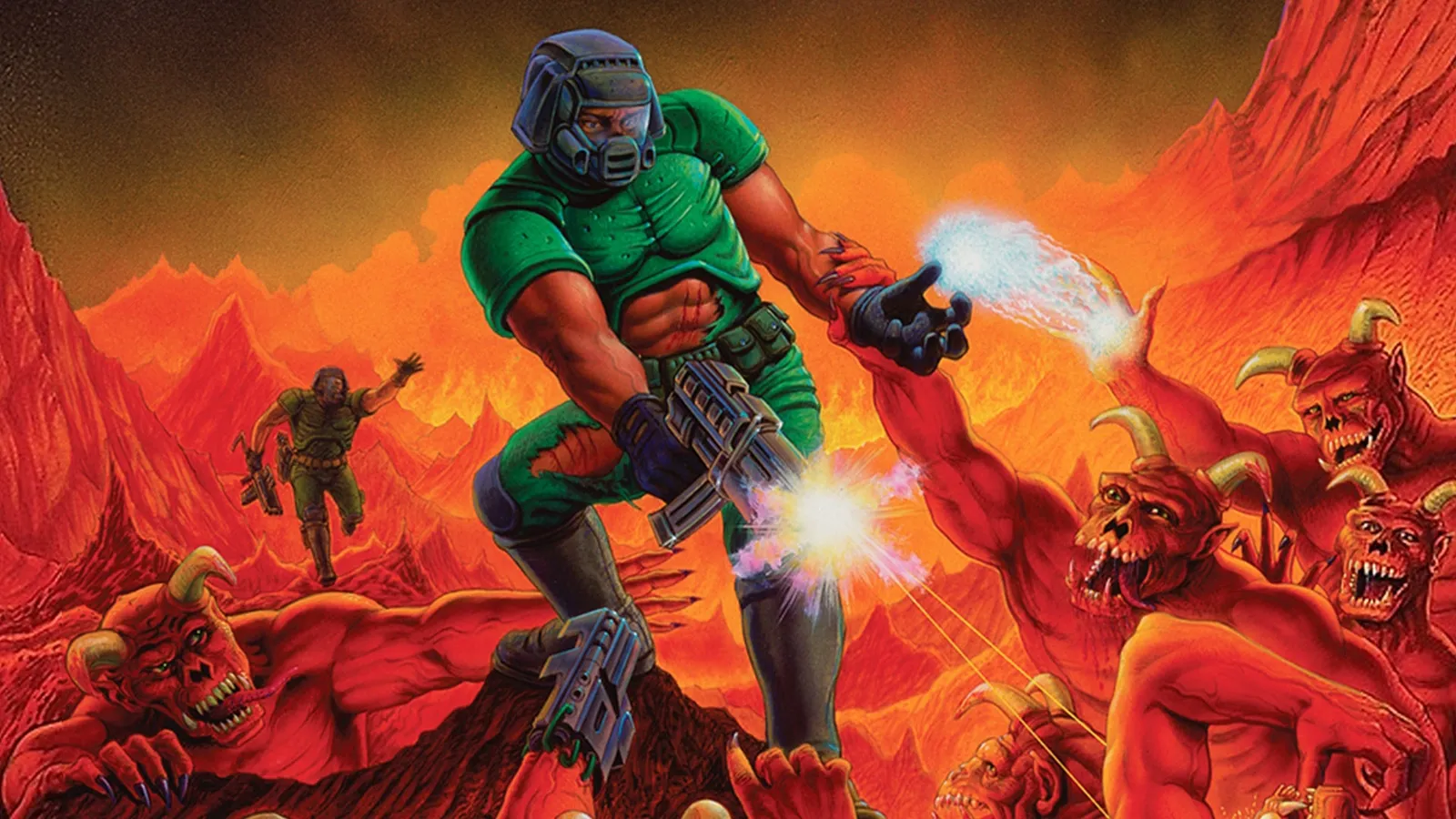
Bobby Prince, Doom composer, dies at 81, just after Doom’s National Recording Registry induction
His family confirmed his death Tuesday, June 16, and the impact of his metal-infused game soundtracks keeps echoing.