
Oliver Tree was on the passenger list when two Rio helicopters collided and killed six
The crash over Rio on June 14 involved electric vehicles and a passenger manifest that still can’t be matched to bodies.
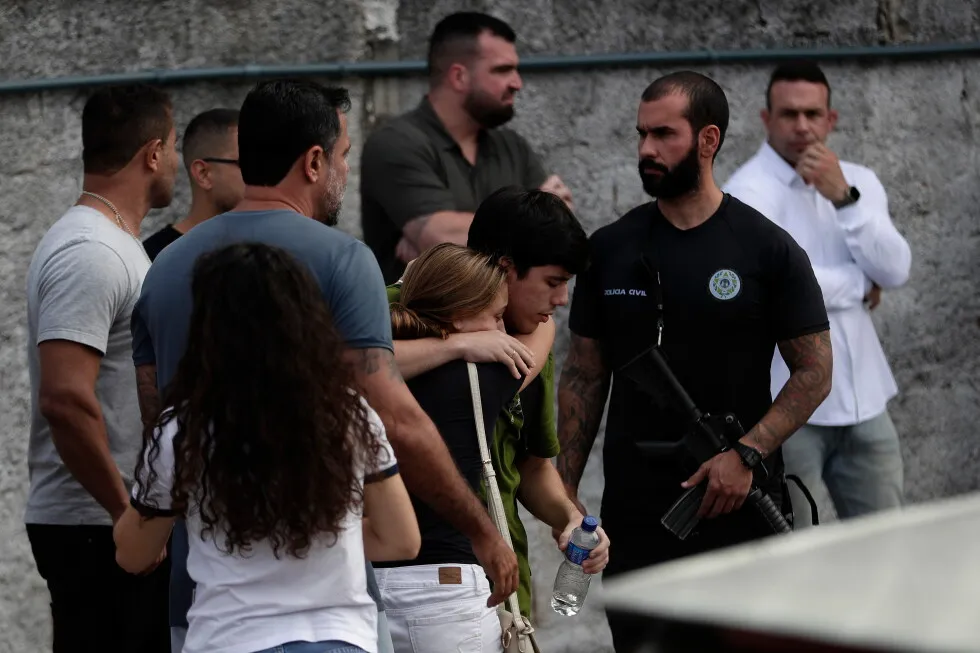
Two helicopters collided over Rio de Janeiro on Sunday morning, killing all six people aboard, firefighters said. Police say American singer and comedian Oliver Tree was on the passenger list provided to aviation authorities, but officials have not been able to identify the bodies.
Rio de Janeiro’s Sunday morning already had a headline problem: two helicopters collided midair and crashed into the western zone, killing all six people aboard, firefighters said. Police then added the second layer of shock, saying American singer and comedian Oliver Tree was on the passenger list given to aviation authorities. But those bodies have not been identified yet, which is where the story gets operationally messy and emotionally heavy fast.
According to Rio de Janeiro’s Military Fire Department, one of the helicopters crashed on the parking lot of a car dealership in an area where several electric vehicles were parked, igniting a fire that was extinguished. Police say officials are investigating the cause of the collision, but the crash scene and the list of passengers do not automatically translate into confirmed identities, at least not yet.
What’s known is grimly straightforward. Emergency responders worked at the site as aircraft debris and burned vehicles filled a car dealership parking lot where the helicopters reportedly went down. A police officer carried debris from the area, and emergency workers continued inspecting the crash location. In other words, the immediate priority was not speculation. It was securing the scene, extinguishing the fire, and preserving evidence for investigators trying to determine what caused two aircraft to collide.
The passenger roster also pulled in names that reached well beyond local aviation circles. Police said Oliver Tree was on the list of passengers provided to aviation authorities, though they have not been able to identify the bodies of those killed. Tree performed in Buenos Aires on June 4, and on Saturday he posted an Instagram video of himself playing soccer in a Brazilian neighborhood. Those details do not change what happened to the aircraft, but they do matter for how investigations are communicated and how quickly public assumptions get created.
Another person reportedly connected to one of the helicopters was Gaspar Prim Díaz, also known as Gaspi, according to Argentine streaming channel Blender. Blender said Gaspi was in one of the helicopters, and noted that he had more than 2.8 million followers on YouTube and was 23. Blender also posted condolences on X, saying: “Thanks for your art, your magic and your sensibility, every one of us will miss you.” For executives and operators tracking reputational risk, that kind of public audience size means a crash is not just a safety event. It becomes a global communication event before the technical story is even fully established.
Local testimony adds another piece of the moment-to-moment chaos, still with the important caveat that eyewitness accounts are not the cause. Fernandes de Freitas, a tire repair worker, said he saw one helicopter in flames after the midair collision and noticed that one of the passengers jumped out of the other aircraft before it hit the ground. His description underscores how little time there is in these accidents, and why investigators later focus on what can be validated: flight records, radar data, maintenance logs, and aviation authority documentation.
Zoom out one layer and the regulatory and industry implications become clearer. The crash triggered a passenger list handoff process to aviation authorities, yet police say they cannot identify the bodies at this stage. That gap between paperwork and confirmed identities is not unique to this case. In aviation, identities can depend on forensics and may lag behind emergency response. From a governance standpoint, that delay affects next-of-kin notifications, insurer communications, and how stakeholders interpret what is “confirmed.” When public figures are involved, the pressure to fill in blanks accelerates. It is precisely during that window that accurate procedures matter most.
For boards, operators, and risk officers in the aviation ecosystem, the second-order lesson is less about the celebrity names and more about the operational chain. A midair collision over a dense urban area, a crash into a car dealership parking lot, and an ignited fire involving several electric vehicles all stack multiple response demands at once. Investigators will be looking for causes, but executives should also be thinking about resilience: how quickly manifests are reconciled, how emergency coordination works on the ground, and how communications are managed while identities and causal findings remain under investigation.
And for everyone else paying attention, the reality is brutal and immediate: all six people aboard died, and the investigation is underway. The world can learn a technical story later. The personal story is happening right now.
This story's Key Insights and Take-aways are locked.
Create a free account to unlock Executive Actions for one credit.
Register to UnlockAlways free for Executives Club members. Join the Club
More in Entertainment

Commodore’s Christian Simpson restarts the retro PC brand, then launches flip phones
After reviving the Commodore 64 with modern tweaks, Commodore is taking the retro look into flip-phone territory.

Asia Argento wins Locarno’s Life Achievement Award, praised by Giona A. Nazzaro
The Locarno festival honors Asia Argento with a Life Achievement Award, spotlighting her film career risks and reinvention.
Blair Partnership wins exclusive global role to revive The Wombles franchise
A consolidated IP setup and a new exclusive representative point to fresh movies, TV series, and broader expansion plans.