

Paris Grand Mosque turns 100, built for WWI Muslim soldiers and now a France-Algeria bridge
On its centennial, the Grand Mosque reveals an overlooked diplomatic role linking France and Algeria, and Muslims with Jews.
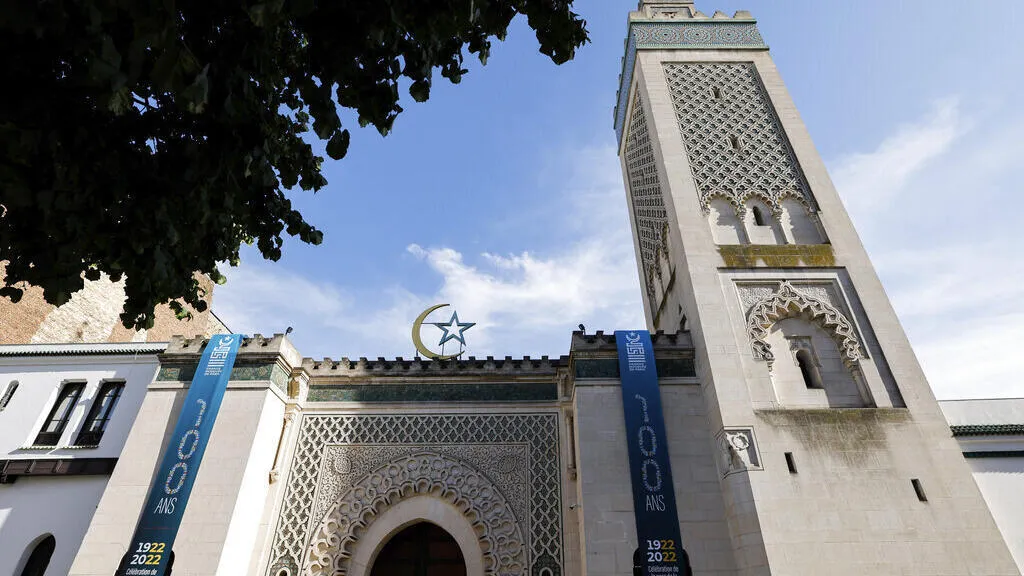
France 24 marks the Grand Mosque of Paris' 100th anniversary, noting it was built in 1926 in the Latin Quarter as a tribute to Muslim soldiers who died for France during World War I. Historian Benjamin Stora describes the mosque's little-known function as a geopolitical bridge between France and Algeria, and between Muslims and Jews.
The Grand Mosque of Paris is 100 years old. Built in 1926 in the Latin Quarter, it was originally conceived as a tribute to Muslim soldiers who died for France during World War I. That origin matters because it flips the default story many people assume about symbols in France: this one was not just architecture or religion. It was also a public way to recognize lives lost for the country.
French historian Benjamin Stora says the mosque's deeper, lesser-known impact is geopolitical. In his account, it has functioned as a bridge not only between France and Algeria, but also between Muslims and Jews. That is a significant claim because it reframes the centennial from a ceremonial milestone into something more consequential: a lens on how communities, identity, and international relationships can be carried through cultural institutions, sometimes quietly for decades.
To understand why a “bridge” matters in an executive briefing, think about how institutions signal legitimacy. A place like the Grand Mosque sits at the intersection of national history and social trust. When societies build commemorative spaces for specific groups, they create an enduring narrative that can either widen or narrow belonging. In France, the mosque’s centennial lands in a broader environment where questions of integration, identity, and public representation are constantly negotiated in policy, courts, and public life. Even without getting into new facts beyond the report, the key point is that institutions with long time horizons tend to accumulate meaning, and that meaning can turn into soft power.
The report also anchors this bridge in France and Algeria. Algeria is not a peripheral detail in modern French geopolitics, and any institution that becomes associated with both communities can end up influencing how narratives travel. The mosque, as described here, operates as a connective tissue: it links a French national memory of WWI sacrifice to Algerian relationships and to broader Muslim presence in France. When that connective tissue holds, it supports social cohesion across generations. When it frays, it increases the cost of misunderstanding, because cultural history becomes harder to separate from current tensions.
Stora’s second bridge, between Muslims and Jews, is where the “why now” energy kicks in for decision-makers. It suggests the mosque's role is not confined to a single bilateral relationship or one identity category. Instead, it functions across communities that often get siloed in political debates. For leaders, that matters because most risks in social policy, human capital, and community relations rarely stay inside neat boxes. A bridge model implies that the right institution design and messaging can reduce friction between groups, not just between states.
There is also a governance subtext executives should notice: cultural and religious landmarks in democratic states operate under layers of public law, local regulation, and political scrutiny. While the source does not list specific regulatory mechanisms, the structural reality is that public recognition and communal participation are usually never “just cultural.” They are managed. They are interpreted. They are policed, sometimes indirectly, through debates about symbols, public order, and representation. Over time, a centennial like this becomes a stress test for whether the institution is viewed as part of the national story or as an outsider narrative.
Second-order implications flow from the word “sanctuary” in the framing of the anniversary. A sanctuary is not only physical. It is social. If Stora is right about the mosque as a bridge between Muslims and Jews, then the centennial can be read as a reminder that coexistence is sustained by shared spaces and shared recognition. That is the kind of stability that reduces reputational blowback for companies with diverse workforces and customers. It also increases resilience for public-minded organizations that need community trust to operate. In other words, a mosque that has historically been framed as a tribute to WWI sacrifice and described as a geopolitical bridge could be more than “heritage.” It can be infrastructure for social cohesion.
For peers, the strategic stakes are straightforward. When boards and executives think about community relations, they tend to focus on the present. But the strongest community signals often come from the past, locked into buildings and commemorations that outlast administrations. This centennial, as reported by France 24 and interpreted by Benjamin Stora, offers a high-signal case study: institutions can carry international relationships, and they can connect identities through time. The question for decision-makers is whether they recognize that historical connective power early, or only after it breaks.
This story's Key Insights and Take-aways are locked.
Create a free account to unlock Executive Actions for one credit.
Register to UnlockAlways free for Executives Club members. Join the Club
More in Politics

LA County: DOJ's 20,000 'noncitizen' voter list is 'unreliable,' includes U.S.-born
Preliminary review by Los Angeles County election officials finds errors in the federal list, raising the stakes for voter roll integrity ahead of November.

Trump's $1.5B Pentagon chip investment lands in North Carolina
A $1.5 billion defense infusion for North Carolina chipmaking signals a new era of Pentagon-backed reshoring - here's what it means for the industry.

Nigeria confirms first Ebola case in Abuja, a woman just off a Uganda flight
Health Minister Muhammad Ali Pate says the patient flew in from Uganda, putting Africa's latest outbreak on Nigeria's doorstep.